The monthly newsletter published by the Balsall Heath Local History Society (BHLHS) in Birmingham, UK. It serves as both a community bulletin and a historical record for the area.
What’s Inside the Gazette?
The publication typically includes a mix of current news and historical research:
Historical Articles: Local stories and accounts of local landmarks – the social history of the Balsall Heath and Highgate areas.
Photographic Archives: Rare images of the neighbourhood from various eras.
Society Updates: Information on upcoming monthly meetings, guest speakers, and local heritage events.
It is published monthly and has been a staple of the society for years with digital archives dating back to at least 2010. Distributed to members, recent and archived editions are also made available as PDF downloads on the official BHLHS website and on the Heathan.
As the Changing Times touring exhibition draws to a close, local voices and artists come together to capture a unique picture of the area, inspired by the photography of Mick Turner. Acclaimed poet Liz Berry is set to bring her local verse to our touring exhibition on Sunday, but she isn’t the only one finding poetic inspiration in Balsall Heath.
Over at the SS John and Martin Church Exhibition, local poet Judith shared a her poem, Old Stamping Ground, offers a vivid snapshot of Balsall Heath – a place that has been defined as much by change as it is by its welcoming people. Judith’s verse reminds us that the heart of our community lives with the people who live and work here:
Old Stamping Ground
It’s a careful walk back to the old places, Where six weeks ago, I walked the familiar streets; Past the sleeping policemen, now the peppered new leaves of waking trees. I saw the cordial Wine Merchant, Hussein in his shop in conversation, Walked past inroads to the Buddhist Centre, I bumped into laughing Andreas, and Uncle Marg, who likes Asian weddings, So then to my newsagent, smiling Mubin. Collected my papers and then saw turbaned Meghan, Who was on her way shopping. Our conversation was about unruly children and too much lax parenting. Surprise, surprise, where there were four flowering fruit trees, Stretching their blossom-laden branches against the amber bricks of the tall residential building, near Mubins.
Judith Fleetwood-Walker
Catch the Exhibition while you can!
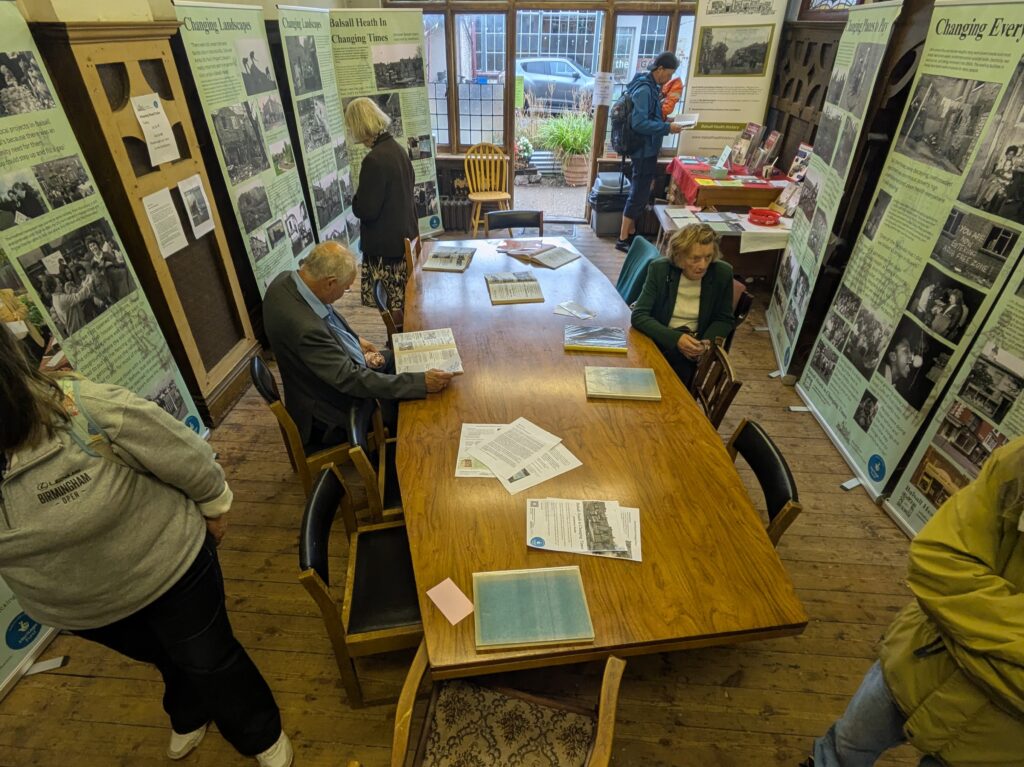
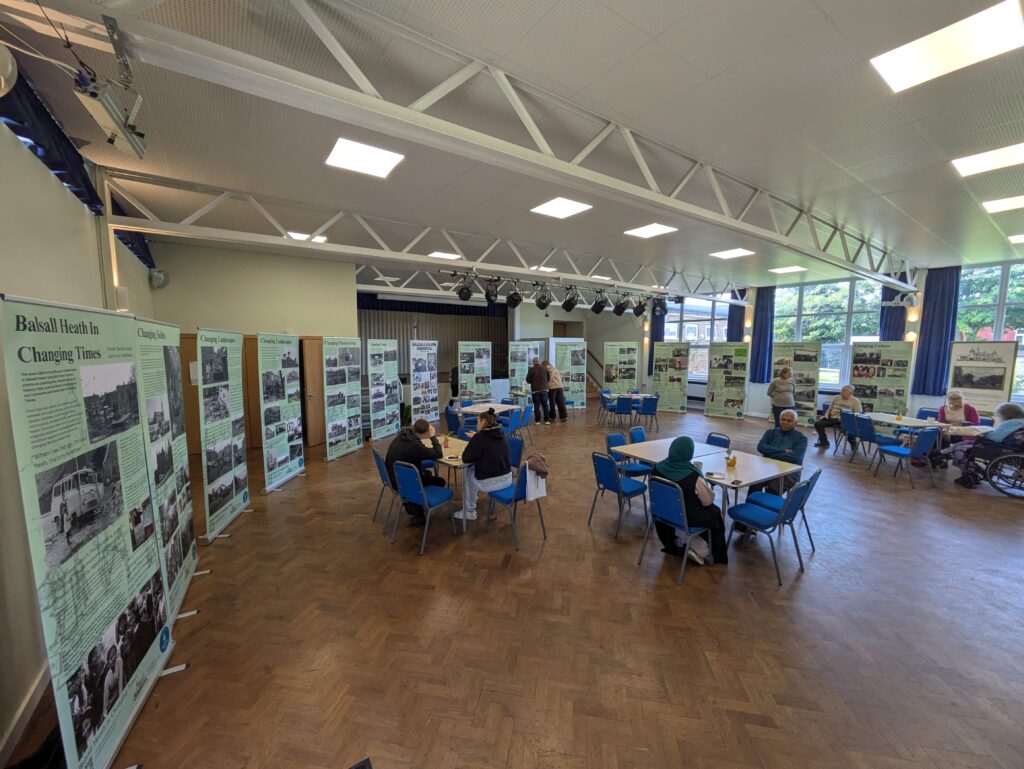
‘Finding yourself’ in Changing Times exhibition
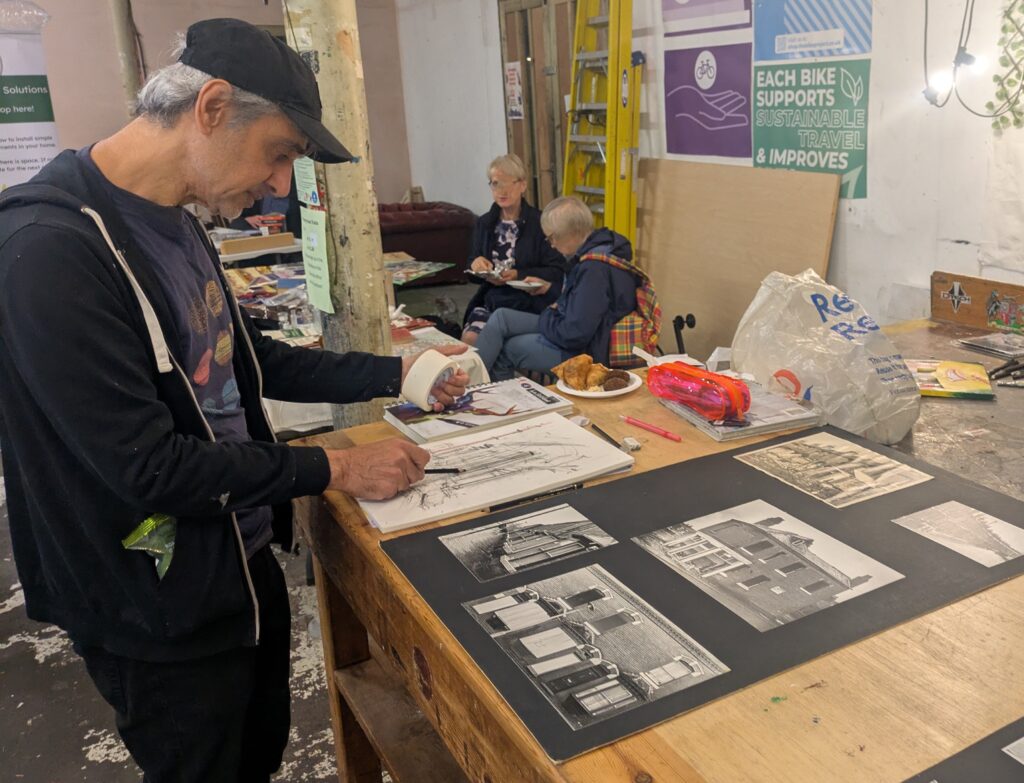
The Changing Times project has been a celebration of local heritage, featuring history tours, creative artwork by Muhmood Tahir (who led a popular drop-in workshop at ‘Second Saturday’), and our extensive touring exhibition across the area.
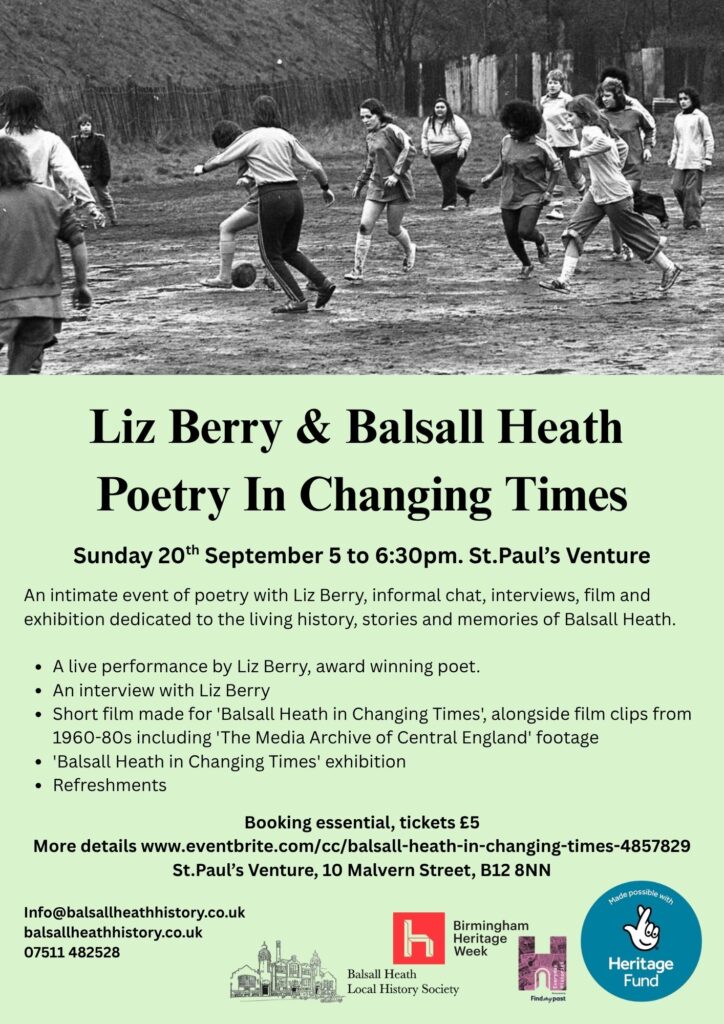
On Friday 18th September join our Touring exhibition at the Old Tram Depot (now Creation Climbing Centre) and Sunday 20th September marks the final day of the touring exhibition at St. Paul’s Venture Hall, opening from 11am and our highlight event, poetry with Liz Berry from 5pm.
Haqi Ali presents a ten minute film made for ‘Balsall Heath in Changing Times’, alongside film clips from 1960-80s including ‘The Media Archive of Central England’ footage.
Exhibition, ‘Balsall Heath In Changing Times’
Tickets are running low – be sure to book your spot now so you don’t miss this wonderful finale.
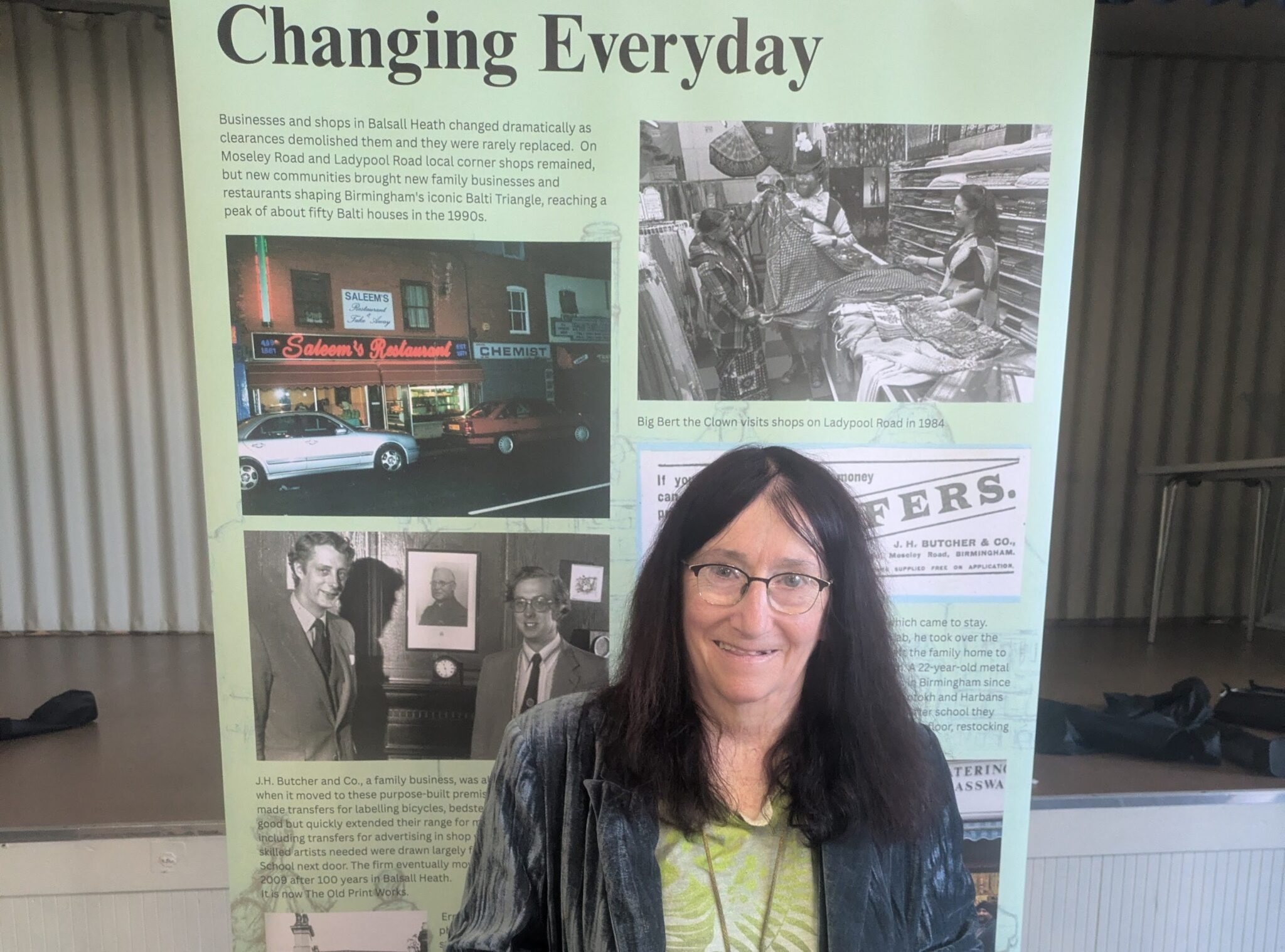
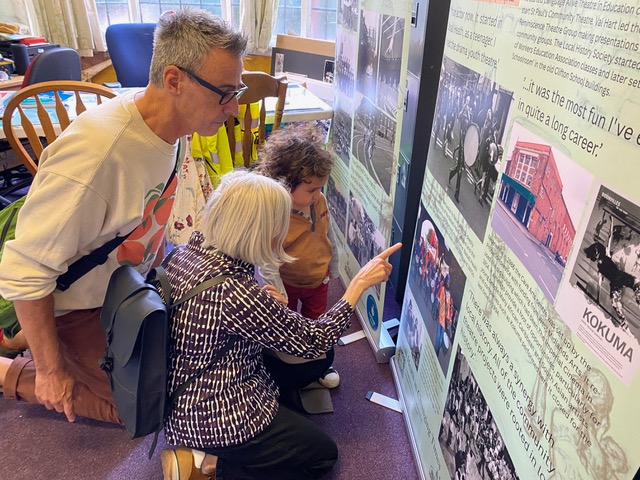
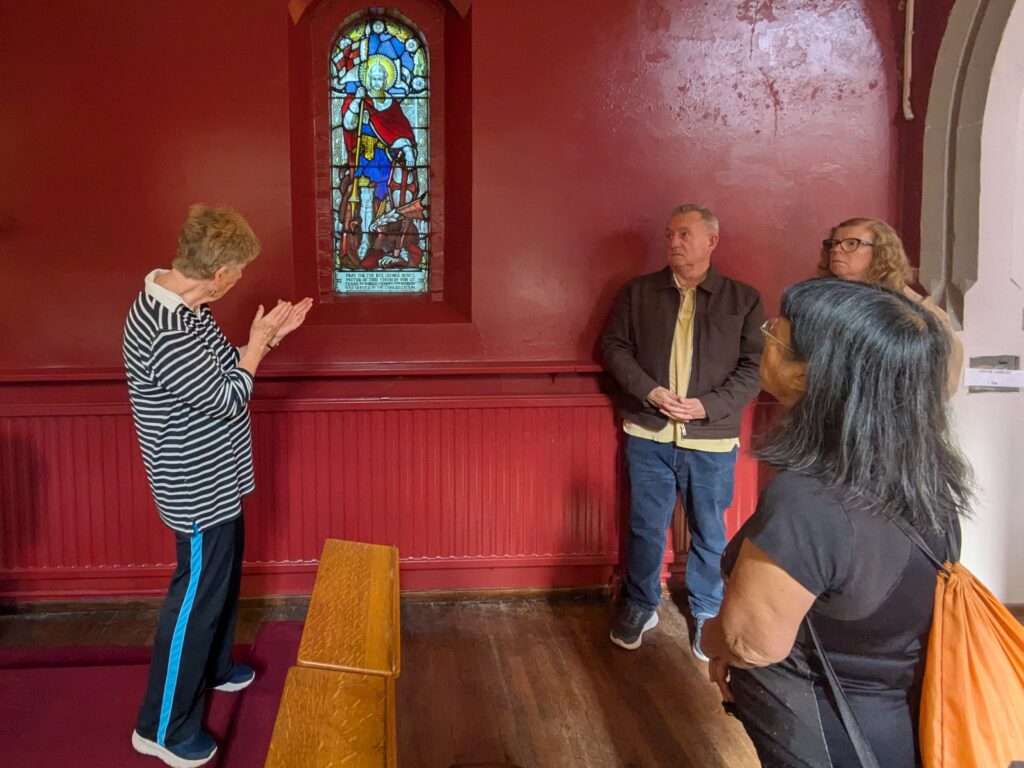
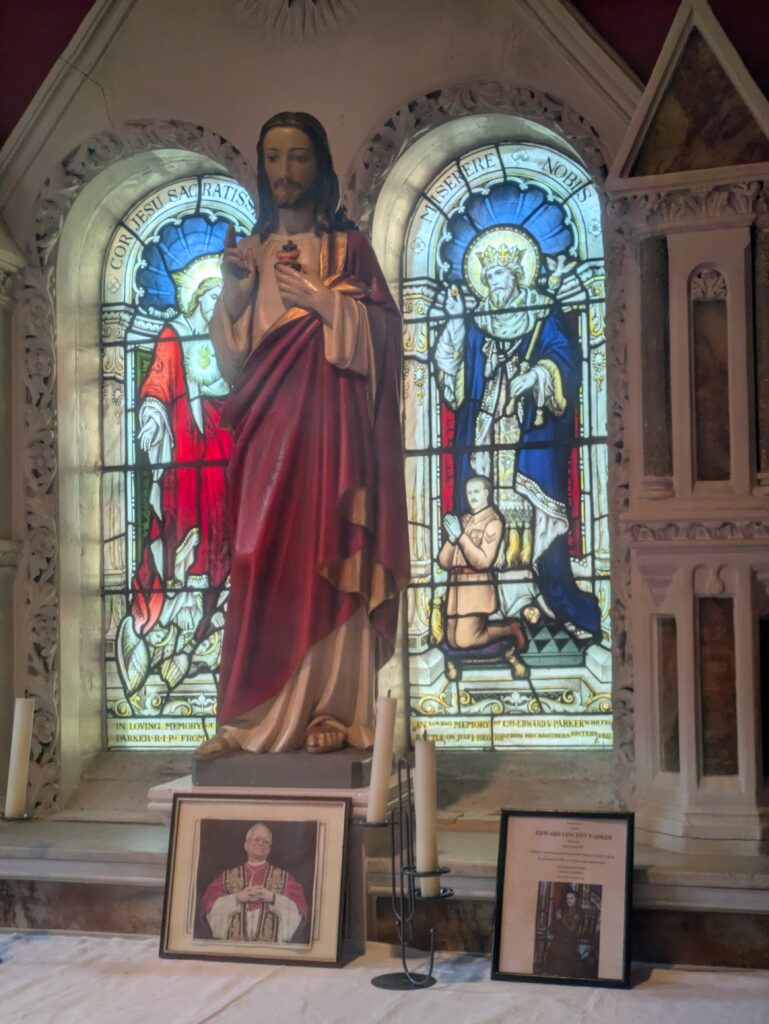
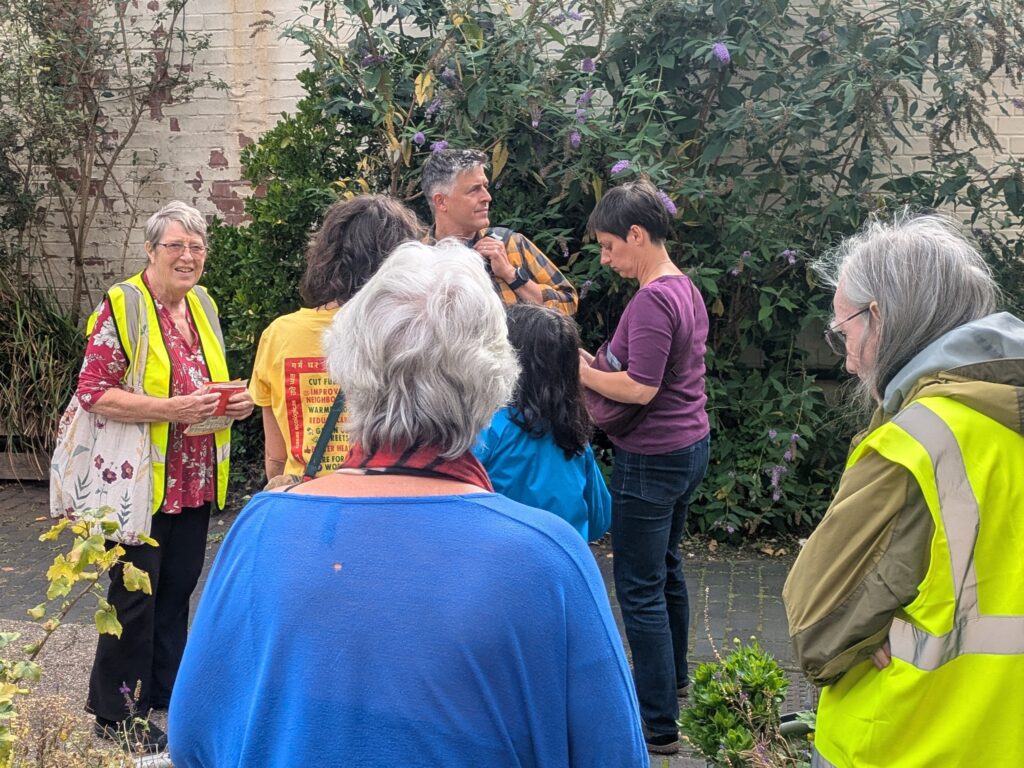
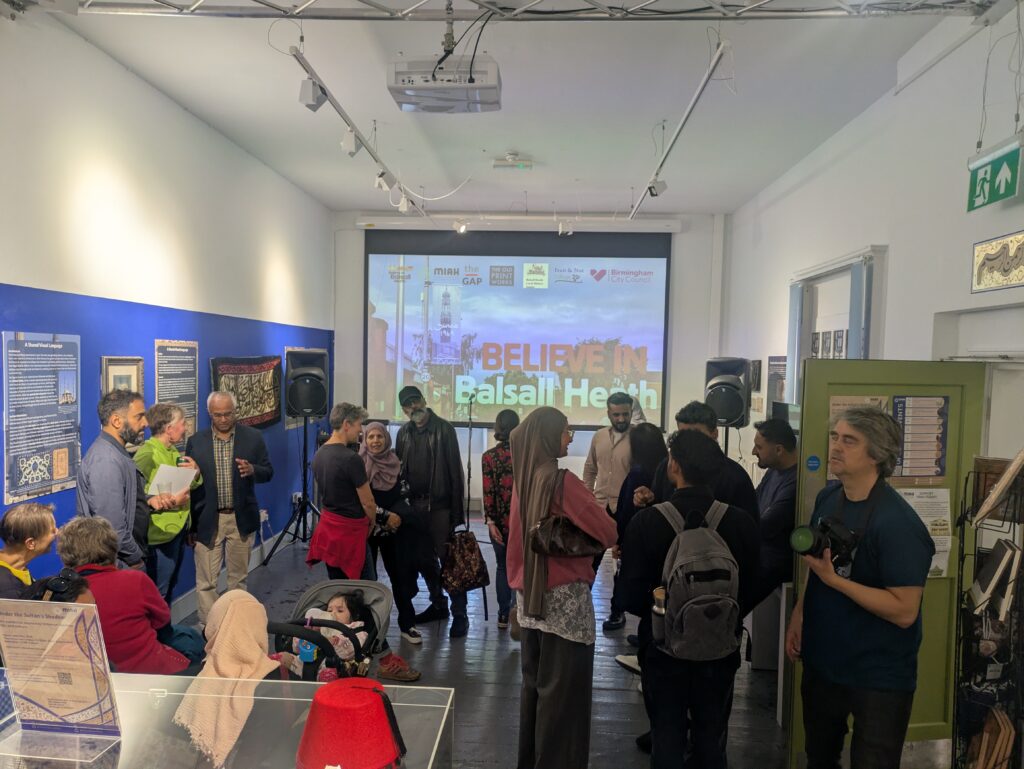
Angela Blackwood, leading the church tour explains the challenges of making, repairing and protecting our stained glass heritageA window in time – window created following a tragic family death in World War 1. Part of the Church tourJudith at the exhibition brings her Balsall Heath poetry‘Balsall Heath in Changing Times’ in the Directors Office of the Old Print WorksPreparing for a Moseley Road Tour on Saturday with Val Hart, Balsall Heath Local History SocietyMuhmood Tahir live sketching inspired by Mick Turner at ‘Second Saturday’, The Old Print Works‘Believe in Balsall Heath’ launch event for banners at MIAH Foundation, part of many celebratory events across Balsall Heath this yearExhibition at SS John and Martin Church B12 Community Hall
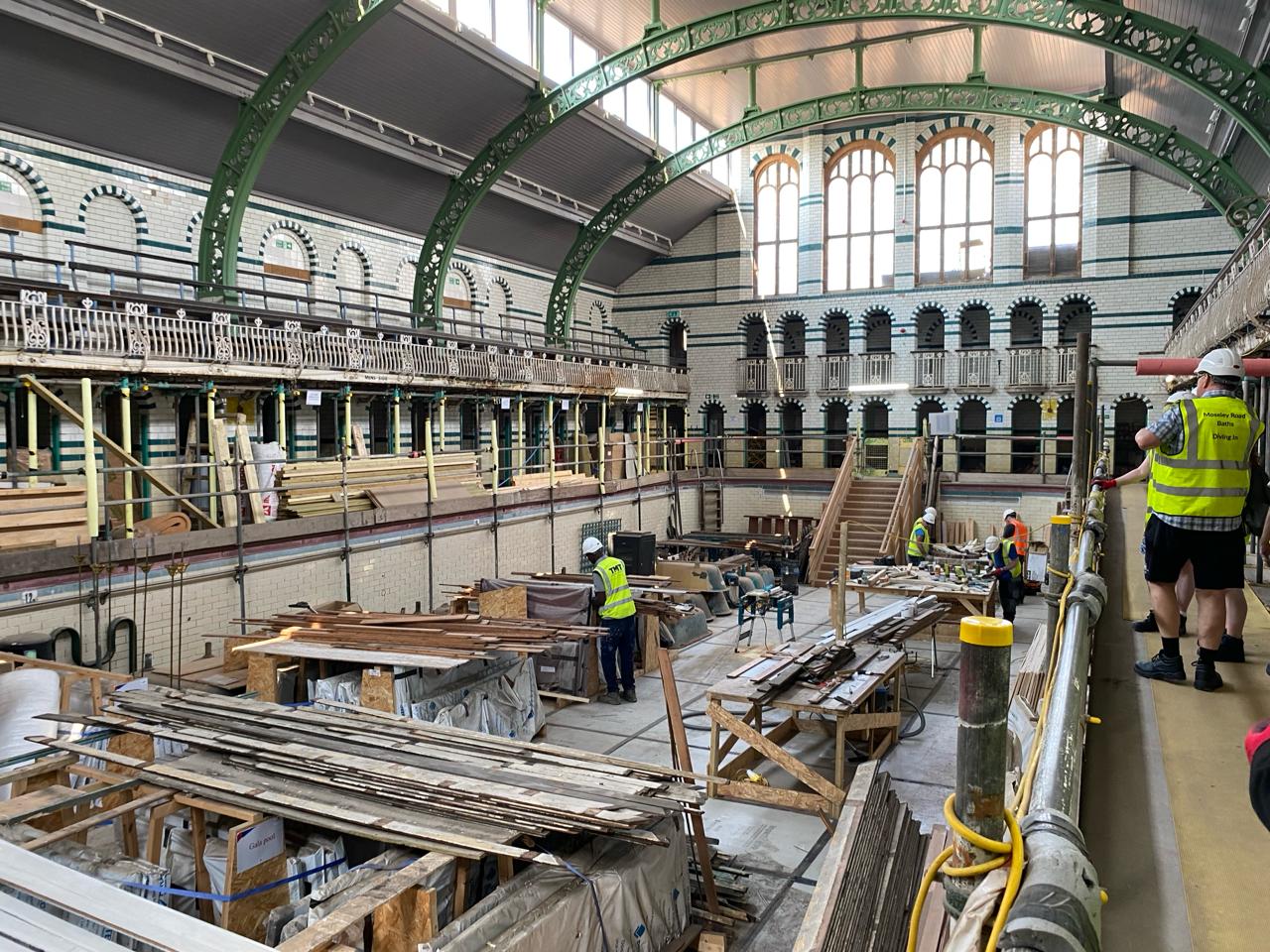
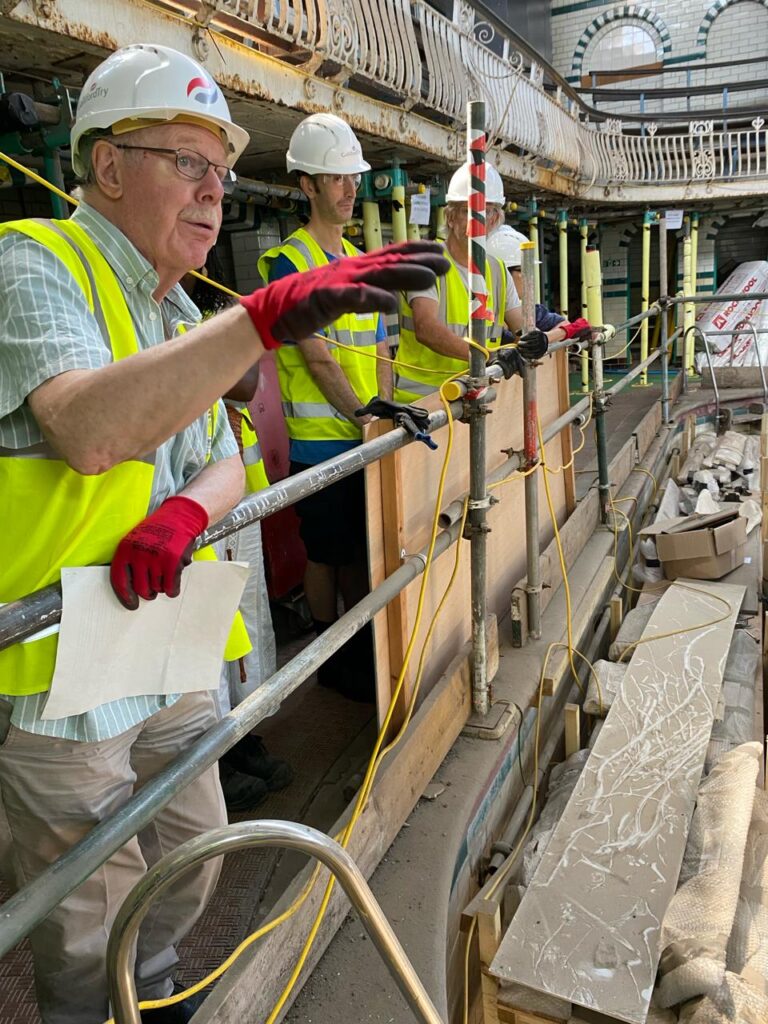
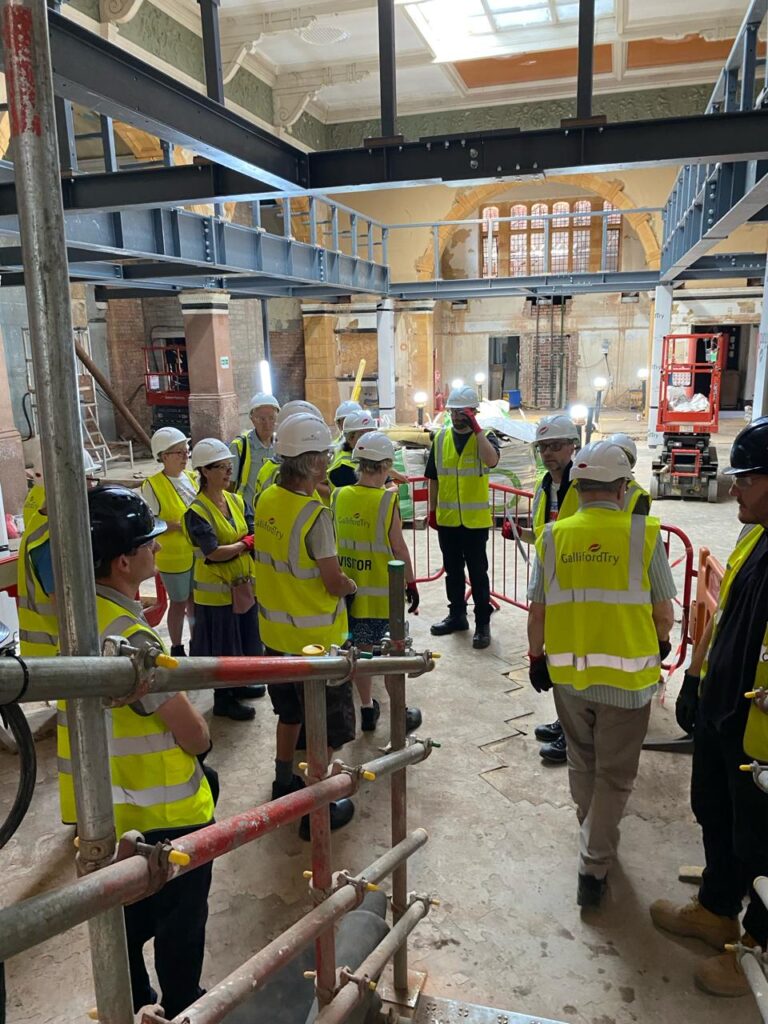
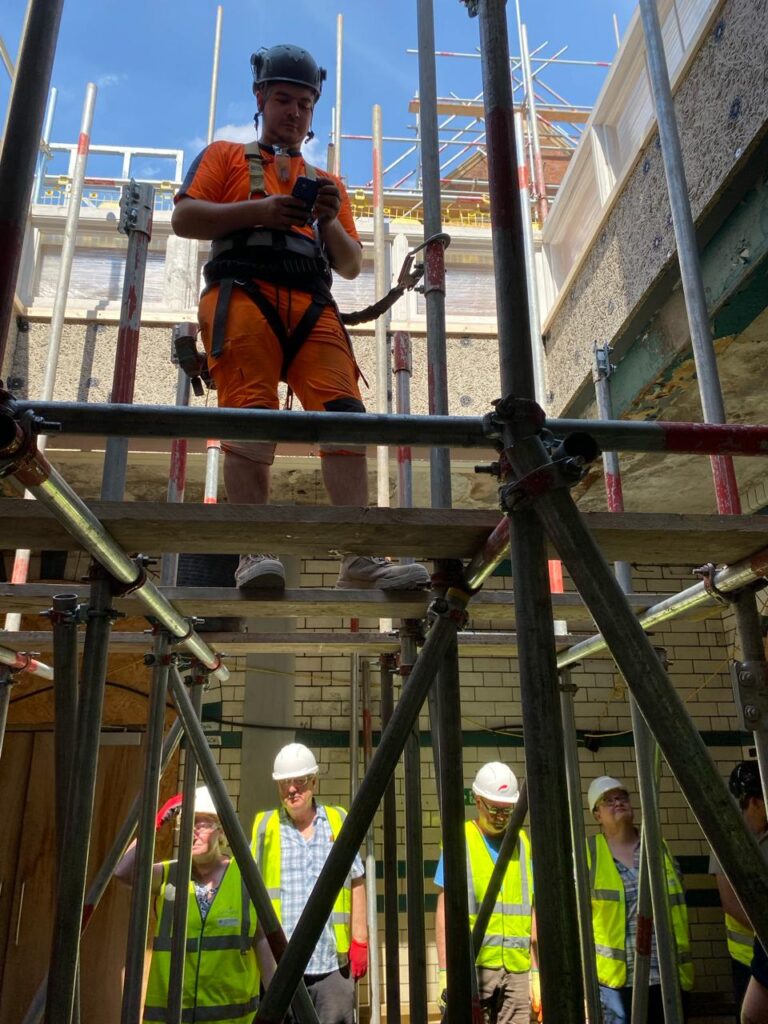
Joe Holyoak has written an update for us from the Baths and also has been leading tours of the Baths as part of Balsall Heath Community Festival #BHCFest – Initially tours were offered to neighbours, stakeholders and local charitable friends. For our our festival we had limited free bookings for members of the public, which were fully booked within 24 hours of us putting out the message.
We are very grateful to Joe, volunteers and staff at the Baths who made this possible – keep an eye on the Heathan for the next opportunity to visit – we’re hoping this will be in Heritage Week in September.
‘We are very keen that those on the doorstep get priority access.’
Simon Piaia, Project Manager
Joe explains the work ongoing
In the Library
A bit of work still to do
Report from Joe
As of 13th July, we are now in Week 46 of the 80 weeks of the Phase 1 contract, and all is going successfully.
Buildings Connected
You can’t see it from outside in the street, but for the first time ever, the two buildings are now connected. You can walk from one to the other through a new opening. This was one of the first things that the contractor Galliford Try did, in order to enable access to the library internally from the compound at the back. The decision to join the two buildings together was a bit controversial, but it was decided to do it because when the contractor hands over the completed buildings at the end of the contract, they will constitute a single community resource. The library floor is a bit lower than that of the baths, so a ramp is necessary to connect the two.
The link between Library and Moseley Road Baths
Mixing Jacobean and Flemish Renaissance
Because they are built in a similar style (described as a mixture of Jacobean and Flemish Renaissance), and use the same external materials, red brick and buff terracotta, the two buildings are often mistakenly read as a single building. Historic England, which is responsible for their listing as architecturally significant buildings, contributes to this confusion by listing them together as one building. But they were designed at different times, by different architects. The library, designed by Cossins and Peacock, opened in 1896. It is therefore Victorian. The baths were designed by William Hale and Son. Because of the years spent drilling a well in order to find water, the baths did not open until 1907. They are therefore Edwardian. As I wrote in the first progress update, most of the work in Phase 1 is targeted at the library. That now has a lovely new Westmorland slate roof.
Library to open soon!
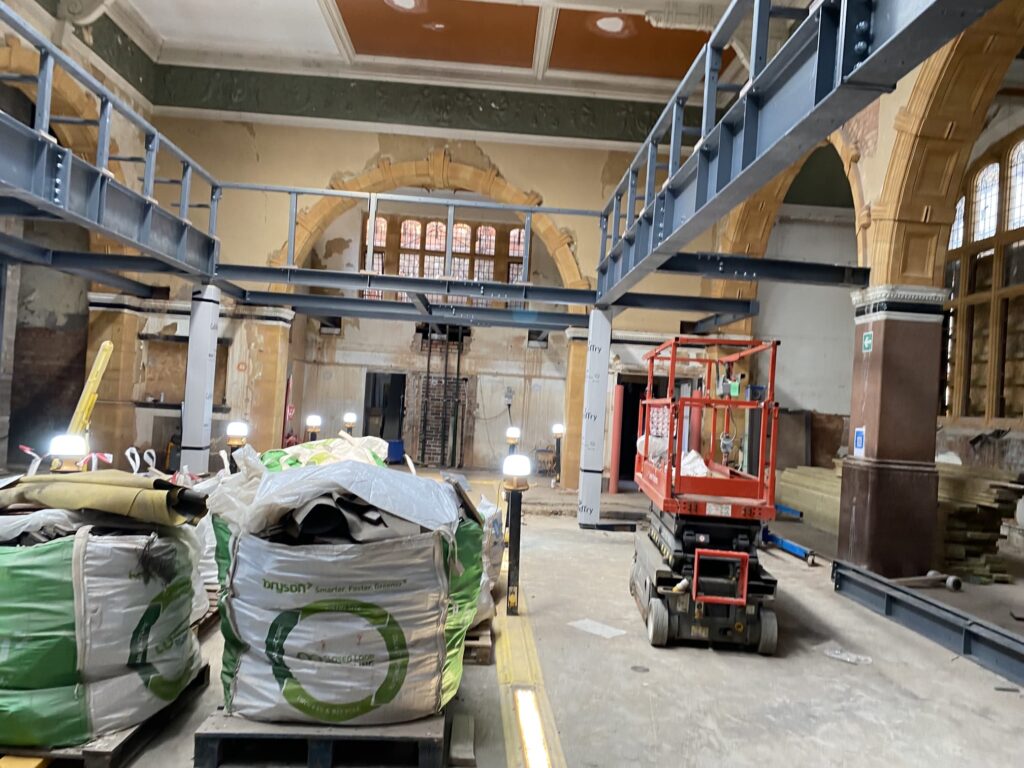
The library will reopen in 2027, with a new mezzanine floor added. This now under construction, with the steel structure in place. The connection to the baths will not then be in public use: that will have to wait until work on the baths is completed in Phase 2.
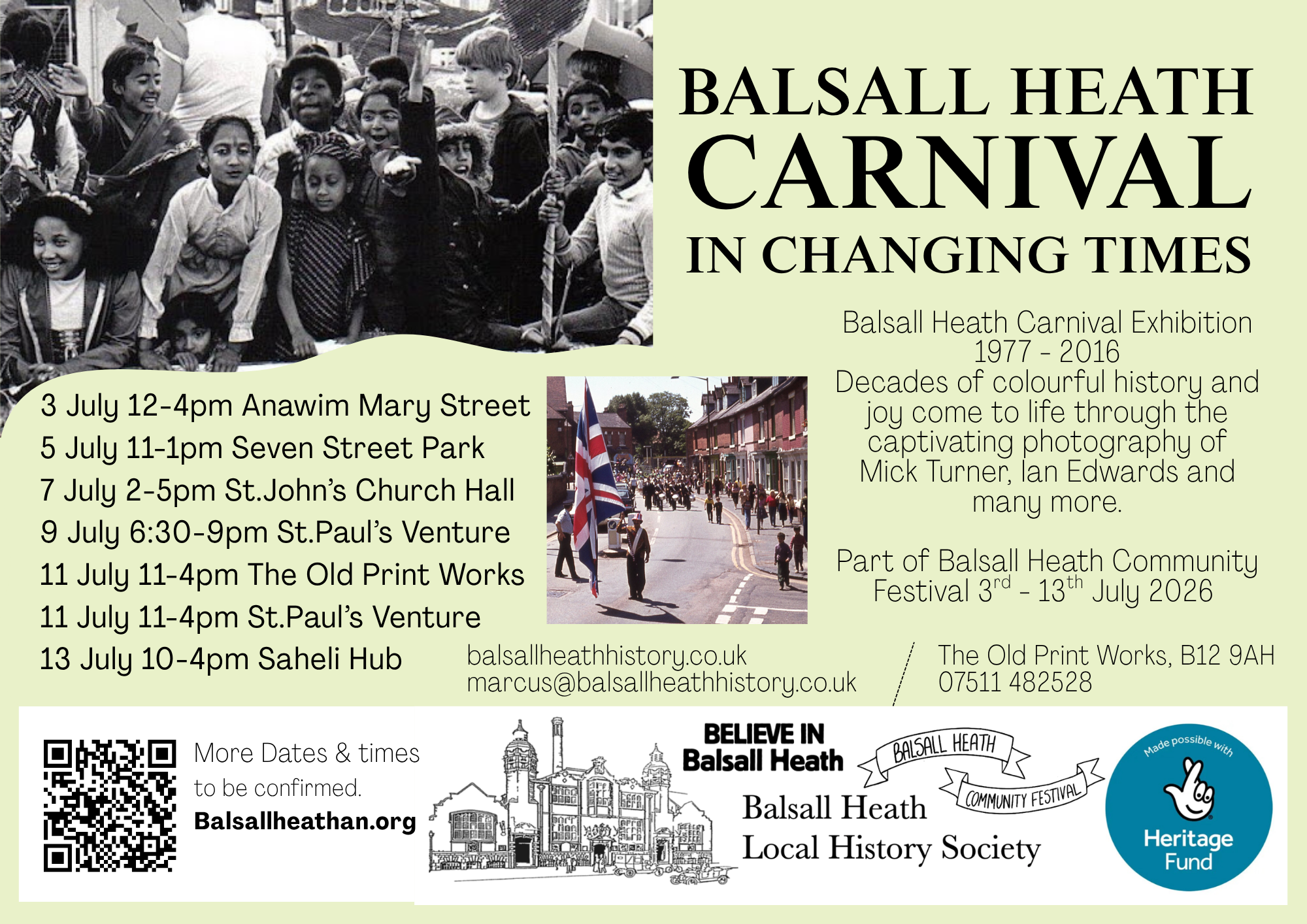
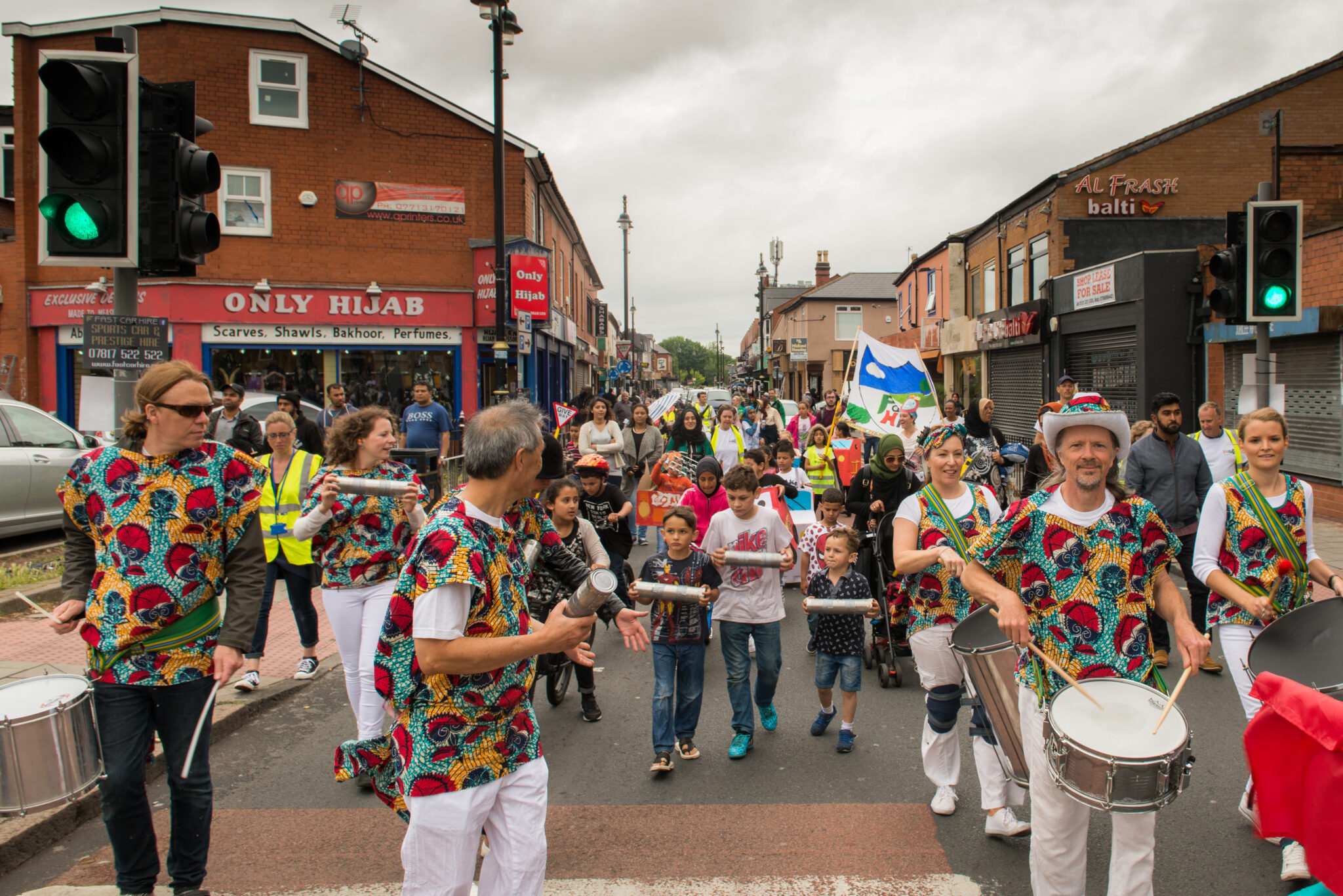
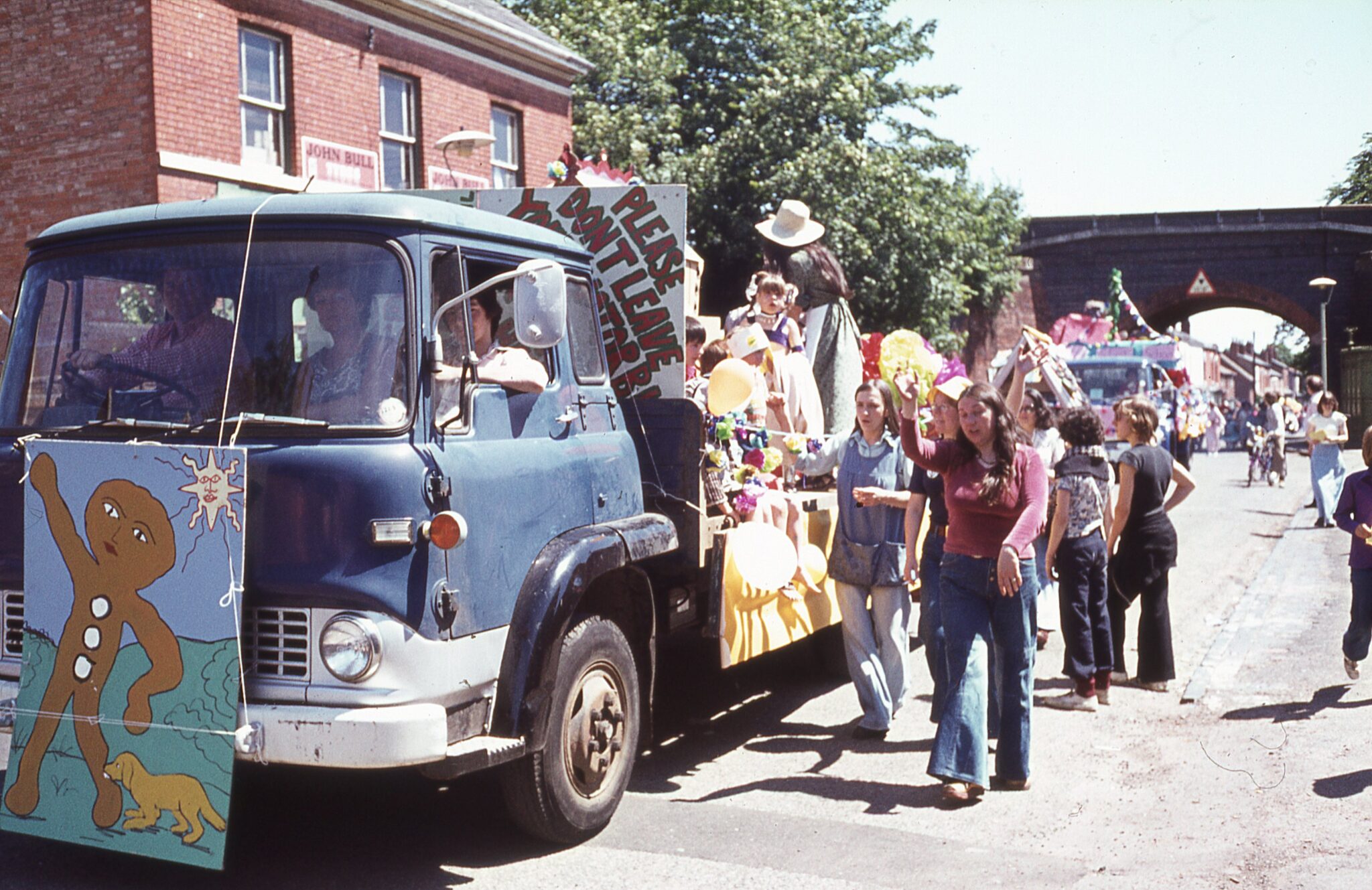
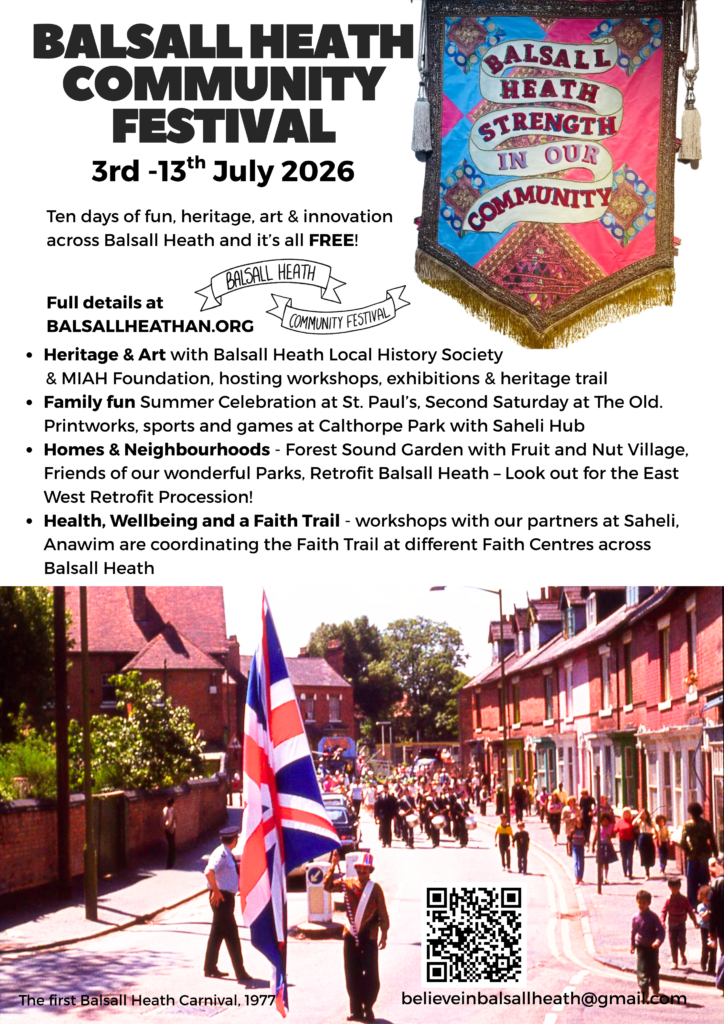
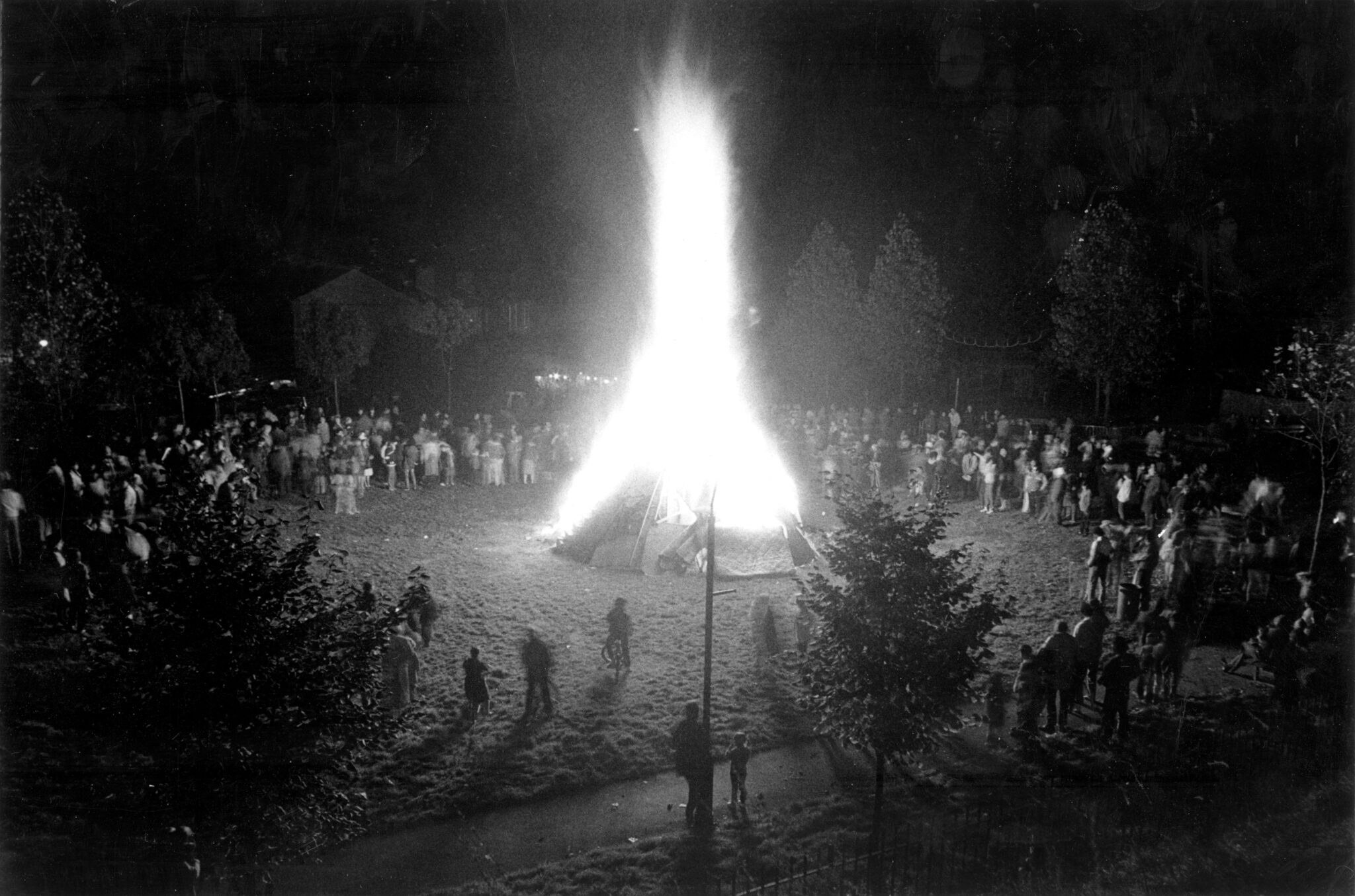
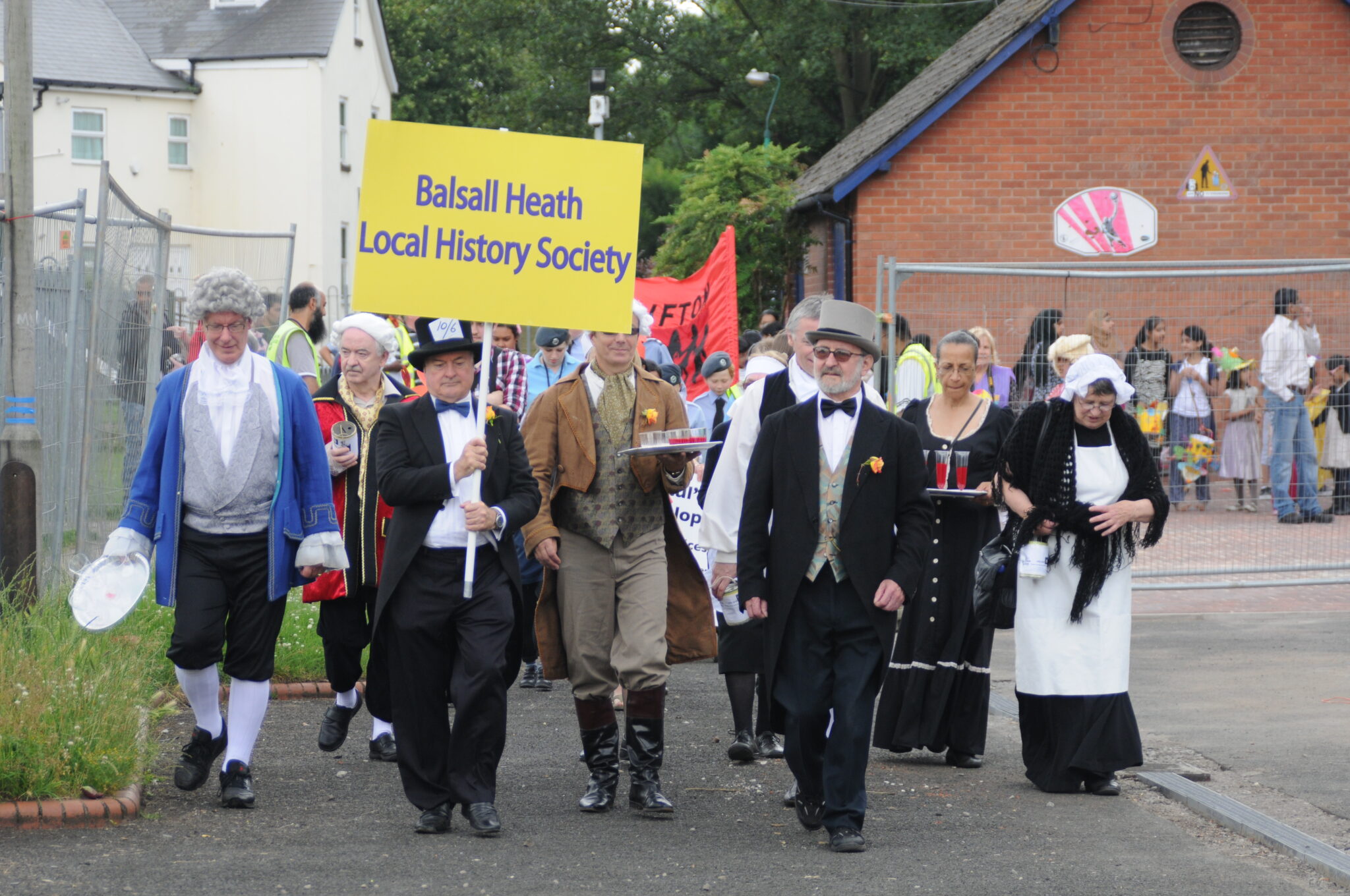
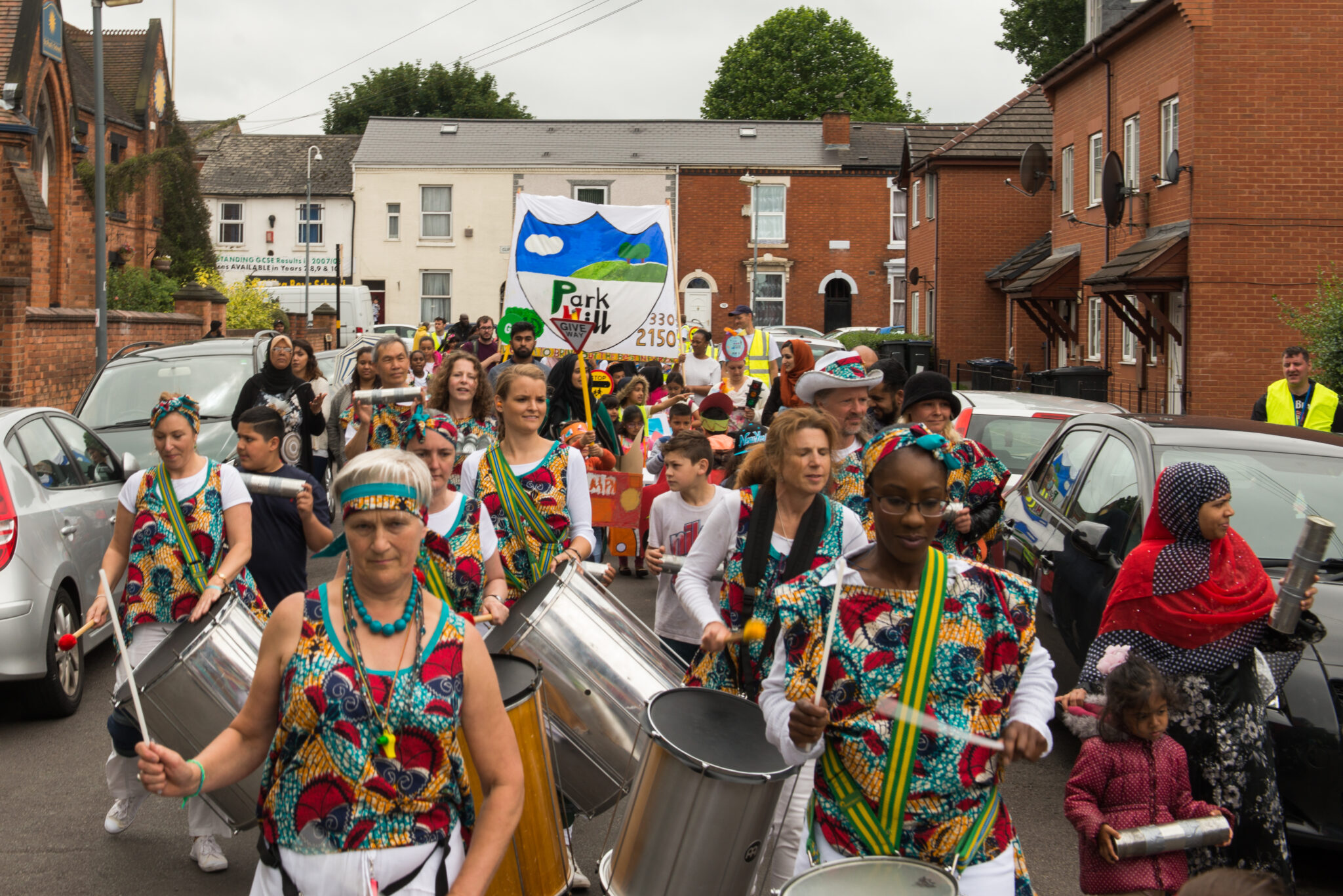
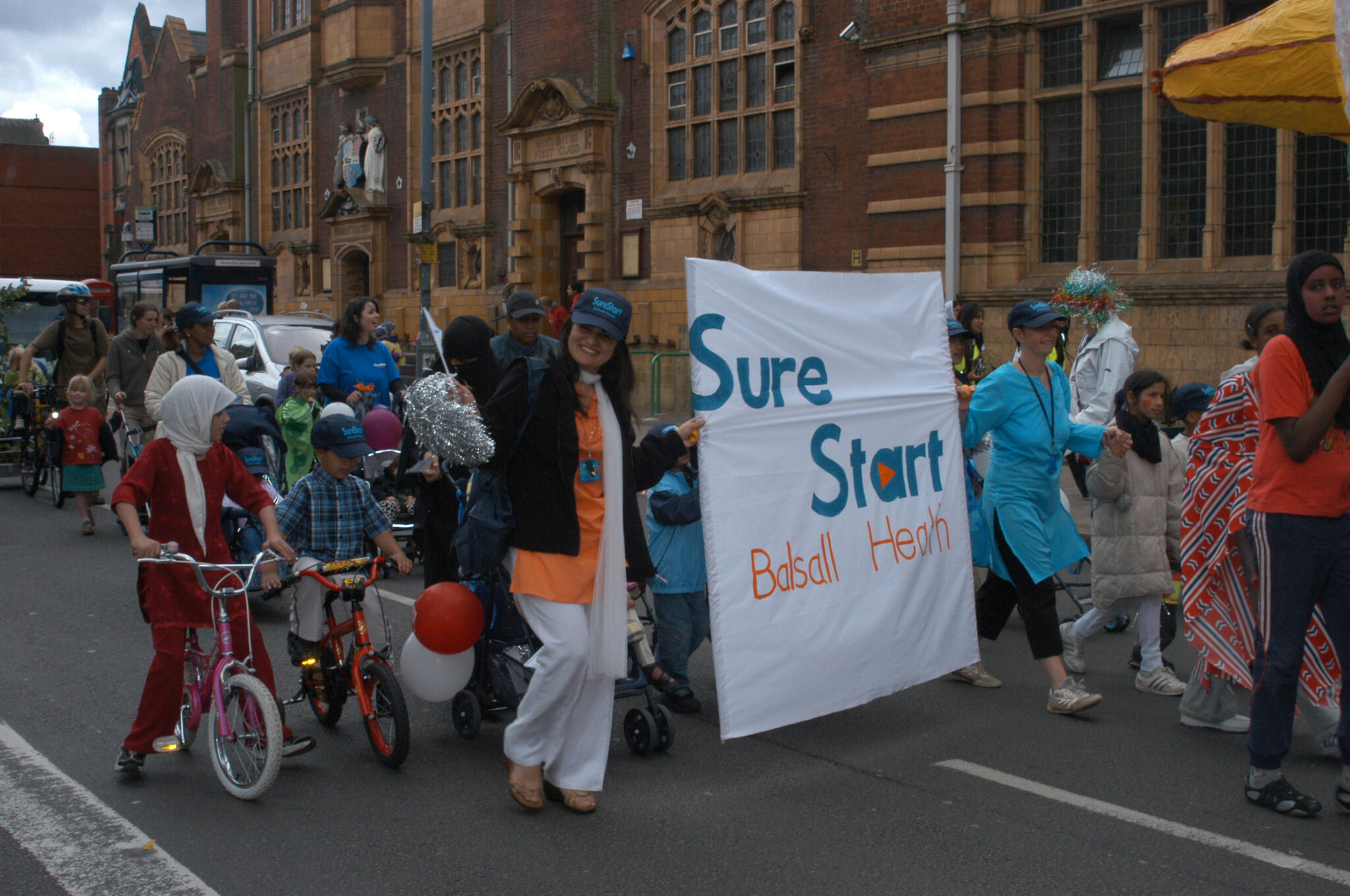
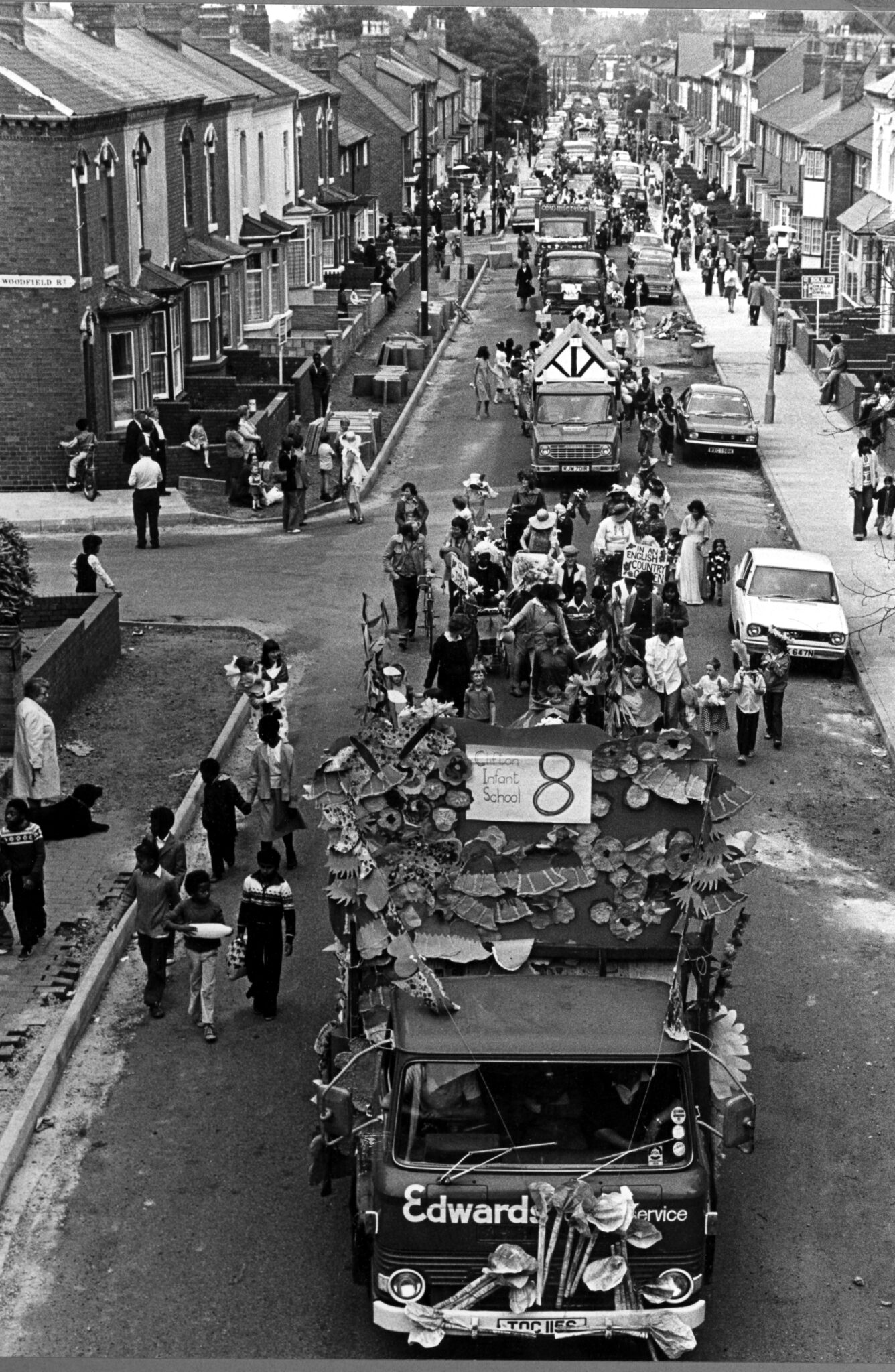
Balsall Heath Local History Society bring the Carnival back to life in a touring exhibition, ready for Balsall Heath Community Festival! #BHCFest26. The Festival runs from 3rd to 13th July and the FREE Touring Carnival Exhibition will be at many of the venues across Balsall Heath.
A Symbol of Hope
‘The Carnival was never just a Carnival. It was a symbol of hope, an agent for change and a showcase for our rich cultural diversity. It is part of our heritage and our community identity.’
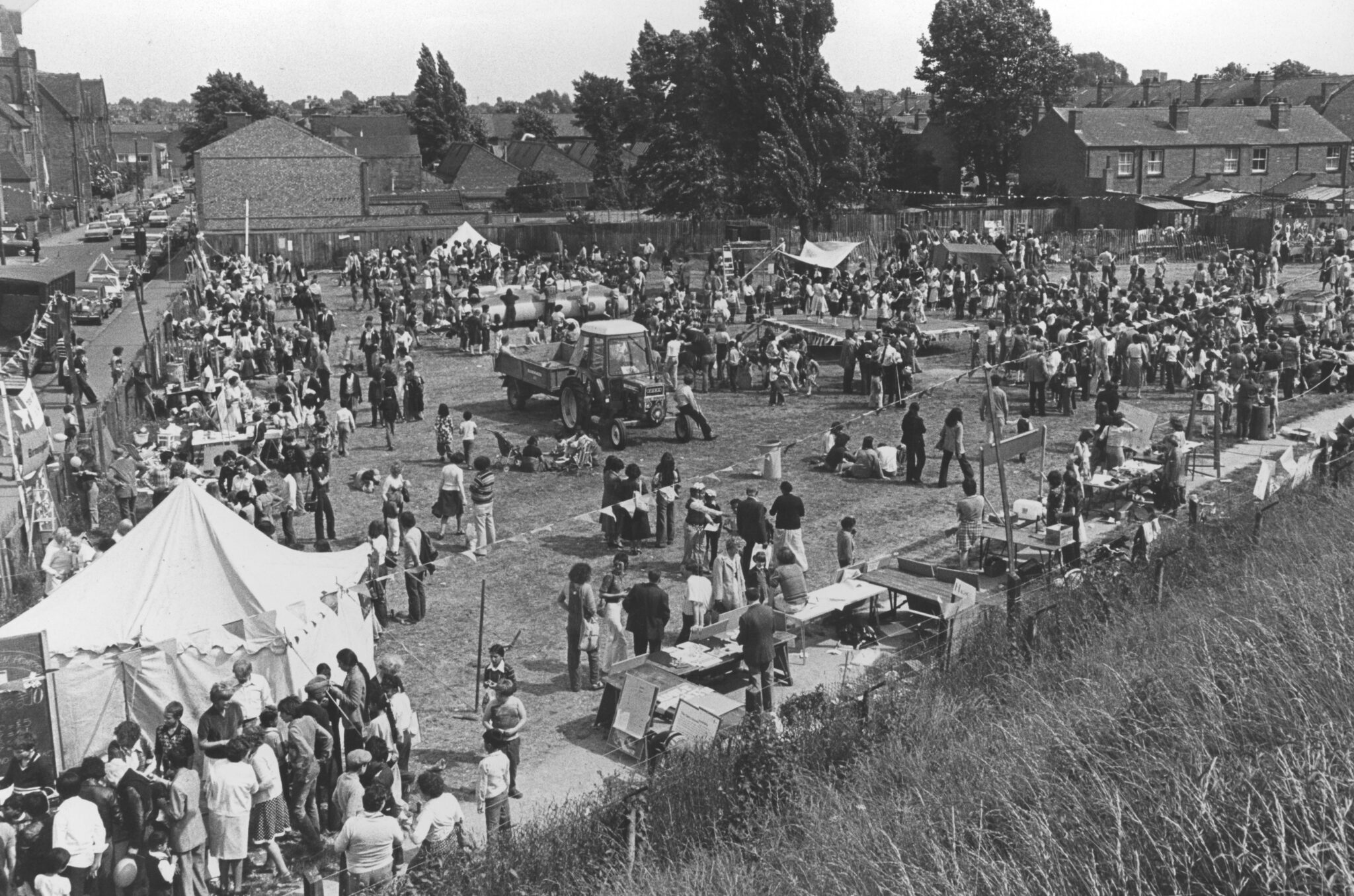
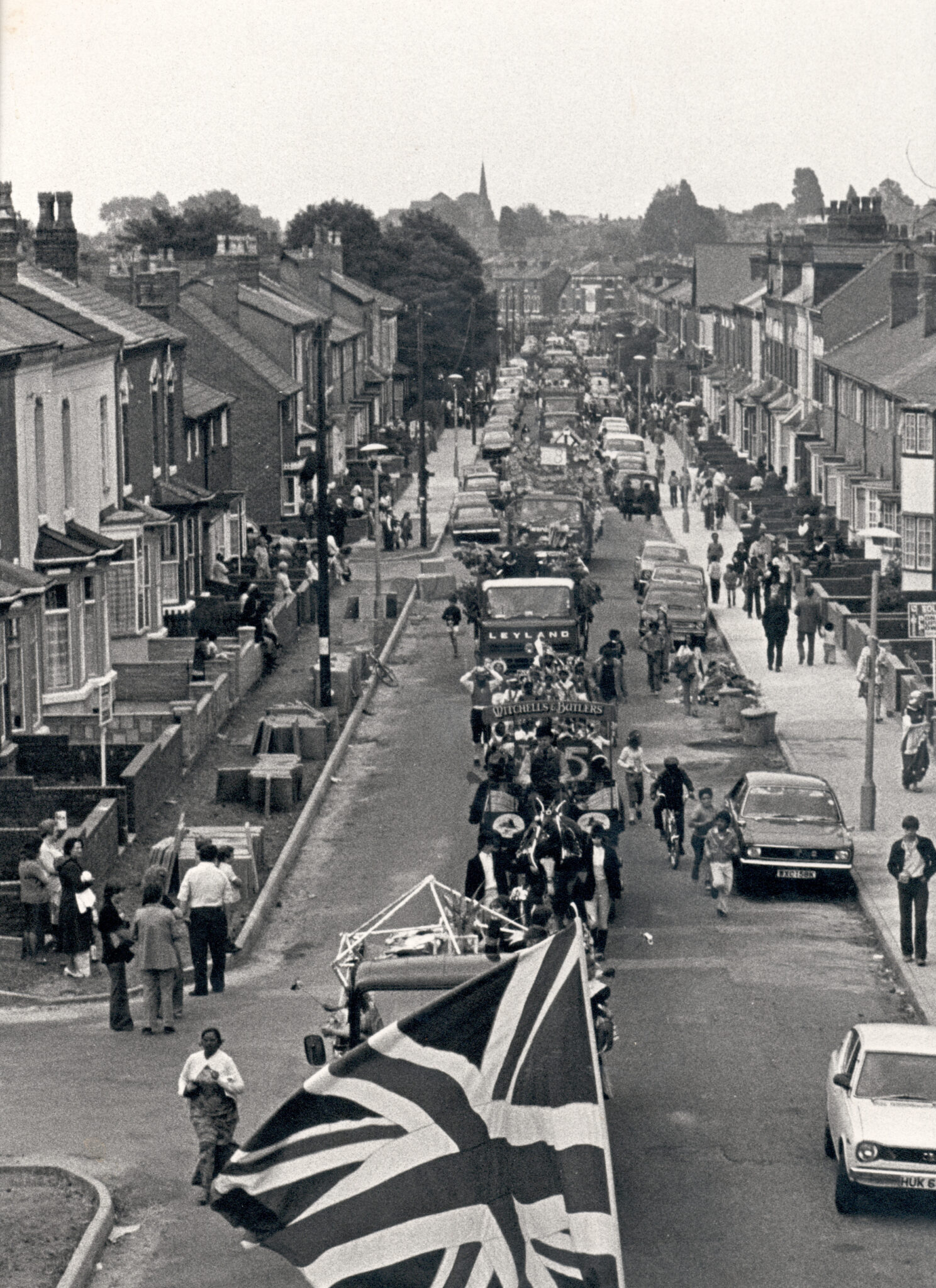
When it started in 1977, the procession wound through streets which were still pockmarked with bomb sites and derelict housing. The area was only just beginning to recover from damage inflicted over thirty years previously in the Second World War. The City Council had cleared a huge swathe of older housing but the neighbourhood as a whole was in an appalling condition: poor housing; high unemployment; dreadful health statistics.
However, it was rich with the biggest asset of all – residents who were committed to rebuilding the community. Hundreds of people created the Carnival and thousands of people took part in it. The success for nearly fifty years reflects our achievement in becoming the thriving Balsall Heath of today.
Balsall Heath Community Festival is not the same as the old Carnival but it has risen from its ashes. But the Festival is again a symbol of hope as all parts of the community have come together to celebrate and to reaffirm our identity as diverse, creative and enterprising.
Balsall Heath for Balsall Heathans
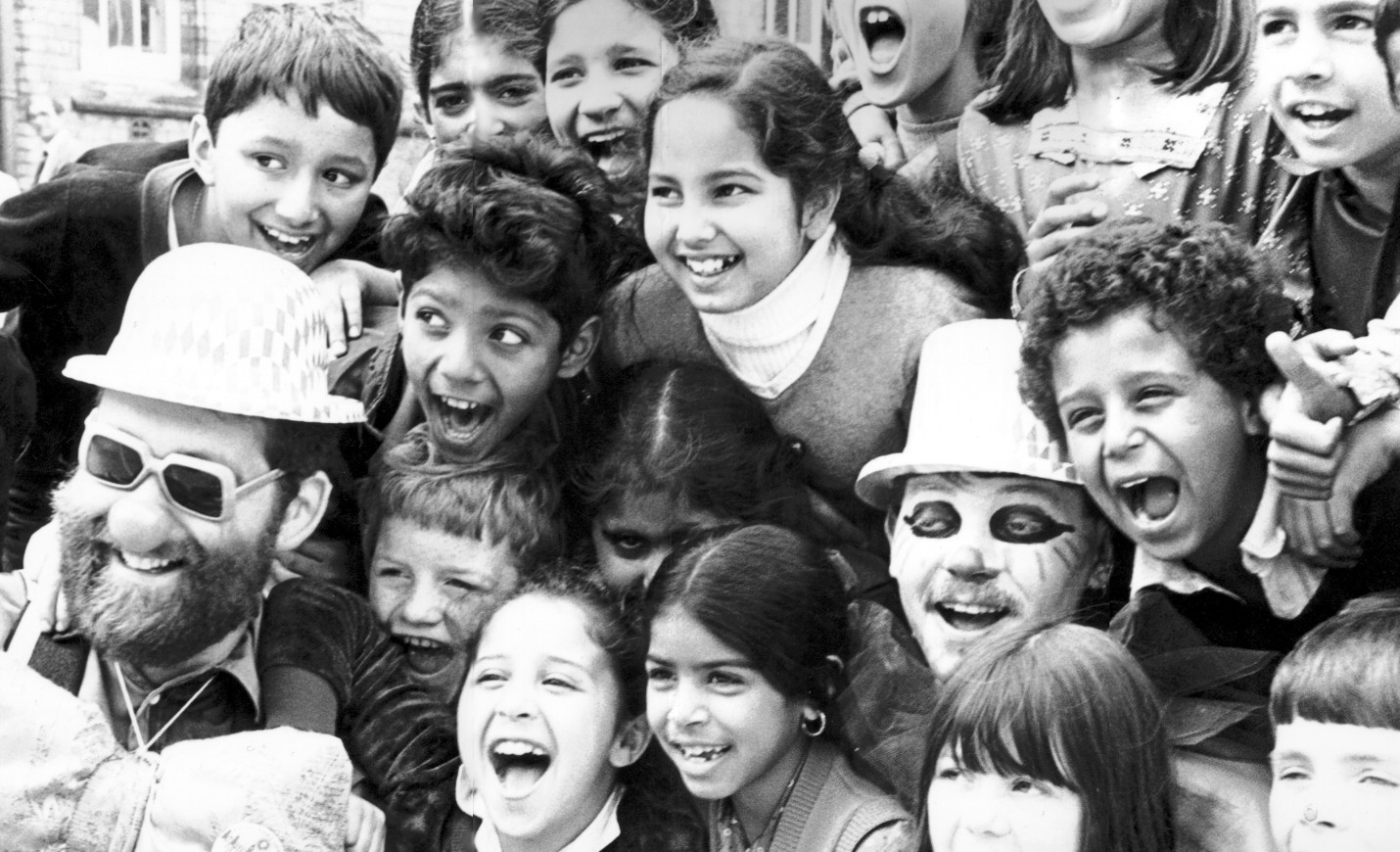
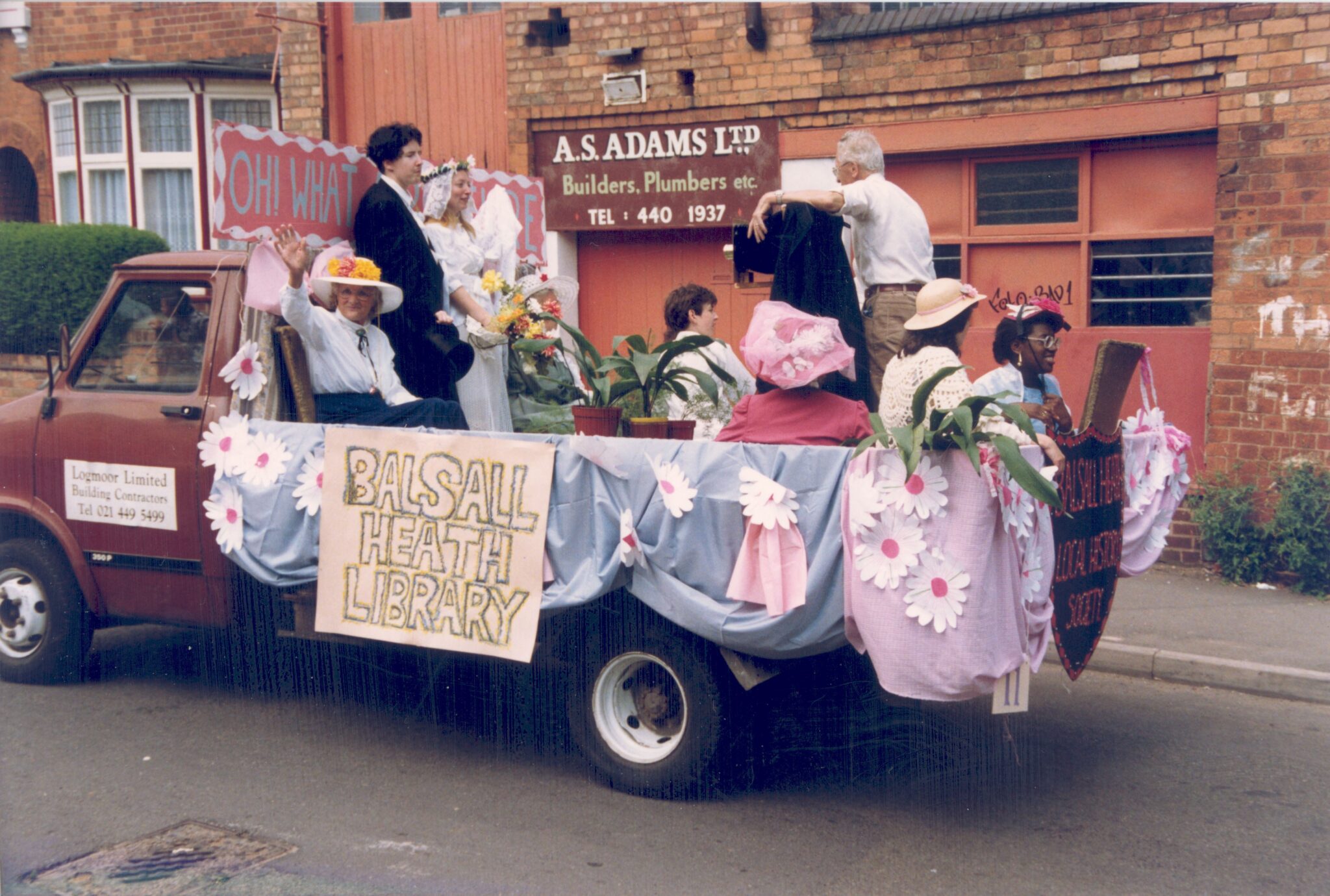
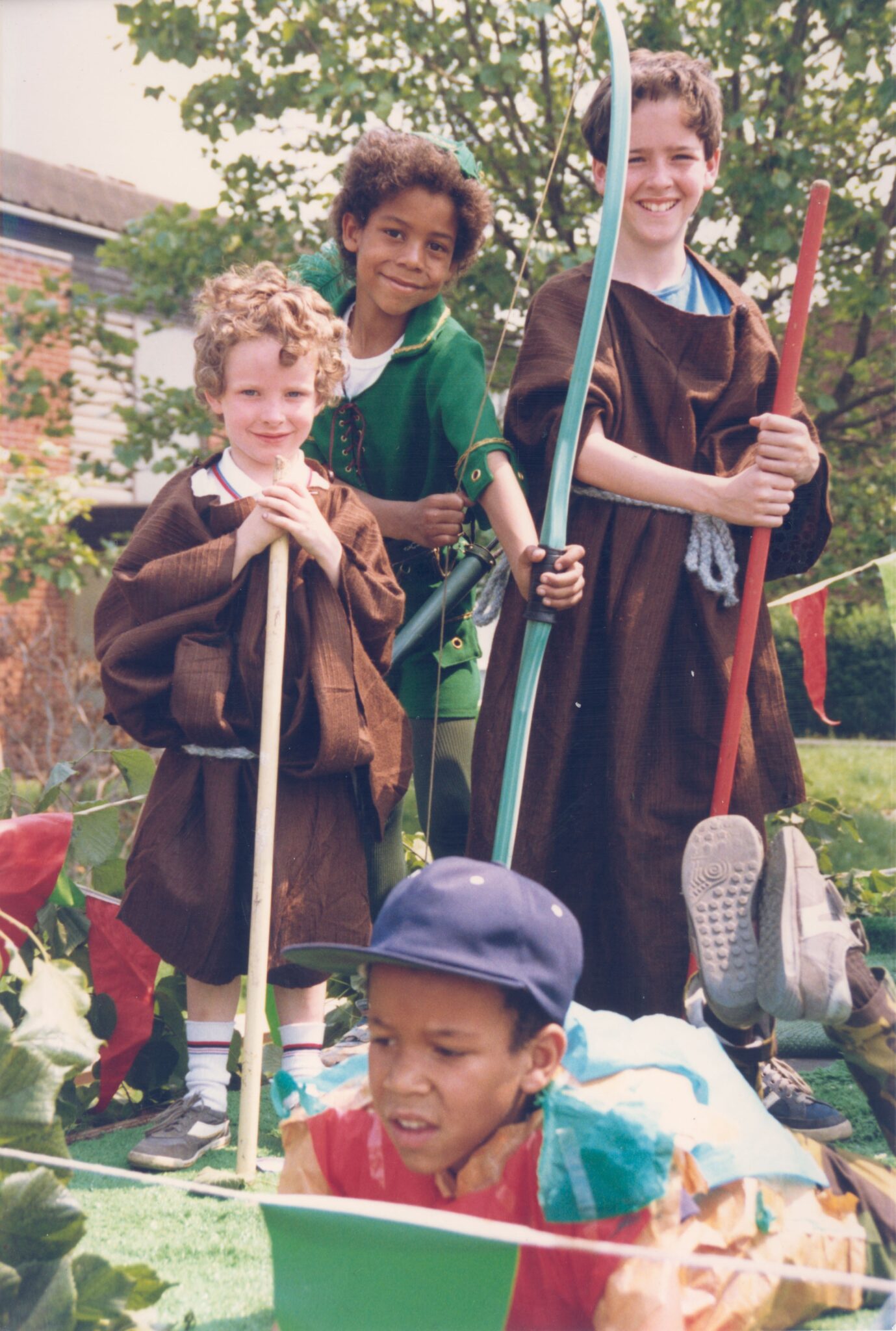
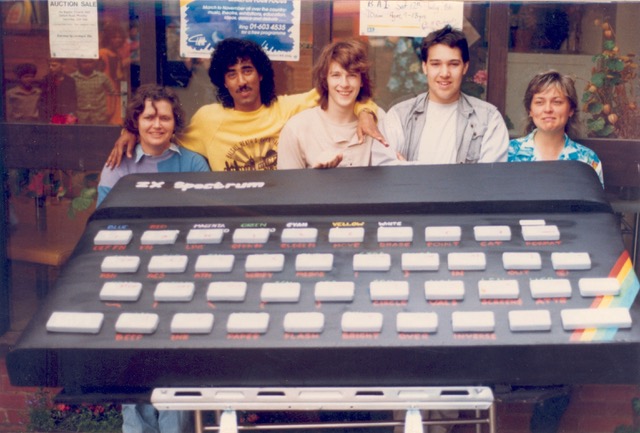
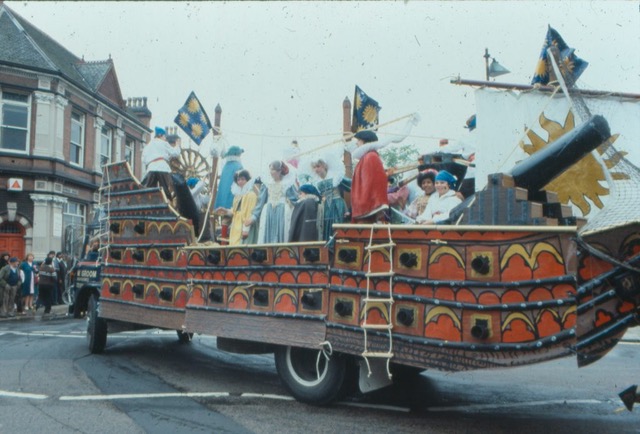
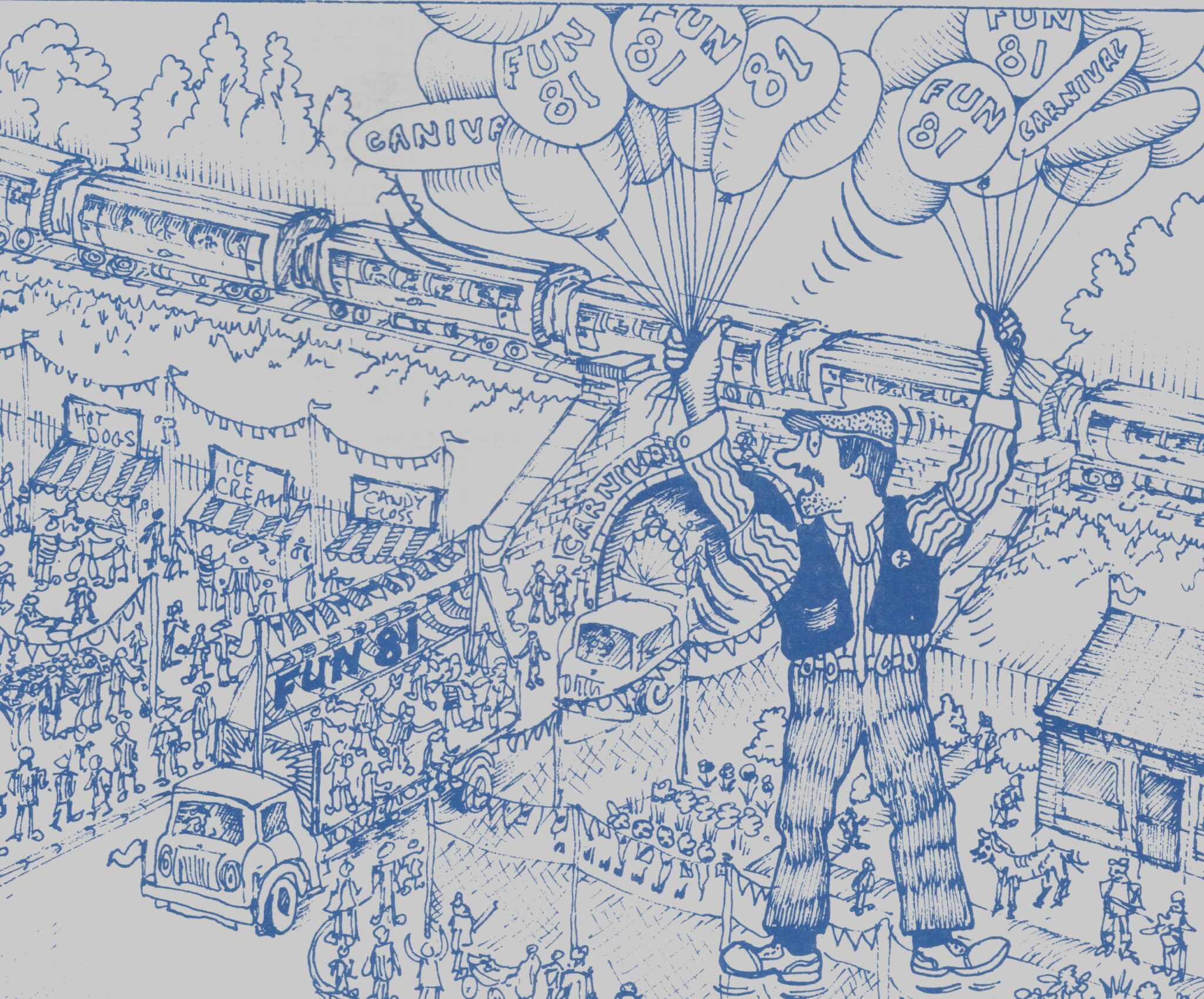
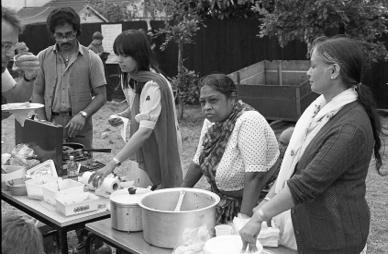
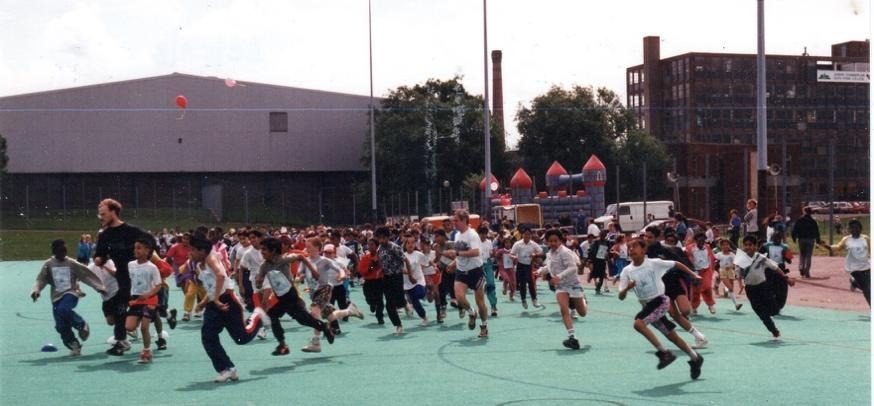
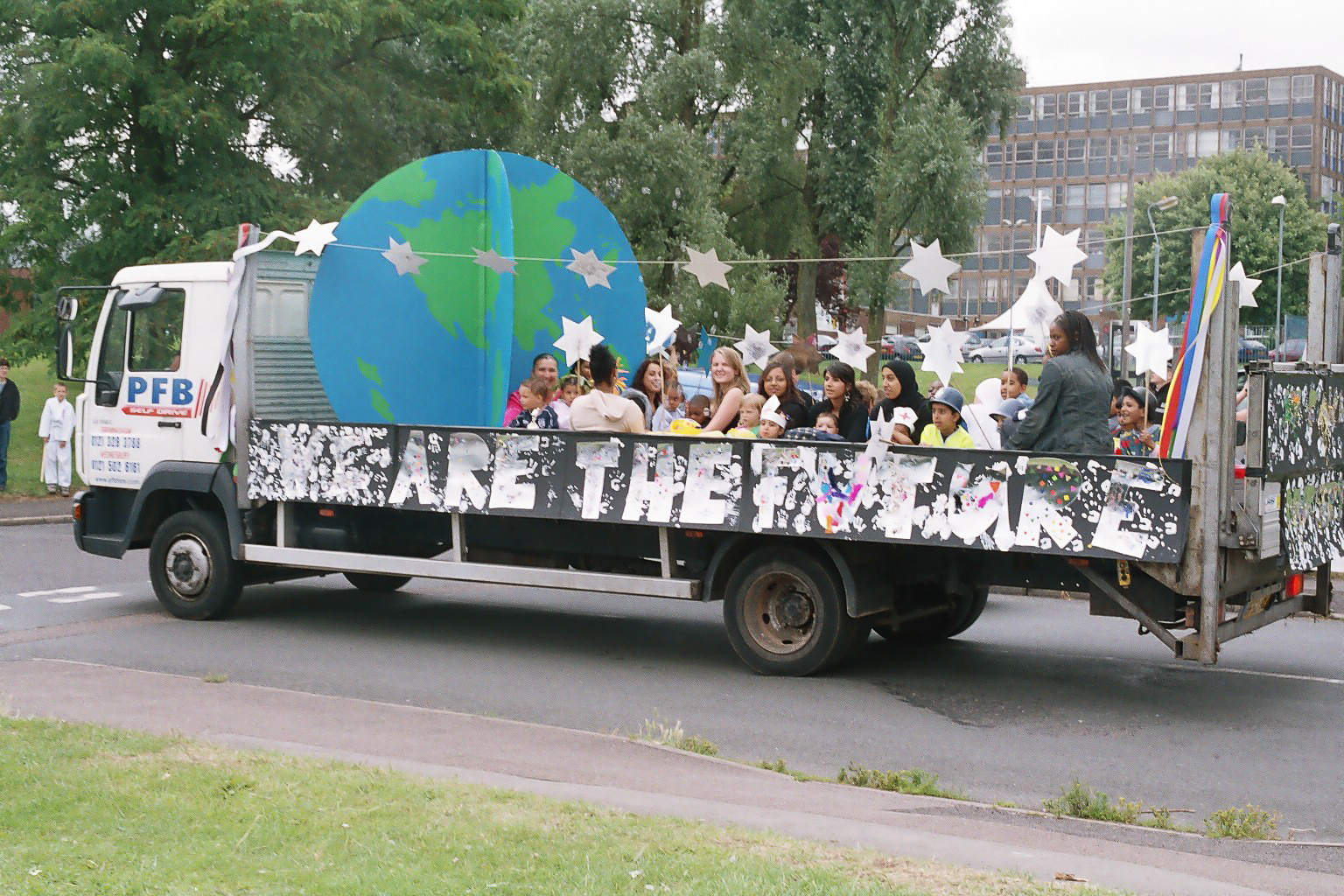
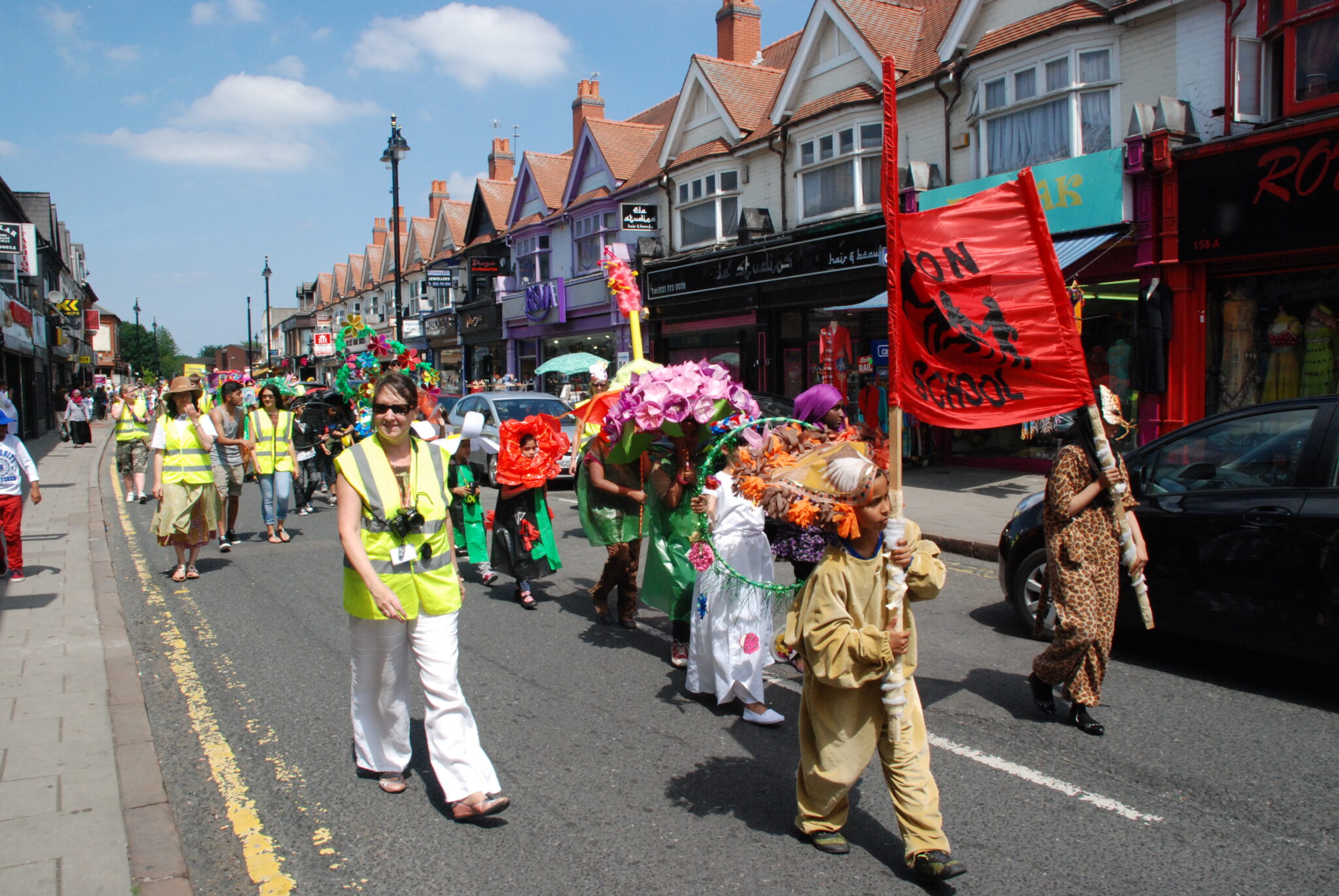
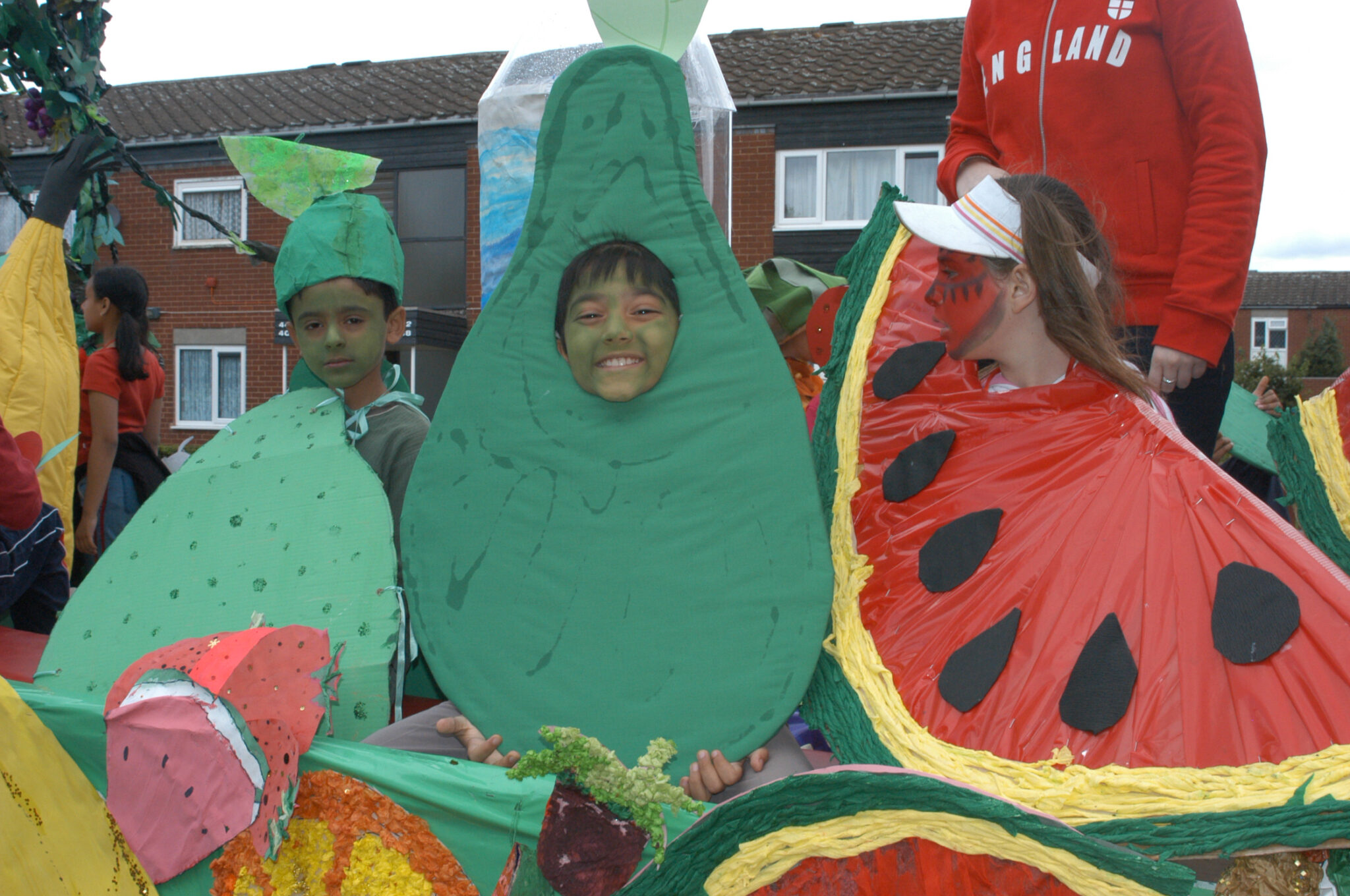
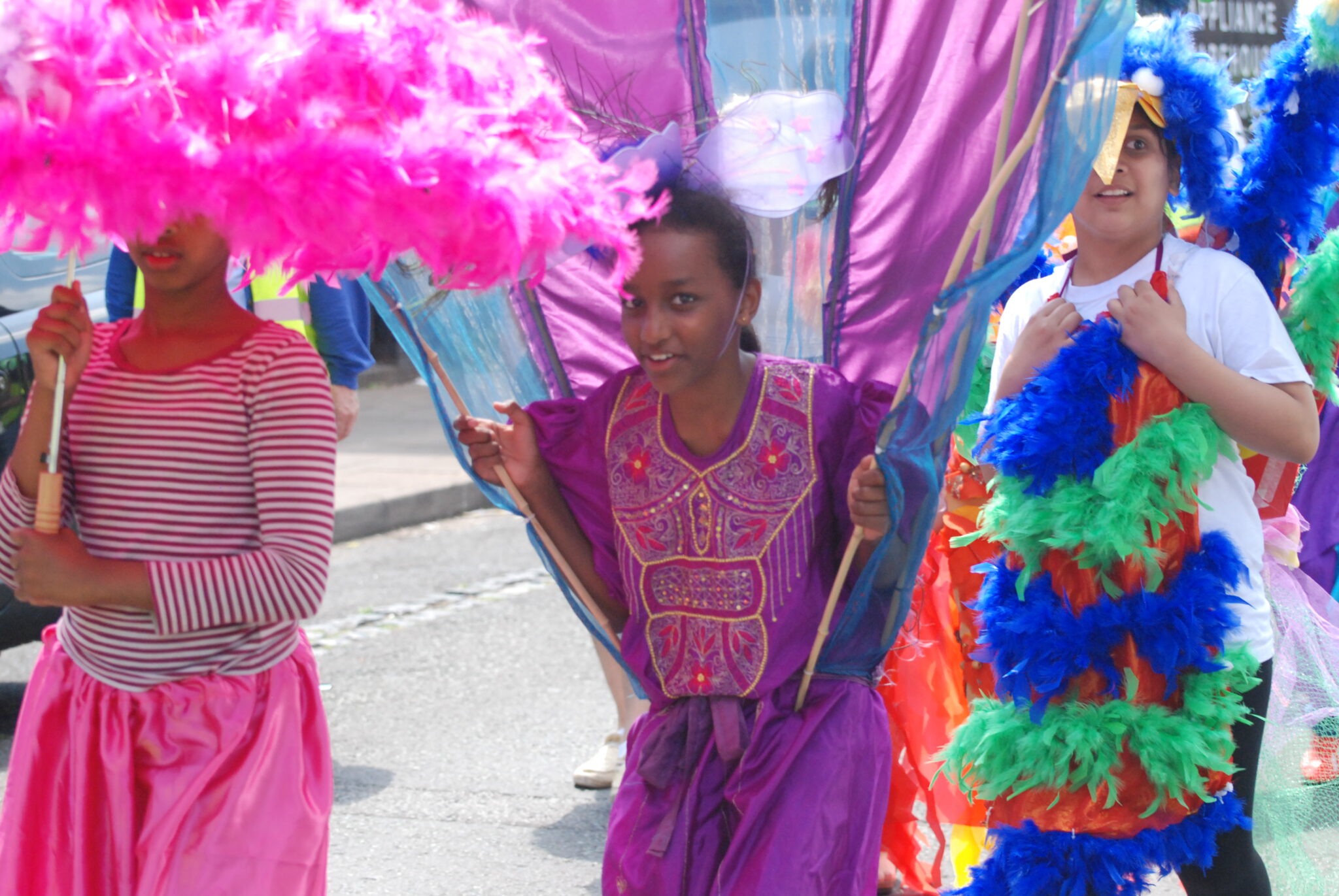
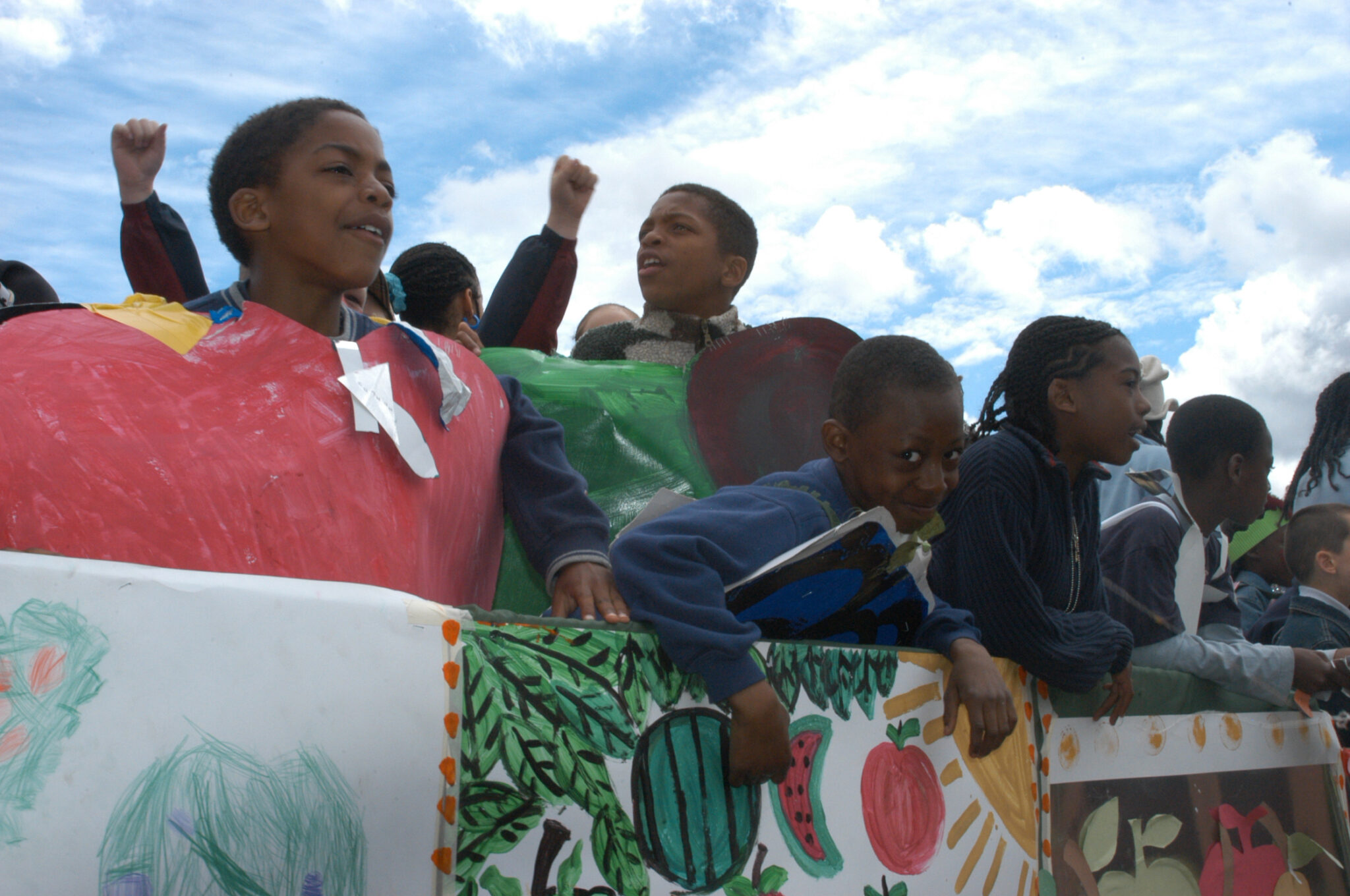
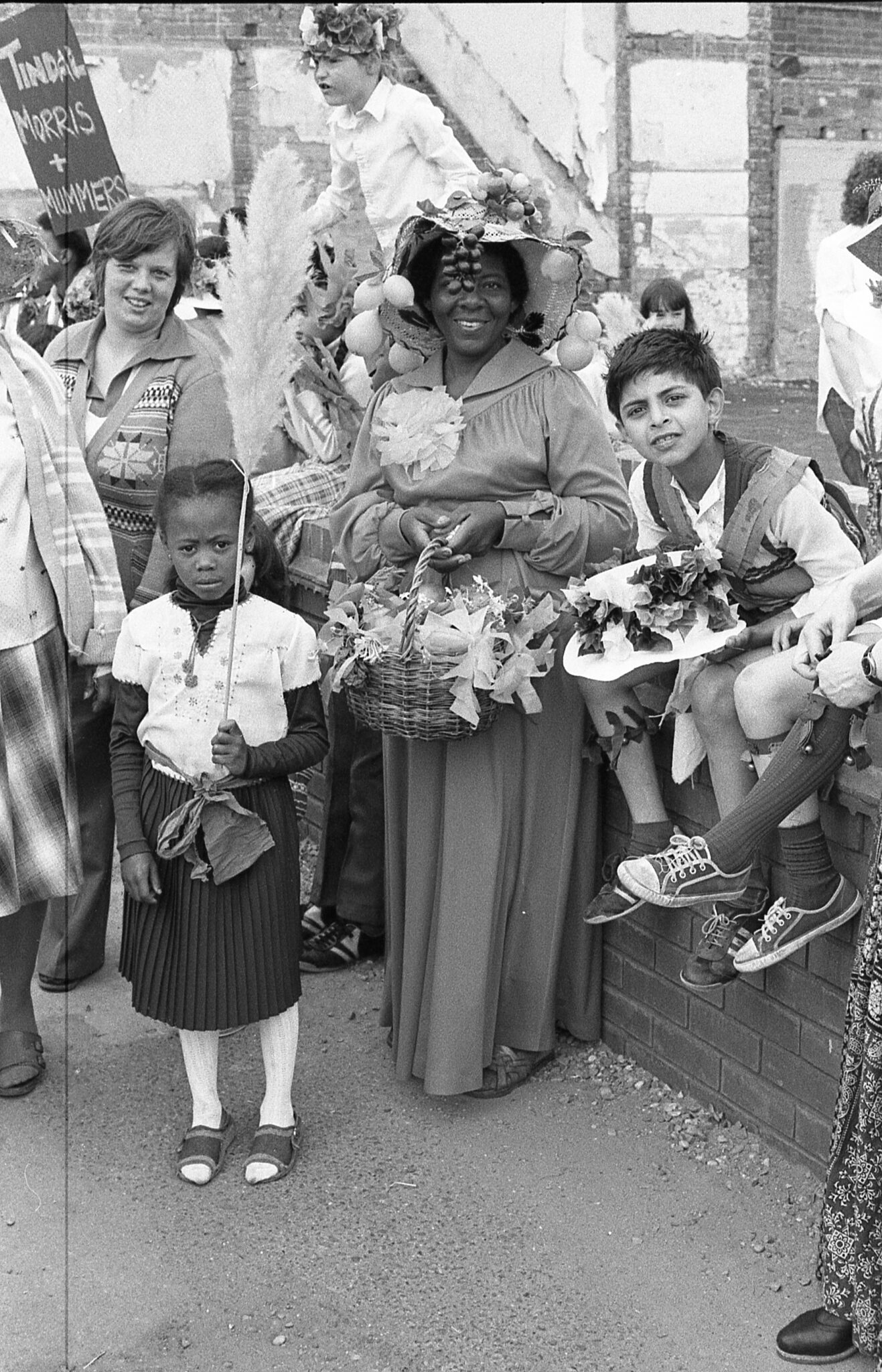
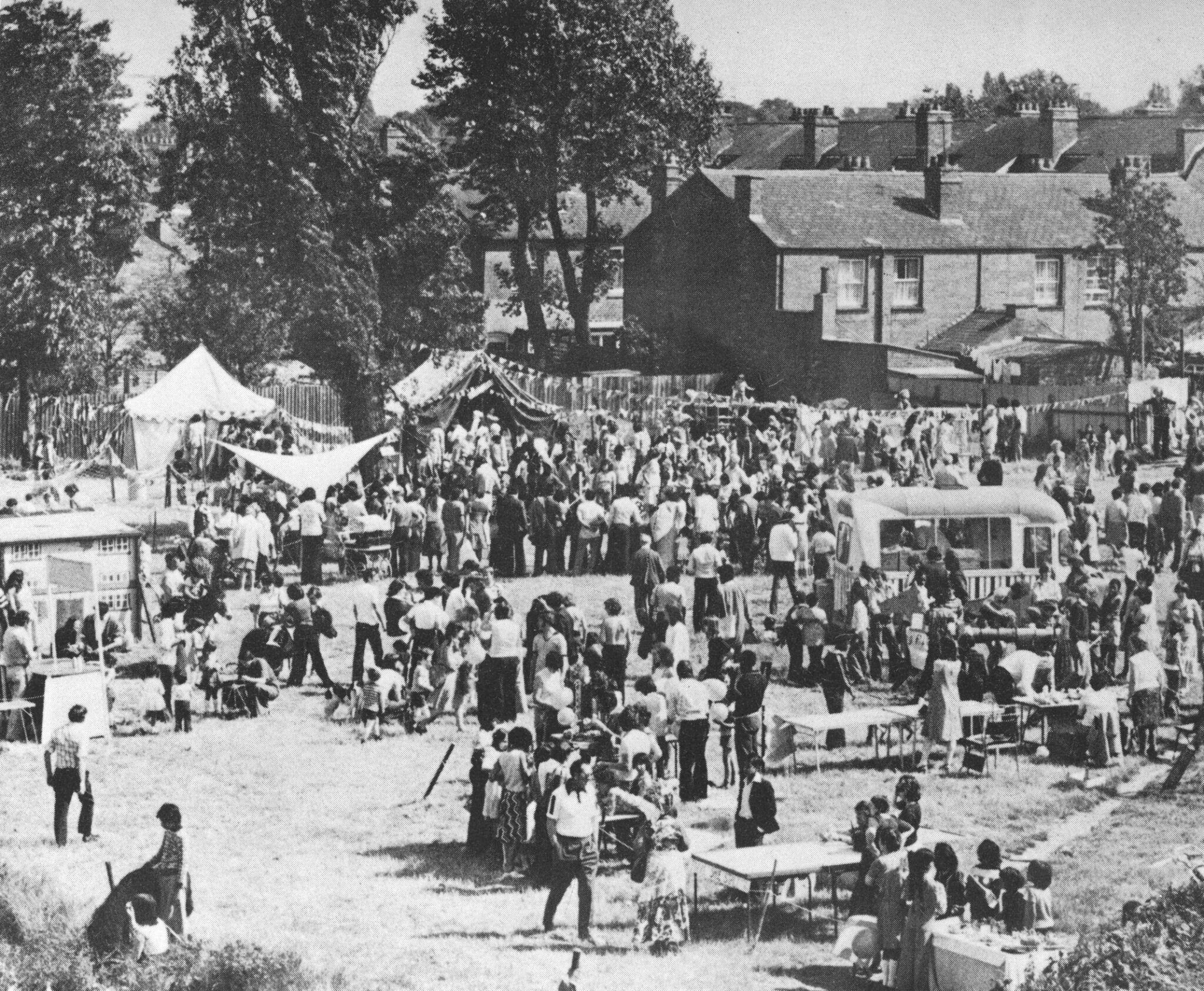
For nearly five decades the Balsall Heath Carnival has been the beating heart of our community – a glorious celebration of diversity, creativity, working together to celebrate our community. Balsall Heath Local History Society volunteers have been looking through the archives – literally thousands of photos and films, artwork and crafty creations, seeing the carnival through the people who have lived it. From the legendary floats of the 1970s and 80s to all the music, dance and glitter of more recent carnivals.
Expect fabulous and fantastic costumes, unusual sporting competitions, artwork extraordinaire and the moving, funny and proud stories of the people who have made it happen year after year.
Whether you’ve marched in the processions, cheered from the pavements or entirely new to the Carnival, this exhibition is a love letter to the resilience, unity and a bit of craziness that is Balsall Heath.
Get involved
There’ll be activities for young and old, reliving activities from the Carnival and Fair of the past, as well as opportunities to find yourself in the photos and document your own stories of the carnival.
Balsall Heath Local History Society Gazette is out with news of upcoming events – #BHCFest26, Carnival Exhibition, Mary Bodfish presentation and Liz Berry at our special meeting on 9th July for ‘Memories of Balsall Heath’.
The monthly newsletter published by the Balsall Heath Local History Society (BHLHS) in Birmingham, UK. It serves as both a community bulletin and a historical record for the area.
What’s Inside the Gazette?
The publication typically includes a mix of current news and historical research:
Historical Articles: Local stories and accounts of local landmarks – the social history of the Balsall Heath and Highgate areas.
Photographic Archives: Rare images of the neighbourhood from various eras.
Society Updates: Information on upcoming monthly meetings, guest speakers, and local heritage events.
It is published monthly and has been a staple of the society for years with digital archives dating back to at least 2010. Distributed to members, recent and archived editions are also made available as PDF downloads on the official BHLHS website and on the Heathan.
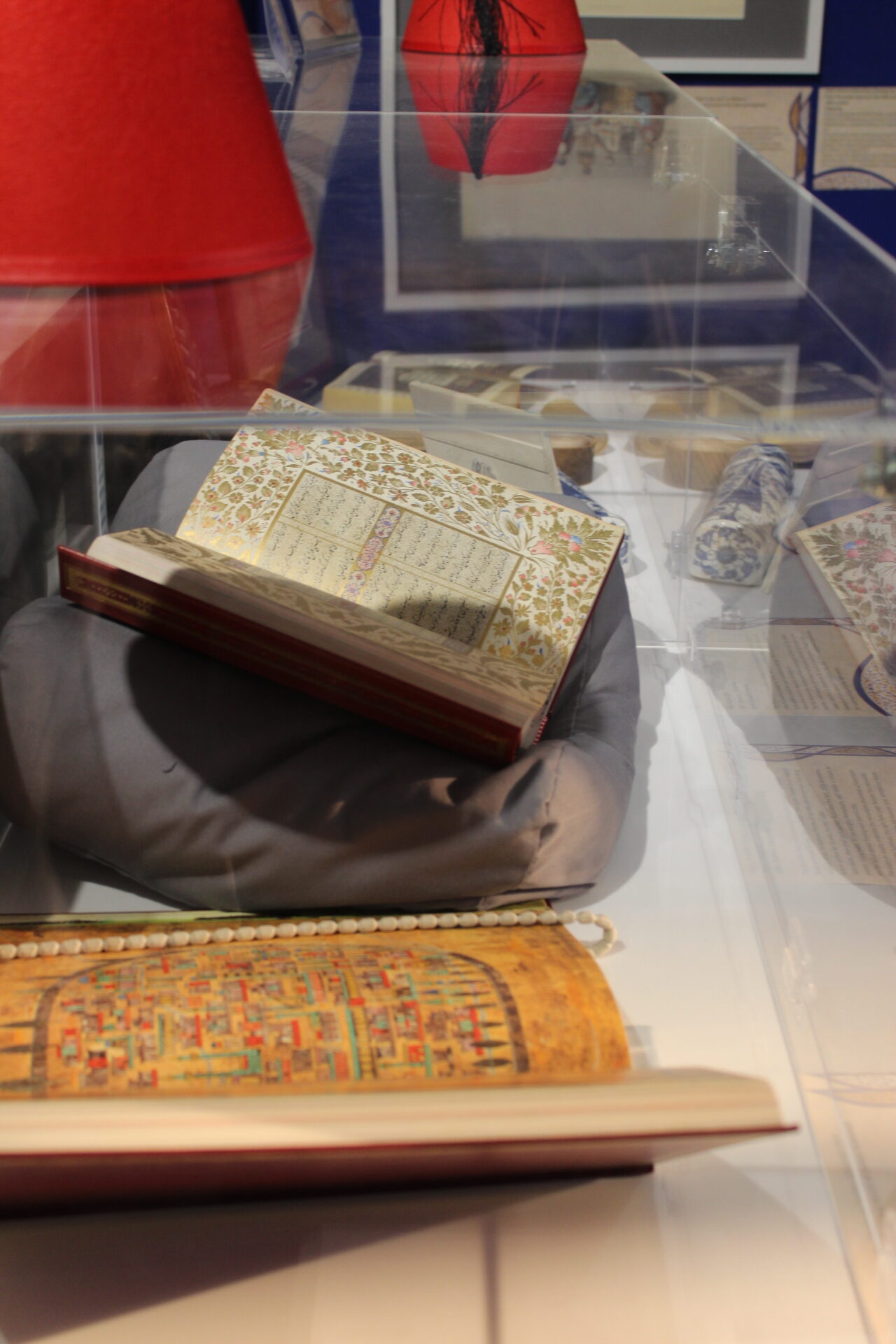
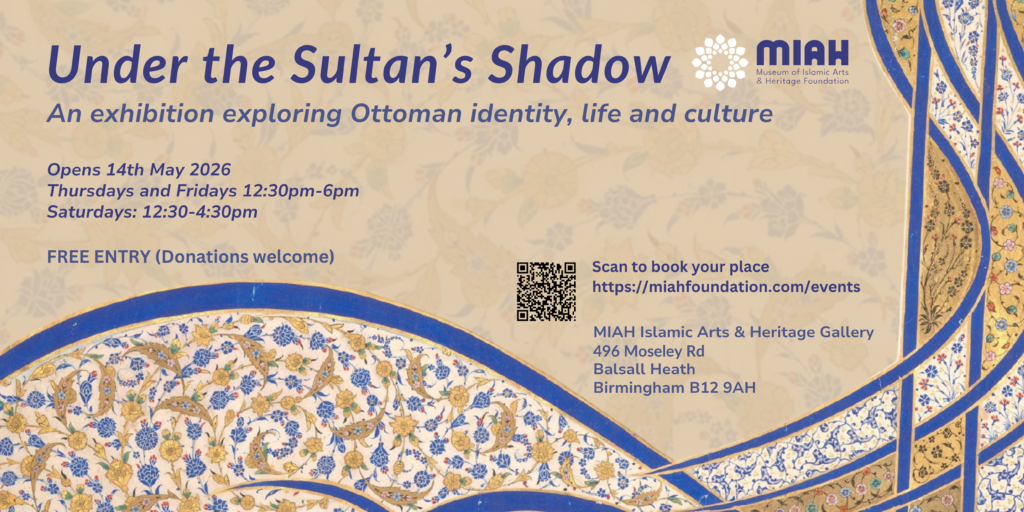
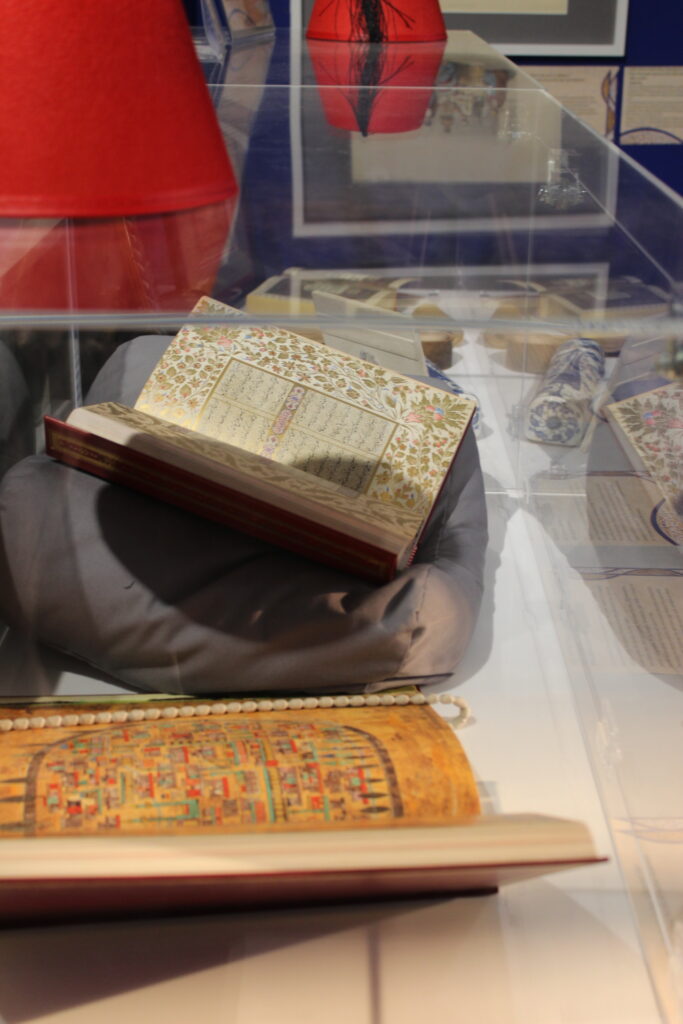
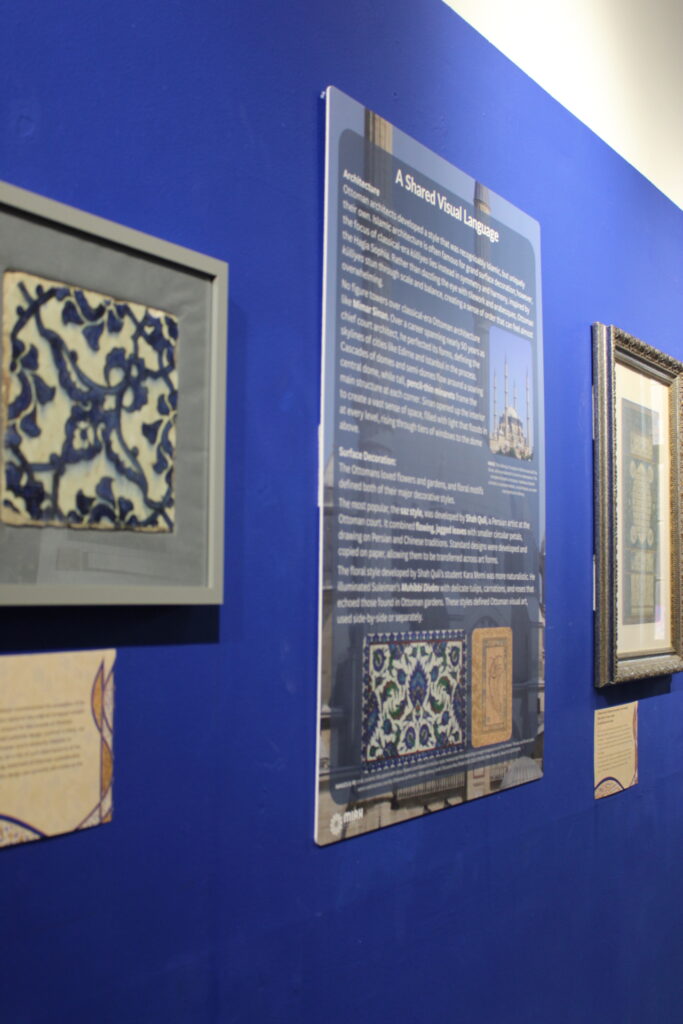
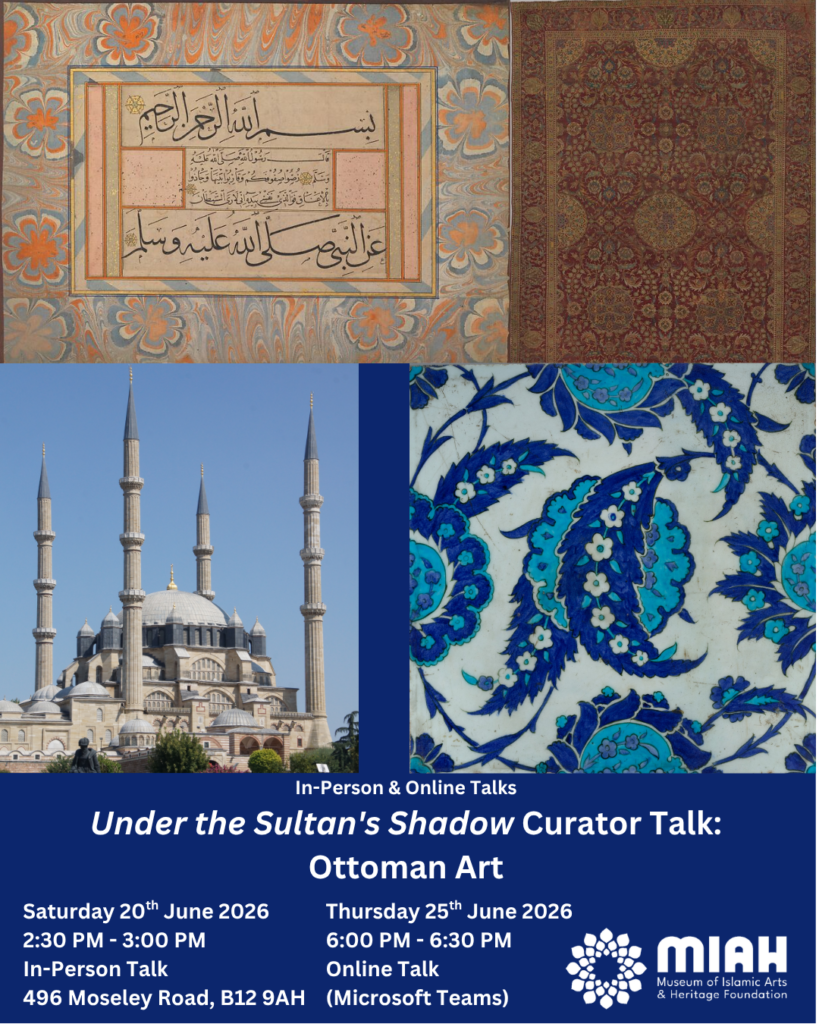
The Museum of Islamic Arts & Heritage (MIAH) Foundation’s latest exhibition, Under the Sultan’s Shadow: How Imperial Identity Shaped Ottoman Life and Culture, examines how the Ottoman Empire consciously built its identity by drawing upon different historic empires, and wider Islamic traditions of the lands it ruled. Through objects, manuscripts, maps, and artwork, visitors can discover how these influences shaped Ottoman society, culture, and public life.
Highlights include a facsimile Qur’an copied by the renowned Ottoman calligrapher Sheikh Hamdullah, maps by the famous explorer Piri Reis, and a sixteenth-century tile from the Dome of the Rock that once adorned al-Masjid al-Aqsa
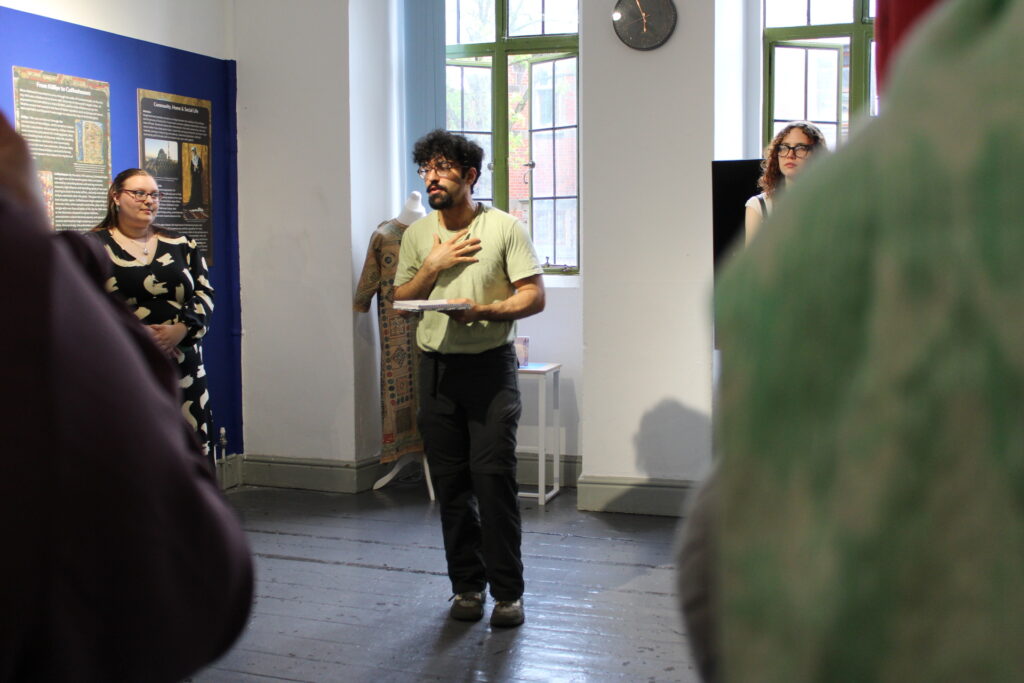
Based in the gallery space in Moseley Community Hub on Moseley Road (which used to be the Old Moseley School of Art) the exhibition brings together objects from private collections that are being displayed together for the first time. Alongside the exhibition, MIAH is delivering a programme of workshops, talks, and family-friendly activities throughout the summer.
The exhibition is currently scheduled to run over the coming months, with hopes of extending its stay should additional funding be secured.
For those keen to explore the exhibition in greater depth, MIAH is also hosting a series of monthly curator talks. The next session, Ottoman Art, will explore how Ottoman artists drew inspiration from Byzantine architecture, Persian motifs, Chinese porcelain, and Abbasid calligraphy, transforming these influences into a distinctive Ottoman visual language during the reign of Sultan Suleiman the Magnificent.
Future talks in the series will cover Ottoman art, architecture, and the later Ottoman period, giving visitors a deeper insight into the exhibition’s themes and the process behind its creation.
Who are the MIAH Foundation and how can you find us? Founded in 2020, the MIAH Foundation works to promote awareness and understanding of Islamic arts, heritage, and culture through exhibitions, education programmes, workshops, and events. Its long-term aim is to establish the UK’s first independent museum dedicated to the arts and heritage of Muslims and the Islamic world.
We are located on Moseley Road in the Moseley Community Hub:
MIAH Foundation Islamic Arts & Heritage Gallery 496 Moseley Rd Balsall Heath Birmingham B12 9AH
Balsall Heath Community Festival starts in just 23 Days! We’ve been finalising events, preparing banners, and will have all out at next Second Saturday, 13th June 2026, The Old Print Works, to put the finishing touches together with everyone.
To reflect the old Carnival preparations, we’ll be painting a giant bill board this Saturday, listing all the fabulous activities, all FREE over the ten days of the festival.
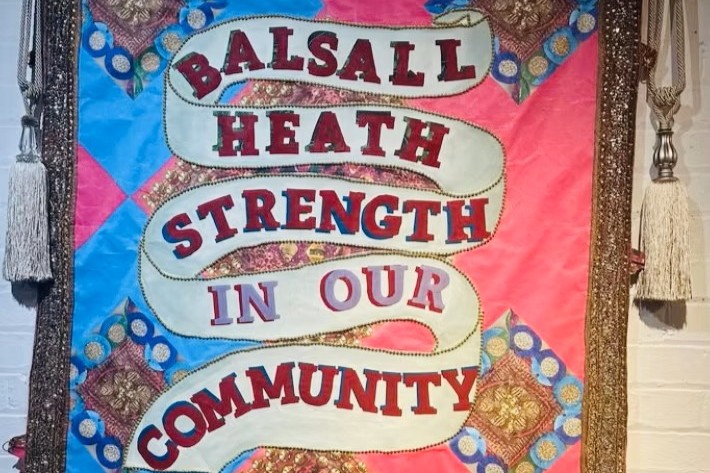
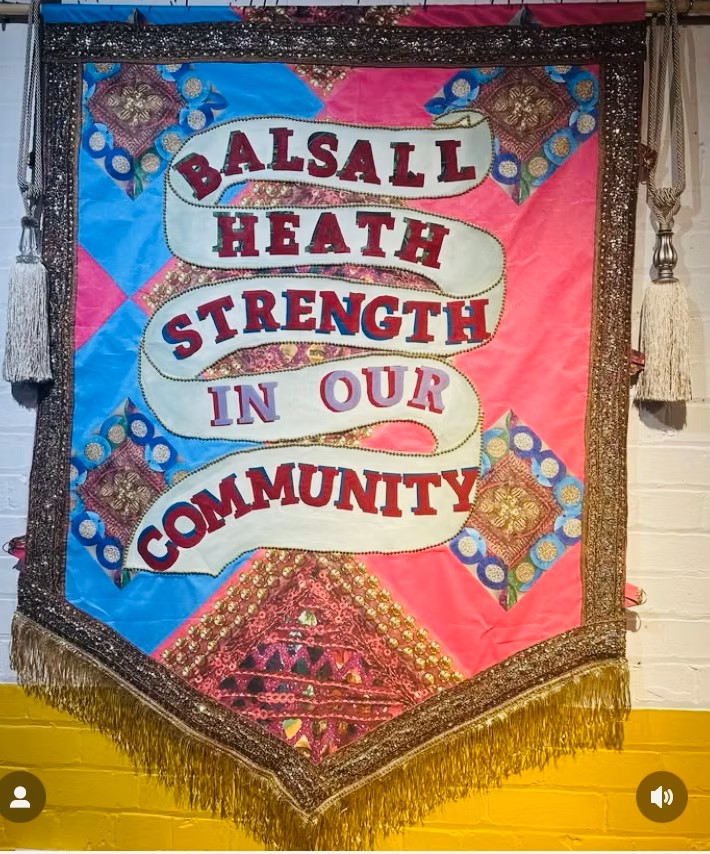
Jane Thakoordin worked with Sewing Solidarity, a collaborative project with GAP Arts a young people focused creative project in Balsall Heath, 2025. Working over several sessions, a diverse group of young people engaged in discussions about their relationship to local community. Drawing on the traditions of union banner making, they co-designed a series of small hangings and a larger banner.
The banners are exhibited permanently at GAP Arts and the larger banner is available for local organisations and groups to borrow for community events, as it will be for #BHCFest26 The phrase “Strength in our Community” was written by a young participant of the Sewing Solidarity project.
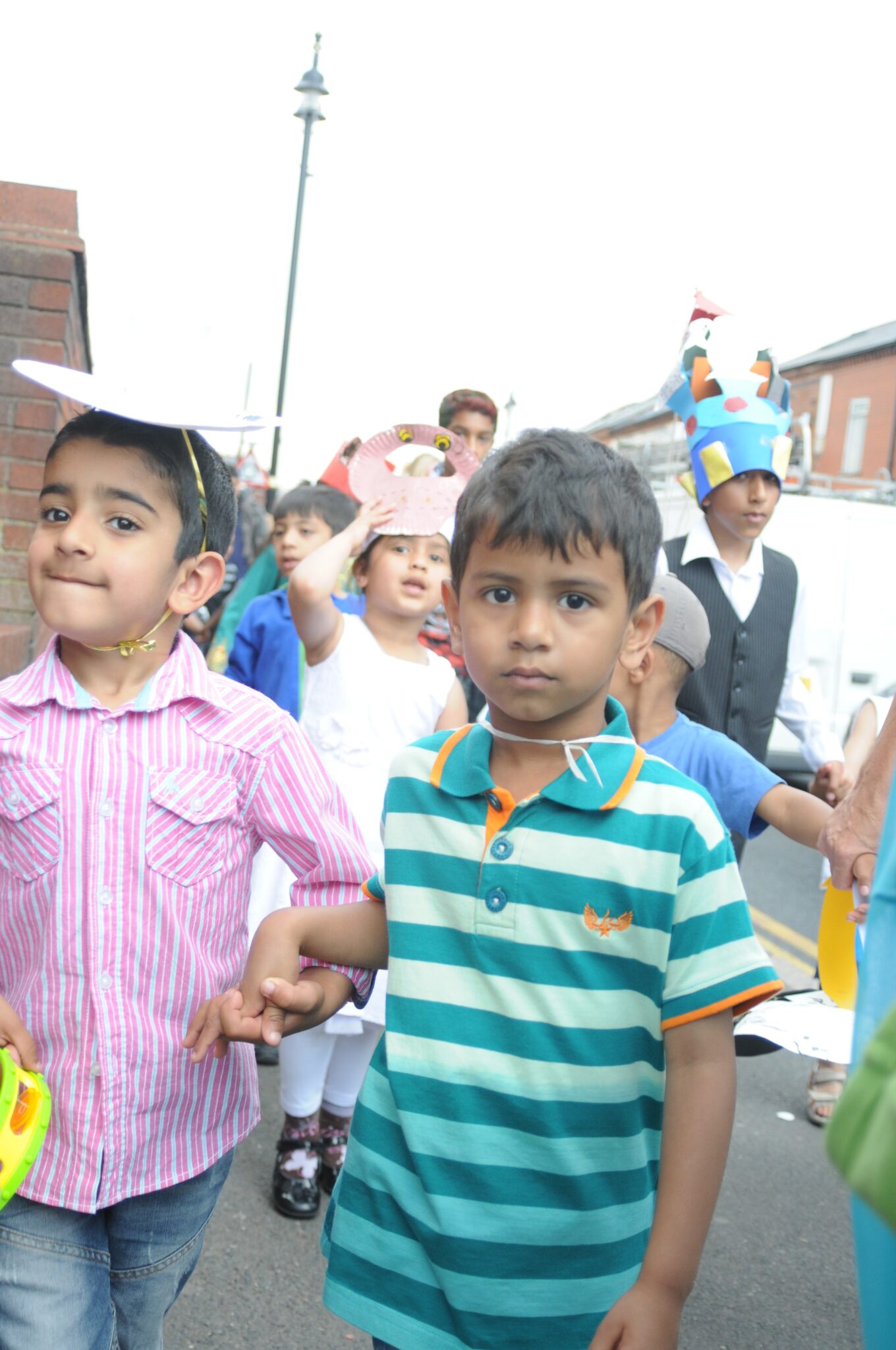
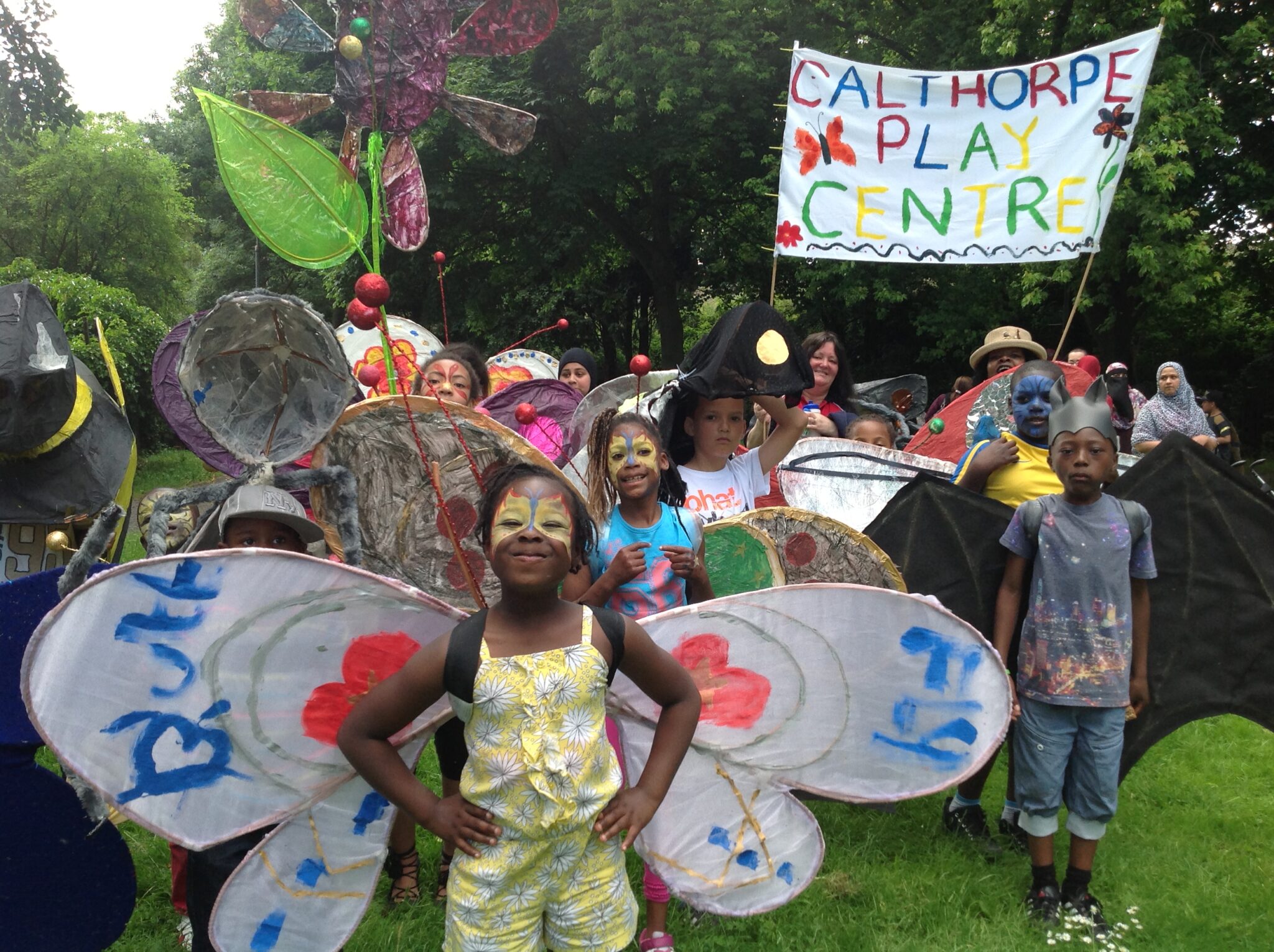
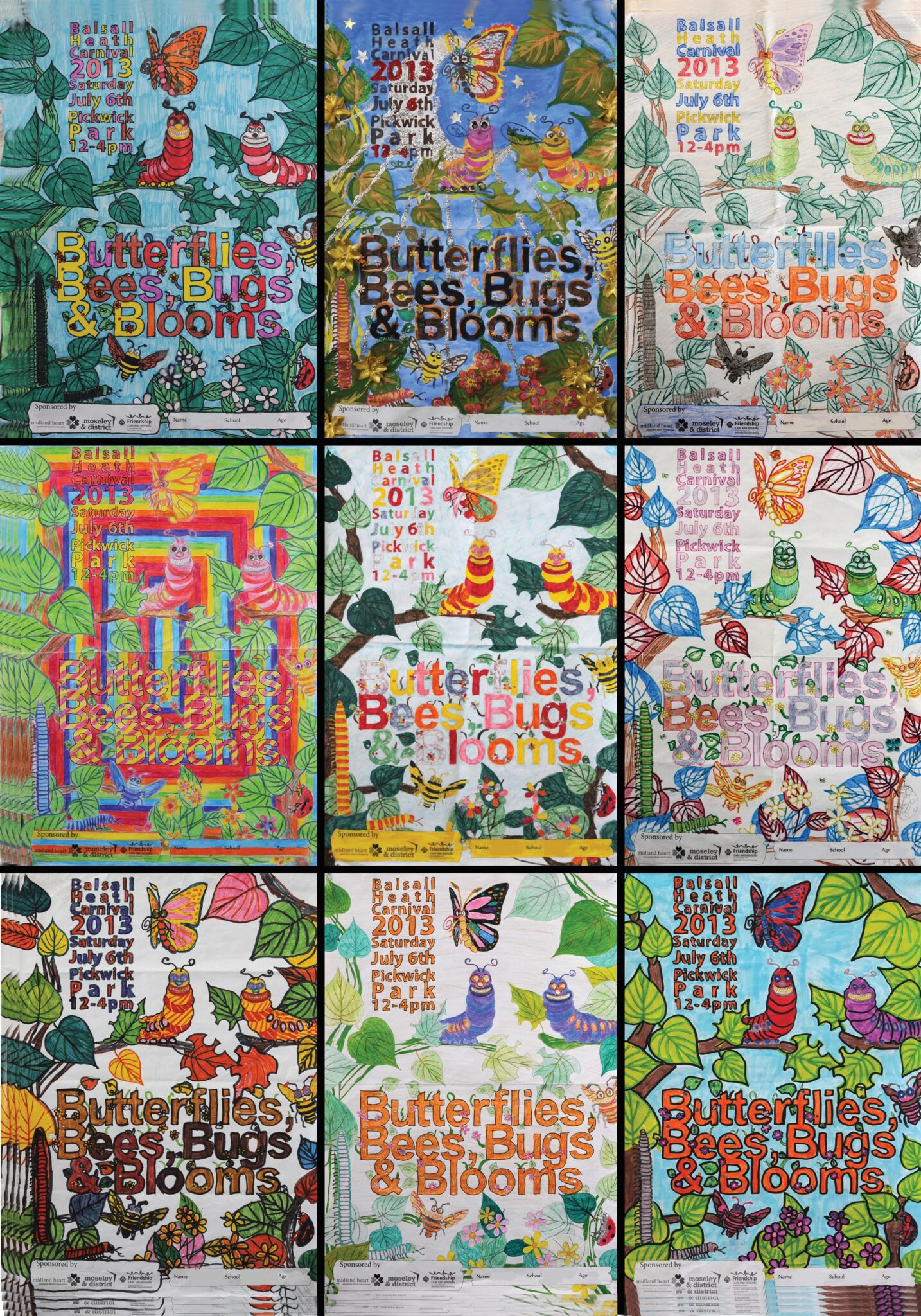
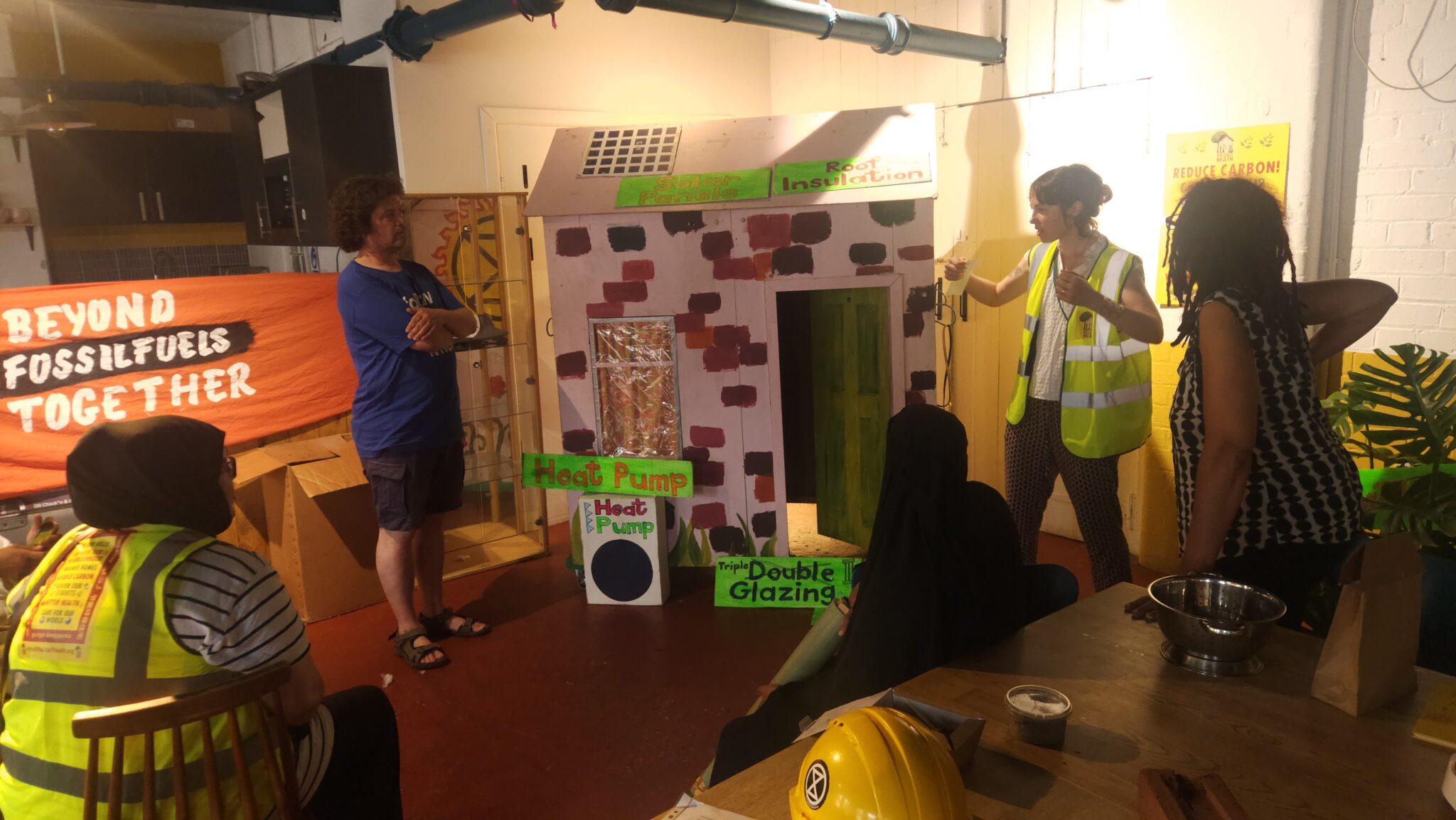
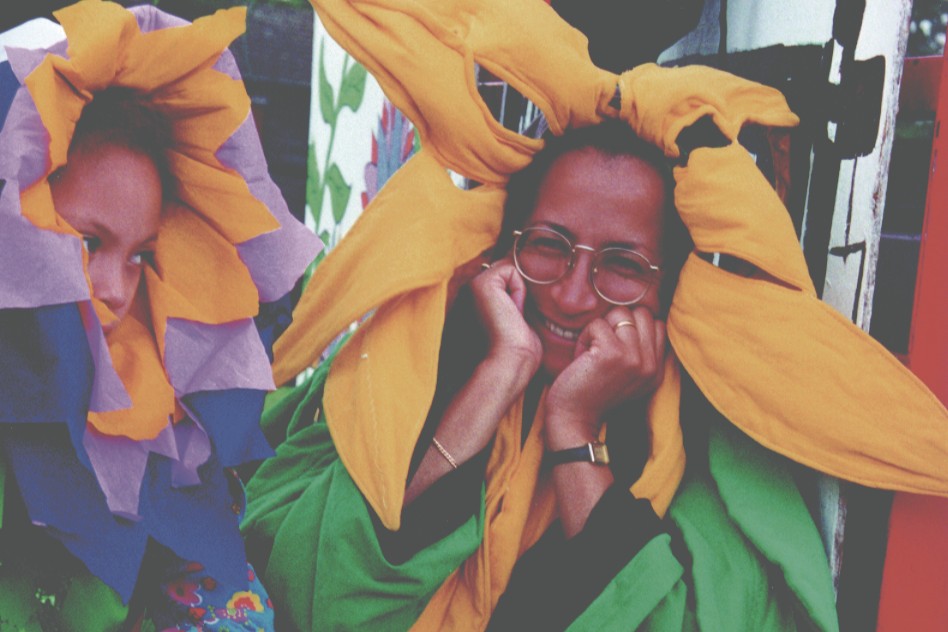
2016 CarnivalJayne Thakoordin’s Banner for Balsall HeathColouring competition 2010Retrofit Model House in action in The Old Print Works Cafe 2026Fun at the Carnival 19951977 Float and banners2004 dressing up fun2016 costumes2004 Carnival Banner
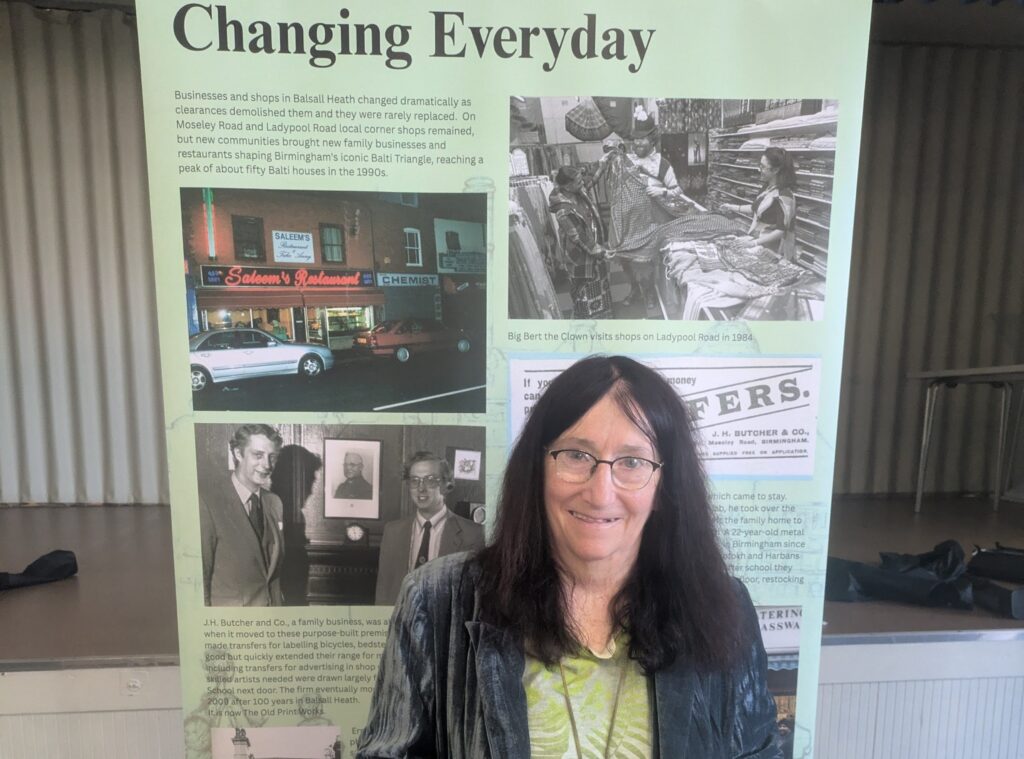
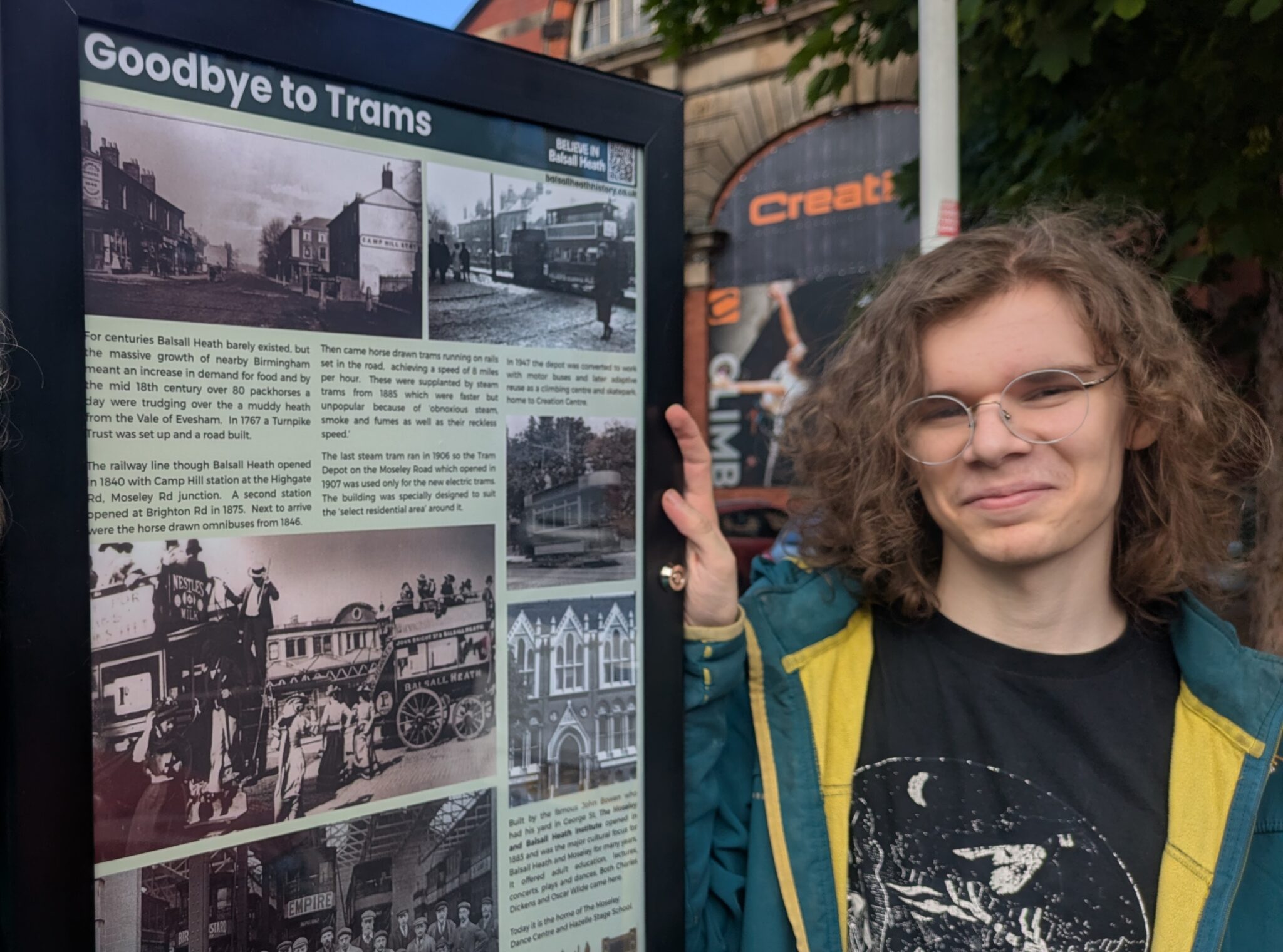
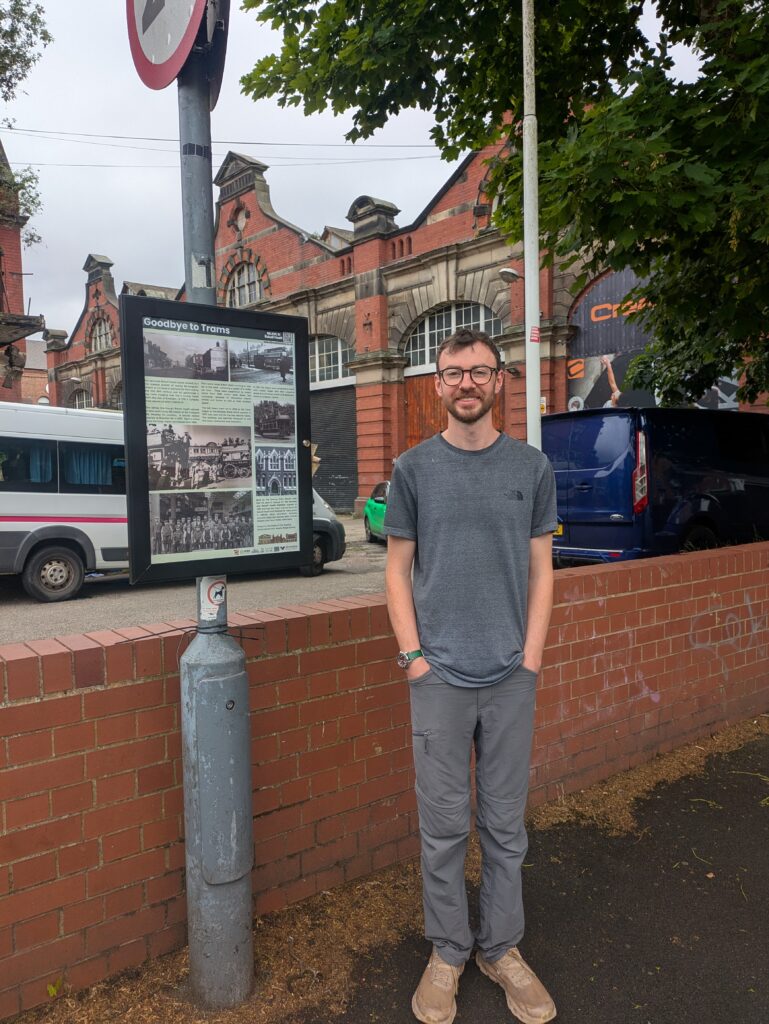
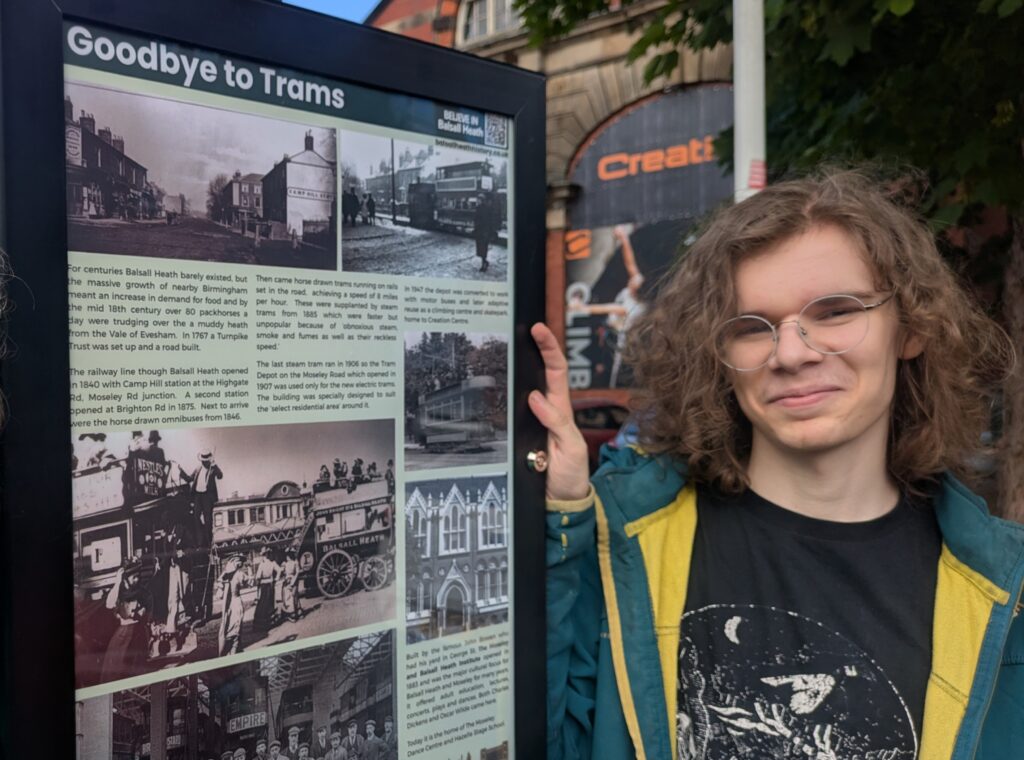
Balsall Heath has seen many changes over the decades, reflecting it’s rich and every changing culture. Ten interpretation panels will be installed ready for Balsall Heath Community Festival, linked to the fabulous images of Mick Turner as well as archive images and present day photography. The Tramworks is a Listed building of historical significance. A truly grand tramwork purpose built and specially designed to be in keeping with the ‘select residential area’ around it.
Climber and Manager Joe outside Creation Climbing Centre, next to the history panel.
Jago, a regular climber finds out about Trams in Brum
Jago, a regular climber at Creation Climbing Centre said:
‘It’s really cool that these buildings aren’t demolished or lost.’
Reflections of the Carnival
The history panels will be ready for Balsall Heath Community Festival, 3rd to 13th July #BHCFest26. Balsall Heath Local History Society (BHLHS) have been selecting Archive images, talking to residents, businesses and local organisations to reflect our history in the panels. For more of the images and stories we are linking via QR code on our panels to ‘In Changing Times‘ resources. We will be building on these to keep our history alive and updated as Balsall Heath changes.
BHLHS are also preparing a touring ‘Balsall Heath Carnival Exhibition’ to run alongside many of the events happening as part of the Festival. The Carnival used to be on the first weekend of July, and while nothing can replace it, the Festival is one way we are hoping to continue celebrating our community and building pride in it.
The monthly newsletter published by the Balsall Heath Local History Society (BHLHS) in Birmingham, UK. It serves as both a community bulletin and a historical record for the area.
What’s Inside the Gazette?
The publication typically includes a mix of current news and historical research:
Historical Articles: Local stories and accounts of local landmarks – the social history of the Balsall Heath and Highgate areas.
Photographic Archives: Rare images of the neighbourhood from various eras.
Society Updates: Information on upcoming monthly meetings, guest speakers, and local heritage events.
It is published monthly and has been a staple of the society for years with digital archives dating back to at least 2010. Distributed to members, recent and archived editions are also made available as PDF downloads on the official BHLHS website and on the Heathan.
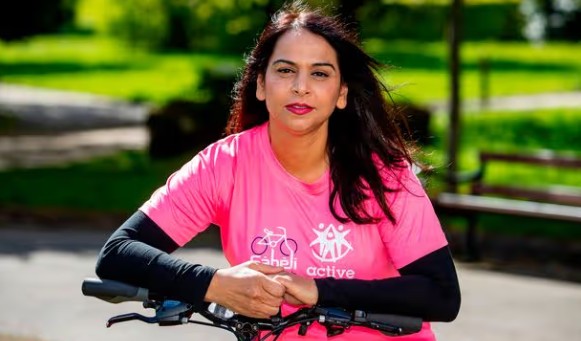
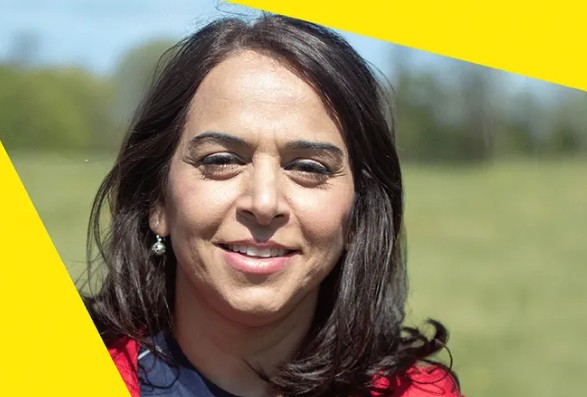
Naseem Akhtar BEM looks back on the challenges growing up and growing strong in Balsall Heath. She has spent over 20 years inspiring and encouraging thousands of women in Birmingham and, with the Saheli Hub team, transformed lives through activity.
Naseem has lived in Balsall Heath nearly all her life. Growing up in Balsall Heath in the 70s and 80s, Naseem recalls hiding where she came from when at school in nearby Selly Park:
I genuinely used to hide that I was from Balsall Heath…I used to say, ‘just by Cannon Hill Park’, or ‘by the Edgbaston Cricket Ground’.
For a young girl in a traditional Muslim household with five brothers, the streets were off-limits. ‘I thought I wasn’t allowed out because I was an Asian girl. Looking back, I wouldn’t let my sons out now, knowing what was happening on those corners.’ Balsall Heath was then known for street prostitution and drug dealling.
‘It’s only when I became a teenager it kind of almost started to become like that 24-hour service. So, you’d see women on the streets in the morning, noon and night and growing up in a kind of traditional Muslim household, no one ever discussed what these women were doing or what it was about…I think that the day that I was really kind of horrified was when I stopped at my doctor surgery, who’s still my doctor, amazing doctor on Cheddar Road, and I remember one day walking past and a woman was sitting in a bikini. I thought what’s that about? But nobody talked about it.’
The Thread of Activism
Naseem’s journey into advocacy started in a local sewing factory at 19 when she realized she was being paid a third of what she thought she should. She went to the ‘low pay unit’ with her brother and photocopied leaflets, distributing them to every woman in the building.
‘…it was on piece work. And some people got the best pieces and some people didn’t, and I didn’t like it. But what I loved in the factory was that it was a lot of Asian girls. As an adult having left school with no real qualifications – I wasn’t allowed to go to College or Uni because Margaret Thatcher had come along and she’d shut all the colleges, unless you went to mix college. And in my generation, many girls weren’t allowed…because of the fact that they’re mixed.’
It was a hard lesson in leadership. “I was ostracized by half the factory,” she admits:
‘I learnt you can’t be an unelected leader by yourself. You have to bring people with you. I stayed for six months to prove a point, then got a job that paid the full £150. I went back to the old factory and showed them my wage slip. I wanted them to know you can get paid properly if you find the right employer.’
Saheli – a Vision Born of Rejection
By the early 2000s, Balsall Heath was changing. The community – churches, mosques, and residents – had reclaimed the streets from the sex trade. But for Asian women, “social exclusion” remained. Naseem joined the Balsall Heath Forum:
‘They could see I was really committed and so they offered me the job. Initially I was too scared to take it – my brother had completed the application for me and I got the interview…I got the job and started from there. So the Forum then employed me to see what women wanted and we secured funding for a feasability study.’
What they wanted was a health and fitness facility run by women, for women:
‘They wanted to do a swimming exercise, Fitness and Sport, and when we asked them why aren’t you using the biggest Sports Centre on the edge of your neighbourhood, they said because they felt nobody understood their culture. The women-only times were very limited by the time you got in and changed you needed to change back…it wasn’t suitable, so they just didn’t go.’
Responses to the feasibility study were dismissive – NHS services said ‘We don’t do leisure, we do health’, and City Council Leisure staff said, ‘That’s never going to happen’.
Naseem partnered with South and City College, starting in ‘The Learning Library’ one day a week. Soon, women were flooding in. Women who came for the gym ended up staying for ESOL classes and vocational training offered by the college too:
‘We changed in one of the side offices. And the numbers just started to go through the roof. So we started in April, I always remember that, and by September we had a meeting they said just have that bit of the site, just have it. And so we ended up using the site Monday to Friday.’
A big break came from a moment of raw honesty at a high-level regeneration conference. Naseem was given seven minutes to speak. She told a room full of suits that despite £6 million being spent on “regeneration” in her area, nothing had changed for women and girls. That honesty caught the ear of a funder from Sport England. He asked for a one-page vision. Naseem sent him a photo of local girls in hijabs and helmets, splashed with mud, beaming after a day of mountain biking in a ravine.
Today, the Saheli Hub stands as a testament to what happens when you stop telling a community what they need and start listening to what they want.
Naseem’s ‘radical’ ideas – that women from all backgrounds deserve to take up space, ride bikes, and prioritize their health – have helped build a bridge to a healthier future for women and men.
From a girl who was once ‘walked to her friend’s house by her brothers for safety,’ Naseem has been walking, running and biking with an entire community in Balsall Heath and across Birmingham.
Naseem is the project manager at Saheli Hub, a charity in Balsall Heath run by women for women, which aims to improve health and wellbeing and encourage participation in exercise and sport. The hub is based in Calthorpe Park and operates out of three wellbeing centres and two GP practices.
Since starting the charity in 1998, Naseem set up The Young Sahelis, a youth club for girls aged 14-25; The Saheli Running Club, which has seen over 75 women run half marathons and seven women complete full marathons; and The Saheli Cycling Club which has taught over 2,000 women to ride a bike.
Naseem has always been passionate about breaking down barriers to exercise for women in her community. She’s channelled this passion into creating opportunities for local women of all abilities to gain confidence to take part.
Saheli Hub welcomes around 1,600 women a year, 80% of which are from diverse ethnic backgrounds, who have now started their physical activity journey with Naseem and the Saheli Hub, regularly taking part in walking, jogging, cycling, chair-based exercises, yoga, pilates and body conditioning.
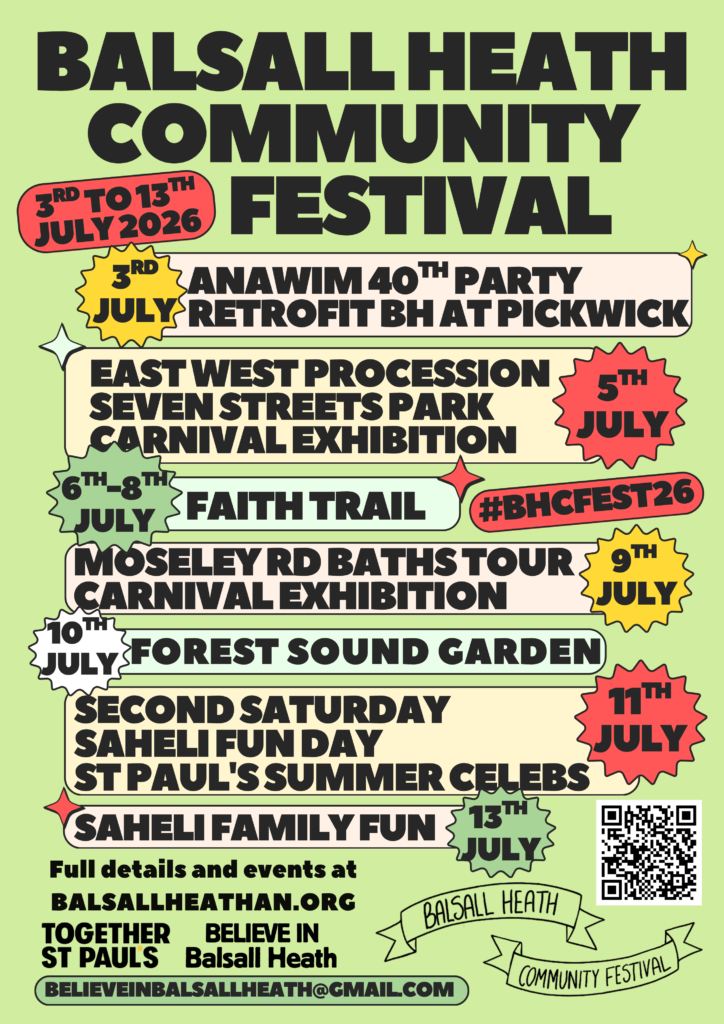
From July 3rd to 13th, 2026, let’s celebrate Balsall Heath! For Balsall Heath Community Festival we are shifting from a single one-day event to a community led week of wonder! We’re working with local organisations – schools, charities, faith centres, everyone and everyone to celebrate everything Balsall Heath and everyone Balsall Heathan.
What’s happening?
We’re coordinating over a week of fun, heritage, and innovation. While the full schedule is brewing, here is a sneak peek at what’s in the works:
Health & Wellbeing – Join us for community meals, a Faith Trail and specialized workshops with our partners at Saheli, MIAH Foundation and Anawim. Anawim are coordinating the Faith Trail, happening at different locations across Balsall Heath – see dates and times below.
Whether you’re an individual or a local organisation in Balsall Heath get involved – it’s a great platform to:
Find out more about fellow Balsall Heathans and Raise Your Profile – Benefit from collective publicity and the relaunch of the Heathan to reach hundreds of local residents.
Meet People and build Partnerships – Meet your neighbours, connect directly with schools, faith centres, and other local organizations
Shape the Future – We want to know what you think about Balsall Heath and we need your help to show the best of Balsall Heath and prove why Balsall Heath deserves continued investment
Many activities are already funded by individual groups, but if we pool our ideas maybe we can unlock even more small-scale funding together. We’re also hoping to feed into the updated Balsall Heath Development Plan with Balsall Heath Alliance so our new Council and Councillors can work with us.
Ready to jump in? Contact Marcus at ma****@********************co.uk to find out more. Let’s show Birmingham what Balsall Heath can do when we work together!
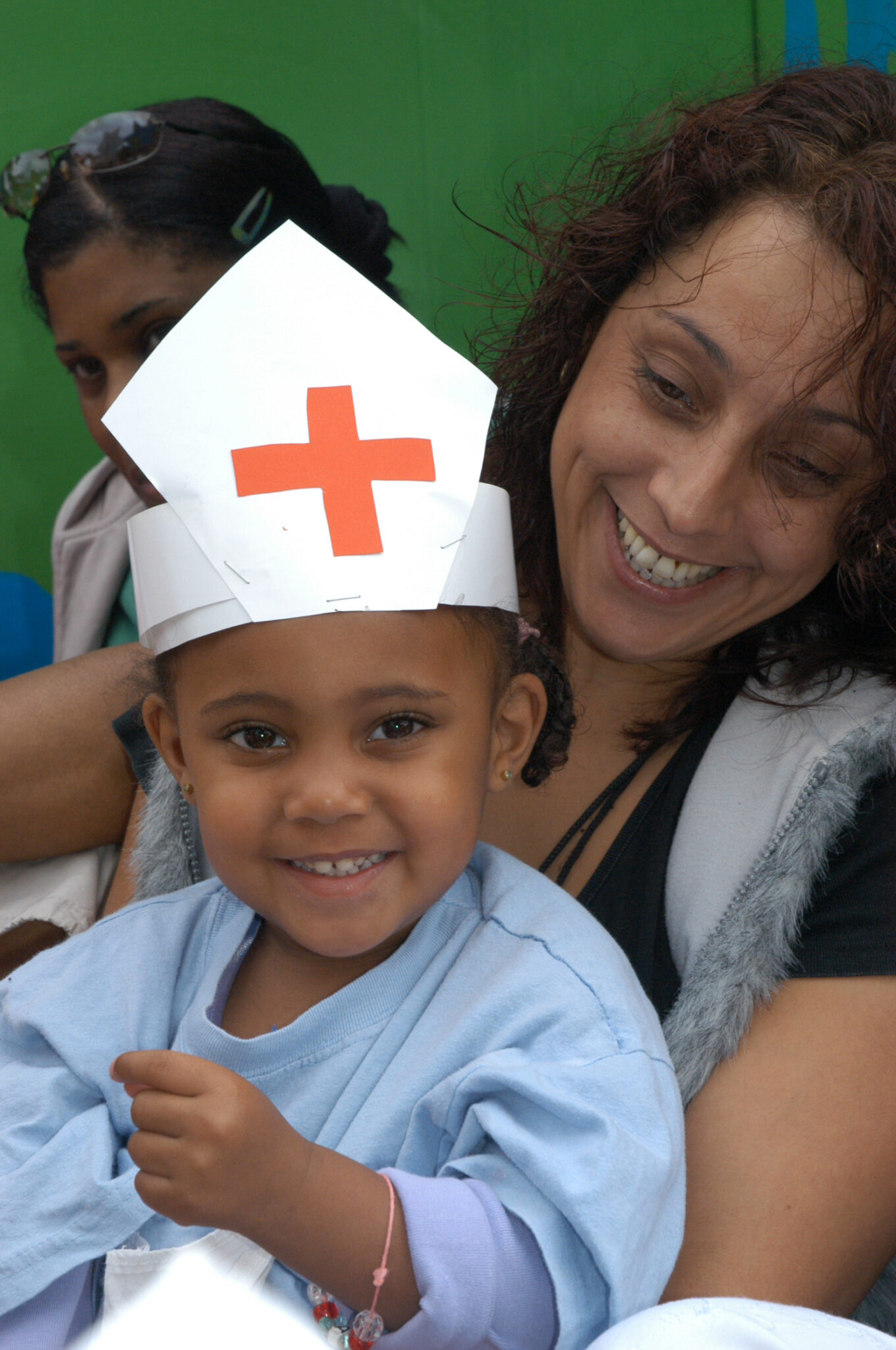
Here’s some images from Balsall Heath Carnival over the years, from which the Community Festival has been inspired:
Anawim is celebrating forty years – check out their 40th Anniversary Day – Joy Doal MBE, CEO, tell us their story:
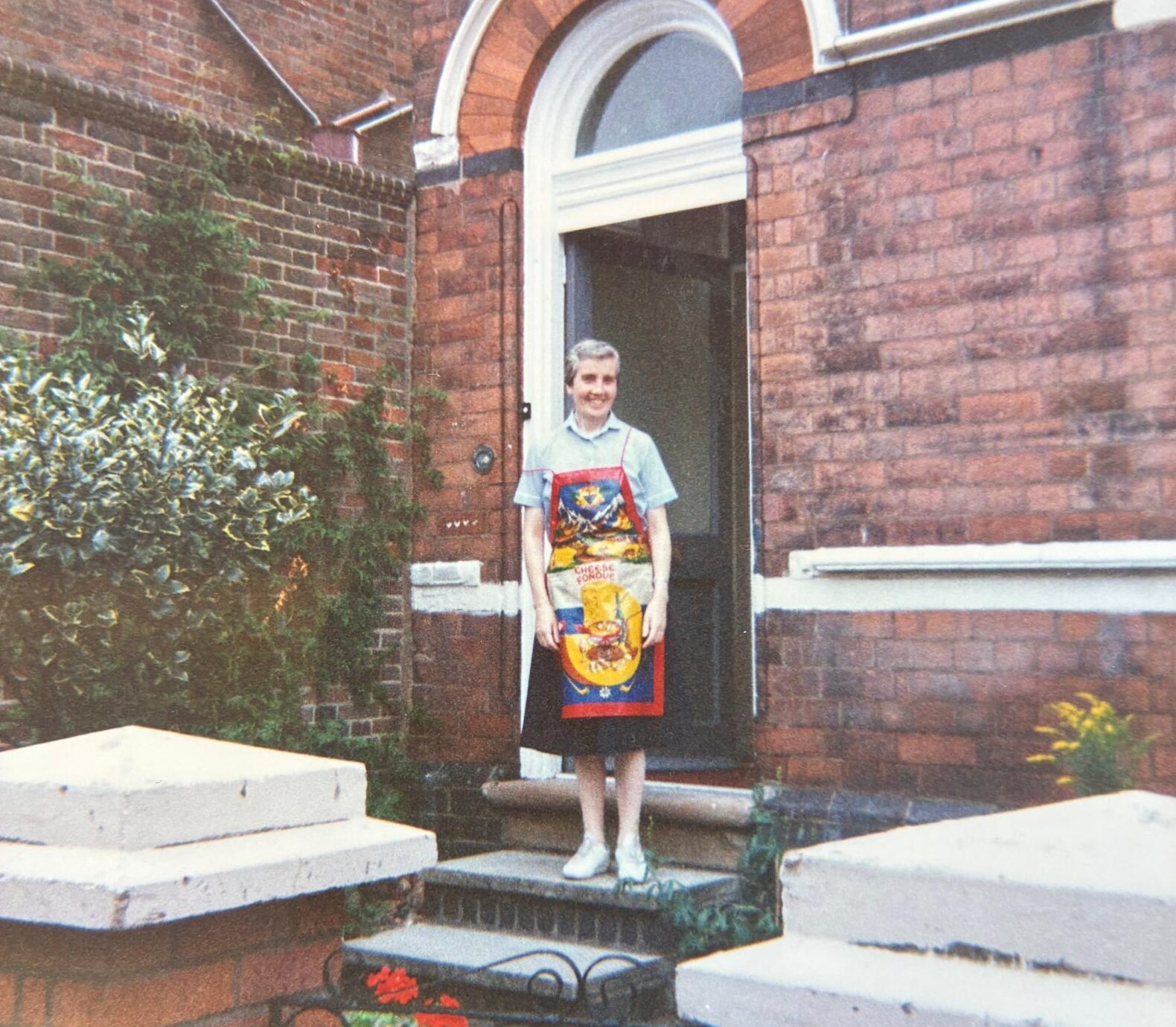
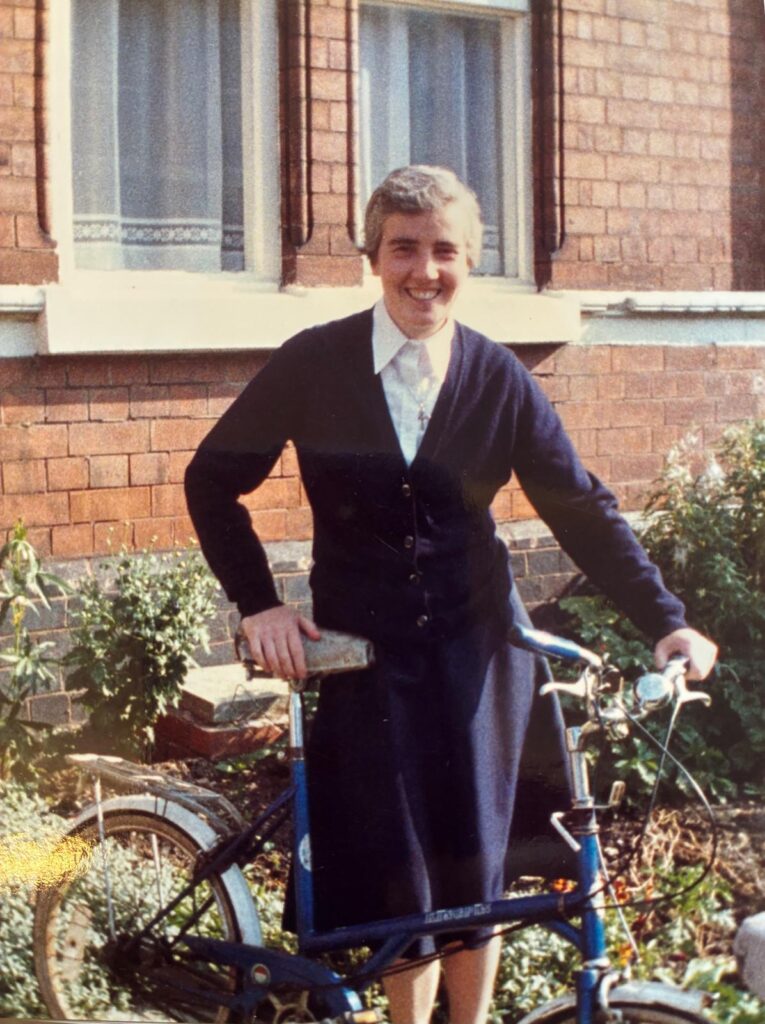
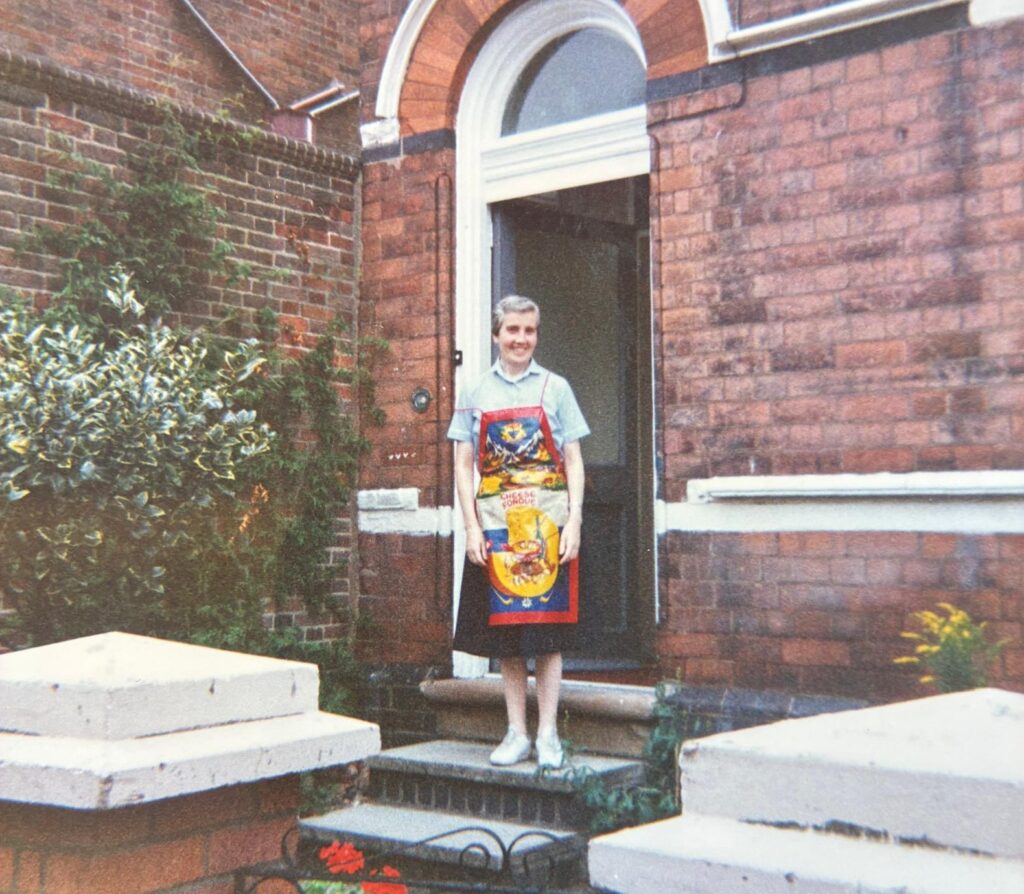
Anawim was founded by two pioneering nuns, Sister Magdalene Matthews and Sister Maisie Nevin, who belonged to the Sisters of Our Lady of Charity. Sister Magdelene had been working with alcoholics in Balsall Heath and Maisie with young people, but both were searching for something more.
They met women doing street ministry, joined them and immediately felt a calling to work with the women they saw on the streets nearby. The pair opened their home on Mary Street as a drop-in centre to women in Balsall Heath who were involved in sex work and vulnerable to exploitation.
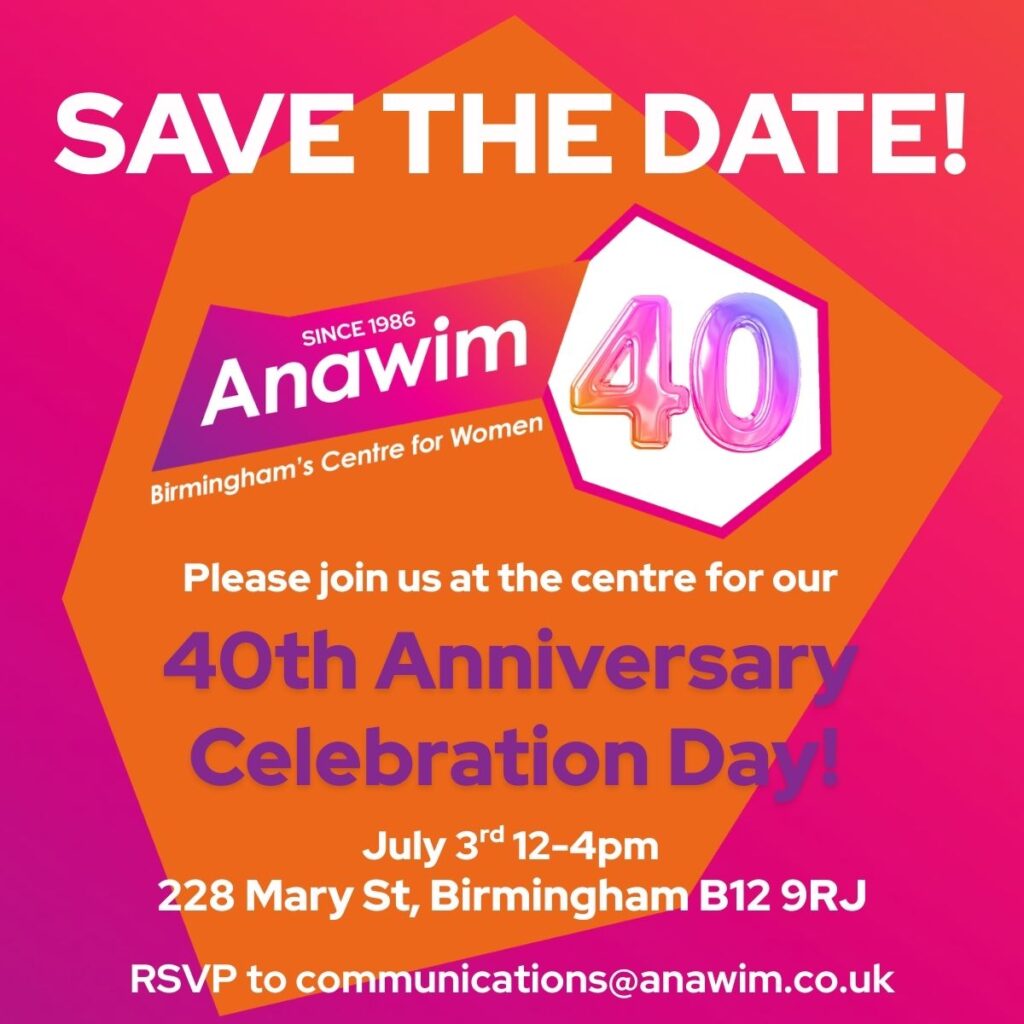
Anawim 40th Celebration Save the Date 3rd July!
The Sisters’ Safe Space
Mary Street was then part of the traditional “red light” area of the city with sex workers on the streets and in around 25 houses used as brothels. The Sisters were struck by the difference it made for women to have a safe space, a warm drink and a listening ear. A place they could go without fear of judgement, to meet other women who cared deeply about their wellbeing. In a matter of two years their contact with women had increased so much – through hospitality at their house in Mary Street and outreach – they decided the time had come to devote all of their time to this Mission.
Looking for Life Transformation
During the day, the Sisters would attend court with the women or accompany them to Social Services conferences, visit them in their homes, hostels or prison. Health and Probation soon became aware of the Sisters, and the local churches were very supportive. The first two women to regularly come to the Mary Street house had stopped sex work and were soon followed by others. Their children were cared for in the front room and in the back room the women were offered literacy training, budgeting, crafts and parenting skills. This was the beginning of the ‘Women’s Development Centre’.
Around this time the Balsall Heath Forum started Streetwatch, the campaign to discourage both those working on the streets, and the kerb crawlers. Women were harassed and sometimes hit with sticks – this had a dramatic effect – it drove them out of sight and made them more vulnerable to attacks. The Sisters, together with volunteers, had to search them out in surrounding areas – where vigilante groups also sprang up.
Maisie, Balsall Heath 1989
Sister Maisie, 1986, 166 Mary Street – a safe space for all women
‘Safe House’ to ‘Development Centre’
In 1994 a Safe House was opened after requests from the women who had left, and lay staff were employed with the help of a lottery grant and funding from the Anglican Church Urban Fund. When the need for larger premises to house the ‘Women’s Development Centre’, became apparent this was closed.
To provide the space required, the present centre in Mary Street was rented from St John and St Martin church and opened in January 1999. By 2002 it was under threat of closure. This was due to lack of funds, the ‘client group’ of sex workers being moved on, the project struggling to meet new women, changes in the political climate and legislation such as ASBOs.
At this time Sister Lizanne was visiting Brockhill Prison and meeting lots of women there, but they were very different to the ones back in Balsall Heath. An integration came when they employed Joy Doal as manager in 2003. Through fundraising to employ staff, co-ordinating volunteers, entering into partnership with the SAFE project to co-locate their methadone programme and development of alternatives to custody with Probation, ANAWIM began to grow.
One-stop centre for all
Anawim became a pioneering one-stop centre for women who were either in the sex industry, at risk of being there, or were involved in offending. Outreach workers went out at night to reach the sex workers who had been dispersed across the city and in-reach took place at HMP Eastwood Park and HMP Brockhill, where Birmingham women were often sent, offering support while there and a place to come on release.
Many women have banded together, over 40 years, to grow Anawim into the charity it is today – an organisation that remains true to our founding ethos and now works with thousands of women every year. Anawim has an open access drop-in and specialist services to meet the needs of women from all parts of the city.
At the charity we believe anyone can find themselves in difficulty or experience trauma – whether that’s living in an abusive relationship, battling addiction, involved in crime or sex work – or simply struggling with life. Our staff can make a huge difference in helping women to try to change their lives – step by step.
Working with Women whatever their situation
We work with women at every stage of the criminal justice system, from first offence to prison. Our open access drop-in is available for any woman who needs it for any reason, and our main room remains a space where people can come for a cup of tea and a chat.
While funding will always be an ongoing challenge, we’ll do everything we can to keep Anawim’s doors open for women and be part of the fabric of Balsall Heath. For support, for friendship, for a safe space.
The monthly newsletter published by the Balsall Heath Local History Society (BHLHS) in Birmingham, UK. It serves as both a community bulletin and a historical record for the area.
What’s Inside the Gazette?
The publication typically includes a mix of current news and historical research:
Historical Articles: Local stories and accounts of local landmarks – the social history of the Balsall Heath and Highgate areas.
Photographic Archives: Rare images of the neighbourhood from various eras.
Society Updates: Information on upcoming monthly meetings, guest speakers, and local heritage events.
It is published monthly and has been a staple of the society for years with digital archives dating back to at least 2010. Distributed to members, recent and archived editions are also made available as PDF downloads on the official BHLHS website and on the Heathan.
Believe in Balsall Heath is a community arts and heritage initiative brought to you by local organisations to celebrate the people, culture, and history of Balsall Heath. As we mark the area’s 750th anniversary, the project invites everyone – residents, visitors, and communities – to come together in honouring its rich heritage and vibrant diversity.
Who is involved? Funded by Birmingham City Council, this collaborative project brings together: ● The Old Print Works ● The MIAH Foundation ● The GAP Arts Project ● Fruit & Nut Village ● Balsall Heath Local History Society
Together, these organisations are working to bring renewed pride to the streets of Balsall Heath through community events, workshops, and street planting initiatives.
What to expect One of the project’s most visible and exciting outcomes will be a series of commissioned street banners, installed across Balsall Heath’s high streets. These artworks will celebrate and commemorate the area’s history, identity, and community pride – making heritage something you can see and experience in public space.
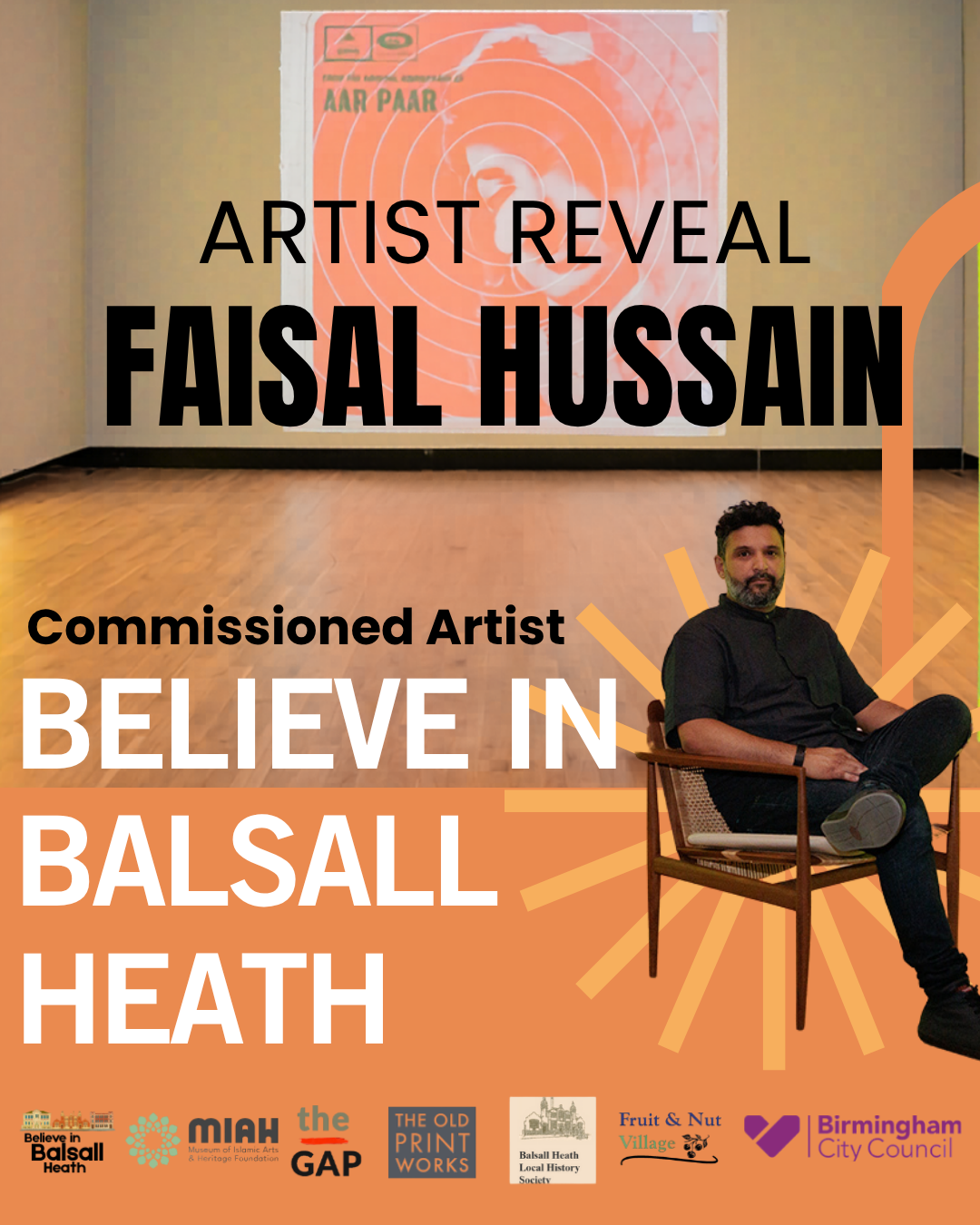
Our commissioned artist: Faisal Hussain Last month we were excited to announce Faisal Hussain as the commissioned artist for the Believe in Balsall Heath project and we received a wonderful response from the community:
“I’m an artist based in Birmingham. My work spans public art, film, archive, sculpture, audio, and text. I create work that questions perceptions, challenges lazy stereotypes, and highlights missing histories and overlooked stories.”
Faisal brings not only a multidisciplinary artistic practice, but also a deep personal connection to Balsall Heath:
“I’m particularly excited to be working in Balsall Heath as I have generational roots there – from my grandfather sharing a house with workers in the 60s, to my mother’s shop on Stratford Road in the 90s, to working in my family business in the 00s. I have memories of music, food, Qur’an classes, functions and raves here. It’s a special place – often overlooked – and I’m looking forward to creating something that reflects its people, past, and future.”
Looking ahead Over the coming months, Faisal will develop a series of street-based artworks to be exhibited across Balsall Heath. Drawing on the area’s rich history, culture, and lived experiences, these works will form a bold and public celebration of the neighbourhood.
To stay updated with the project, follow us on Instagram (@believeinbalsallheath) and sign up to our Newsletter and contact us on be*******************@***il.com
Heba Y Project Coordinator – Believe in Balsall Heath
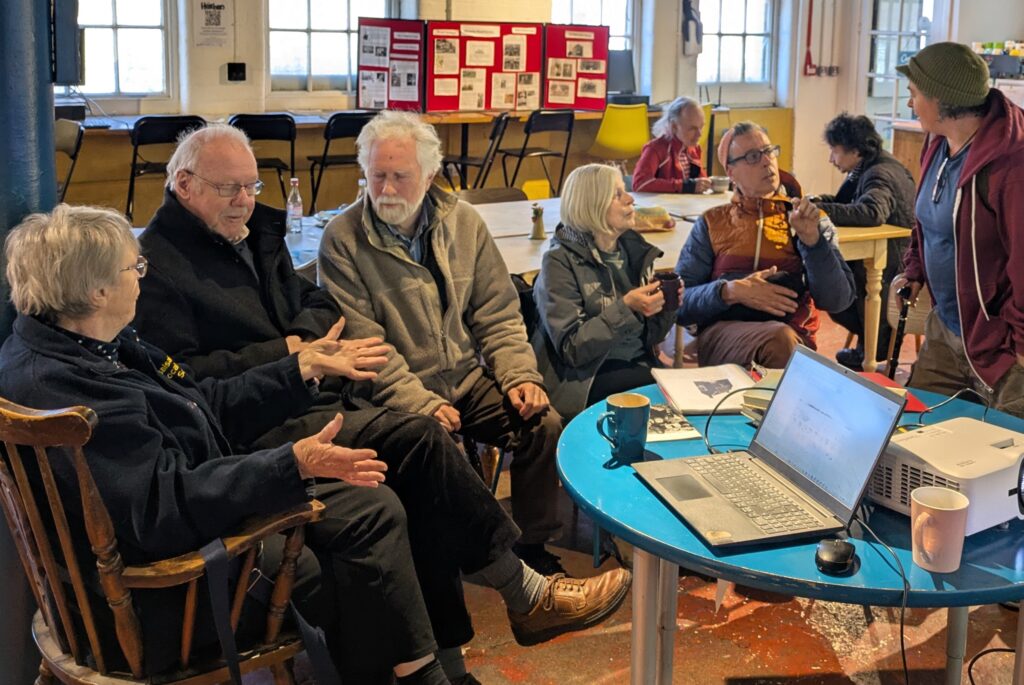
The relaunch event, held during Second Saturday, was a perfect place to bridge between our past and our future. We gathered at the Mix Café inside The Old Print Works, surrounded by archive editions of The Heathan with fab food and refreshments from Change Kitchen.
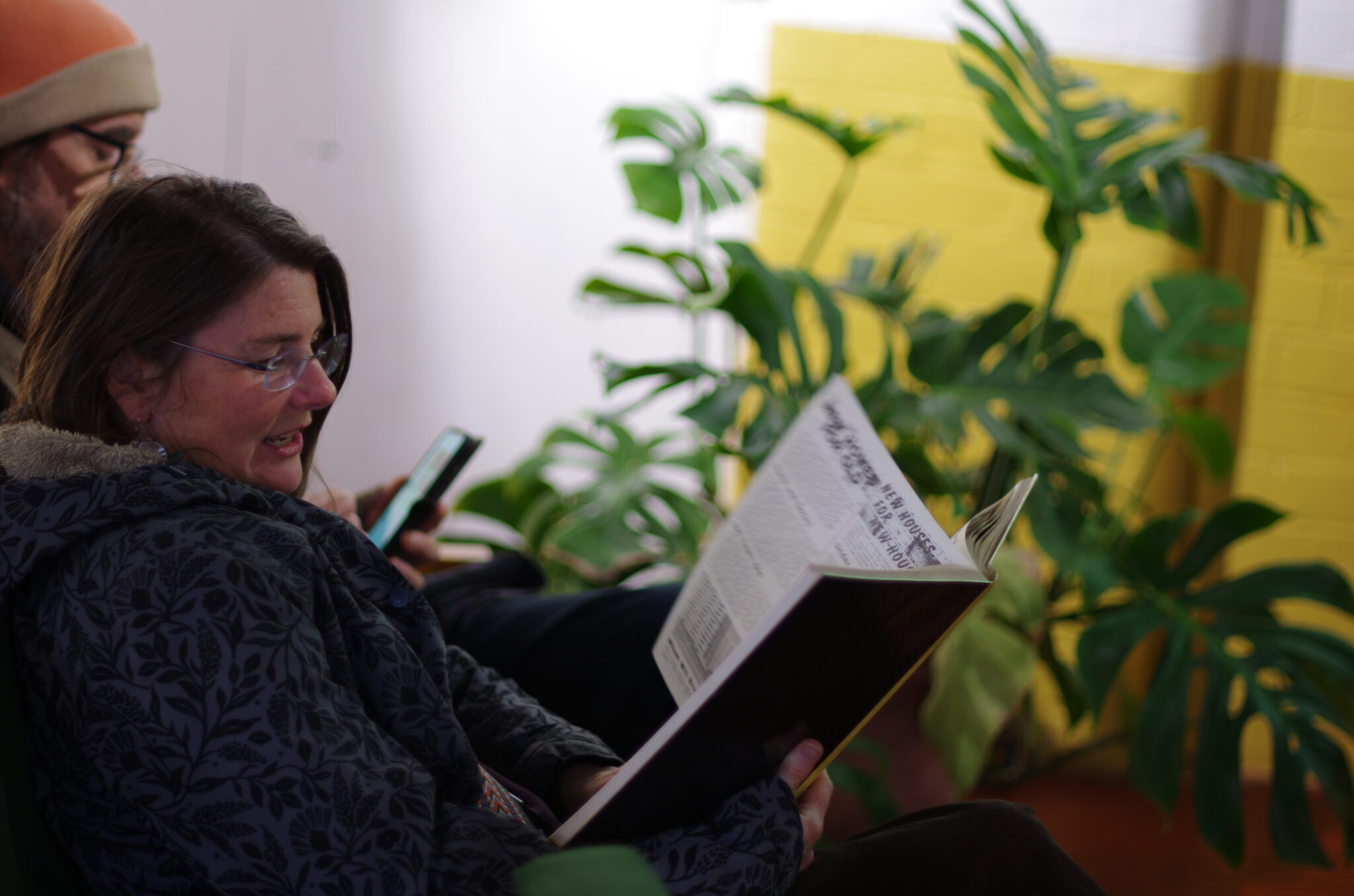
For those used to modern layout software, the exhibition was a revelation – We showcased how the original zine was painstakingly assembled using typewriters, ‘cow gum’ and a massive amount of patience. While the technology has changed, the mission remains the same: for Balsall Heath and Balsall Heathans.
Catching up at Second Saturday as the Heathan relaunches
Second Saturday sees our return
We spent the day sharing memories, and chatting about what the future of Balsall Heath looks like. We will be at every Second Saturday to meet up, chat and keep grounded in Balsall Heath.
Take a look at our gallery below to see some of the faces we met on the day! Thanks Photographer Richard Albutt
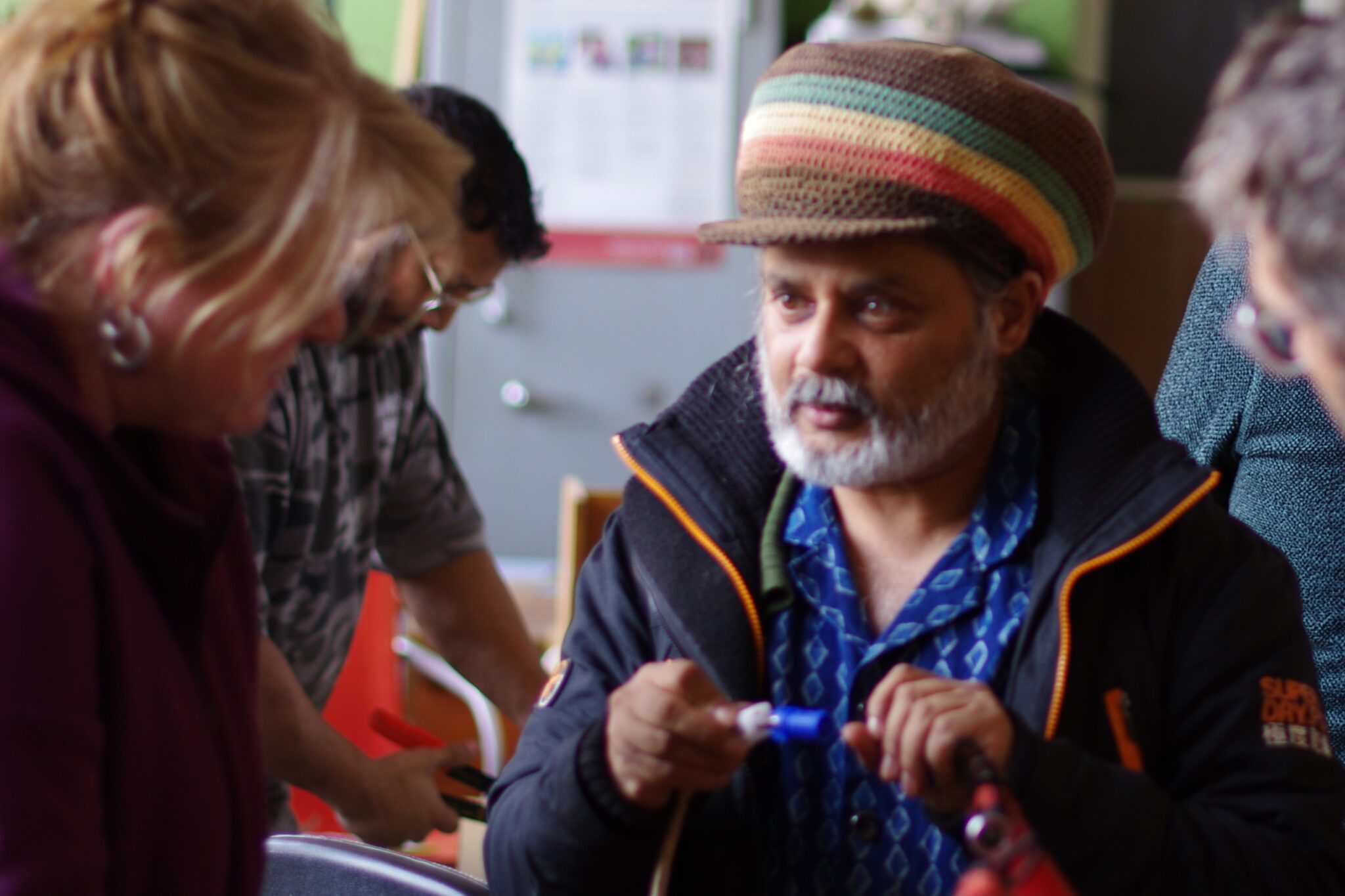
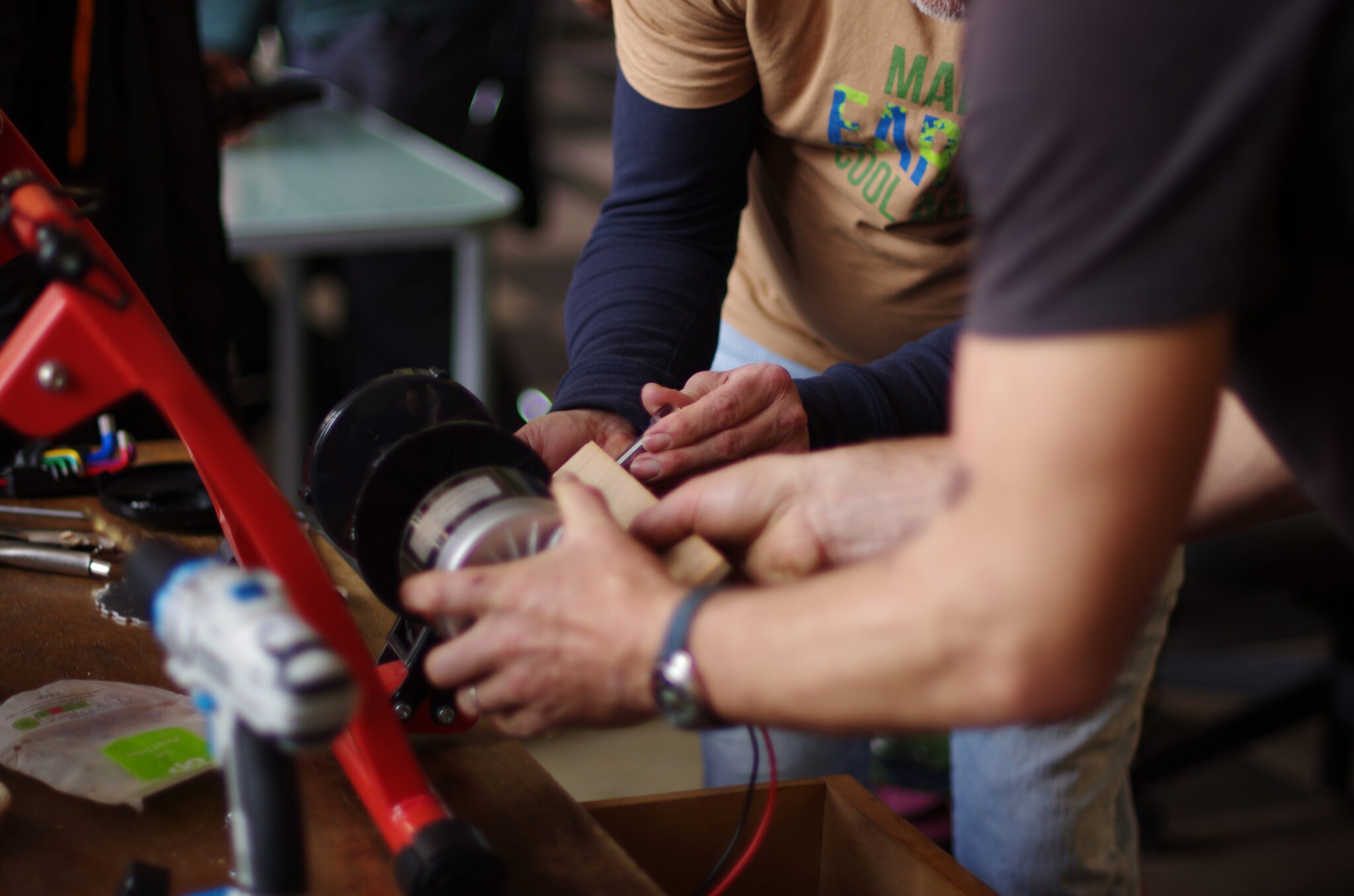
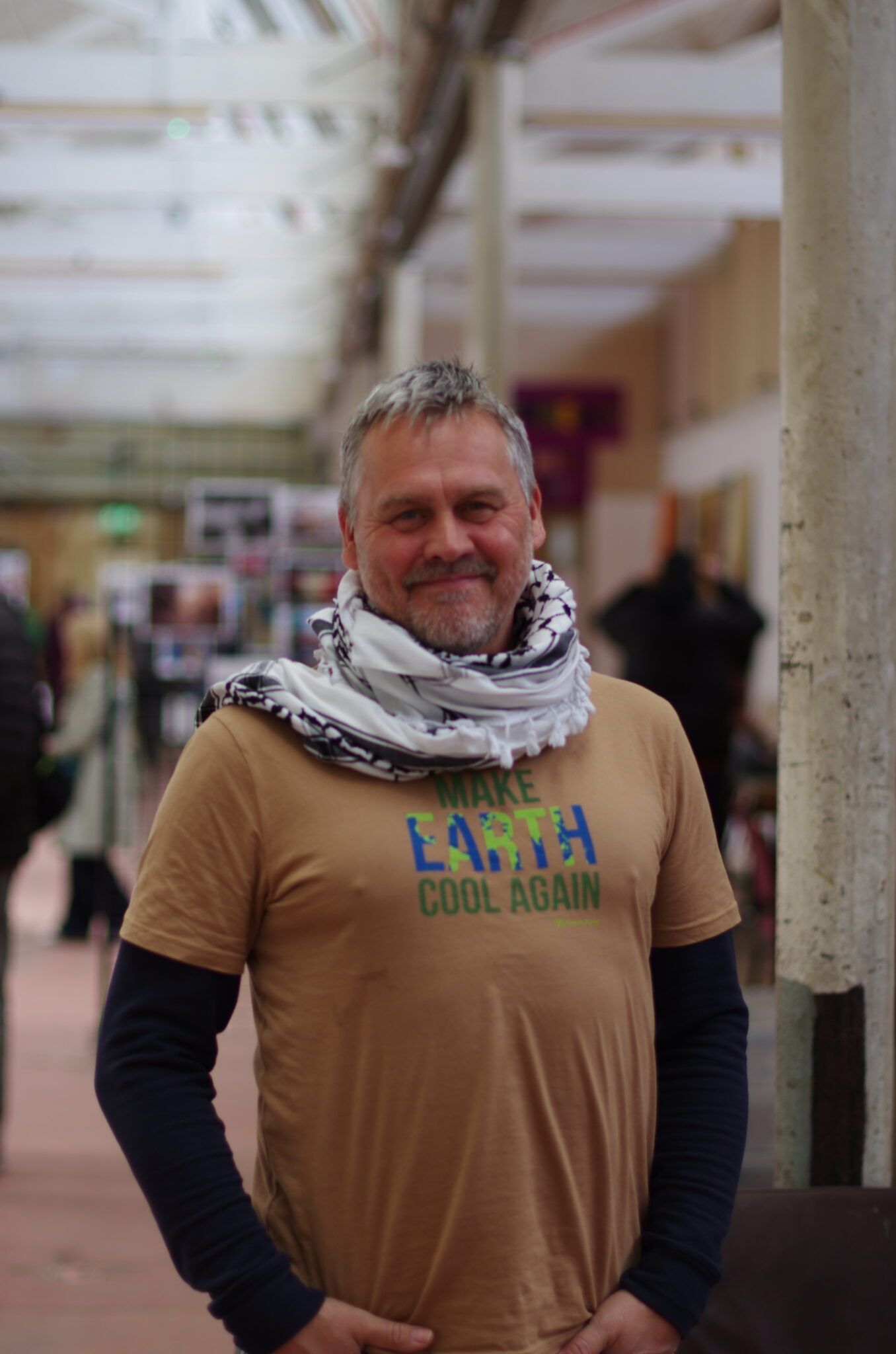
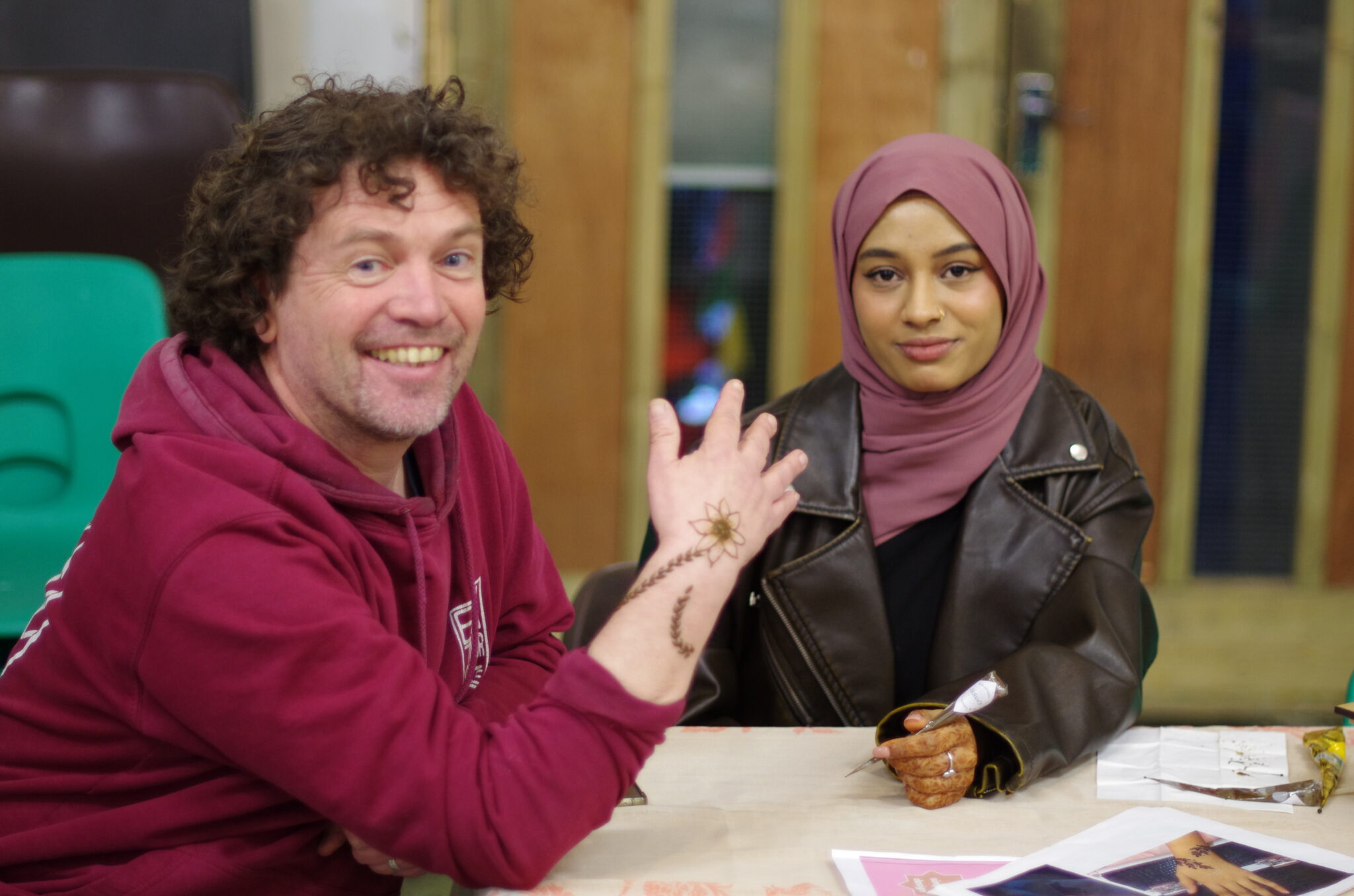
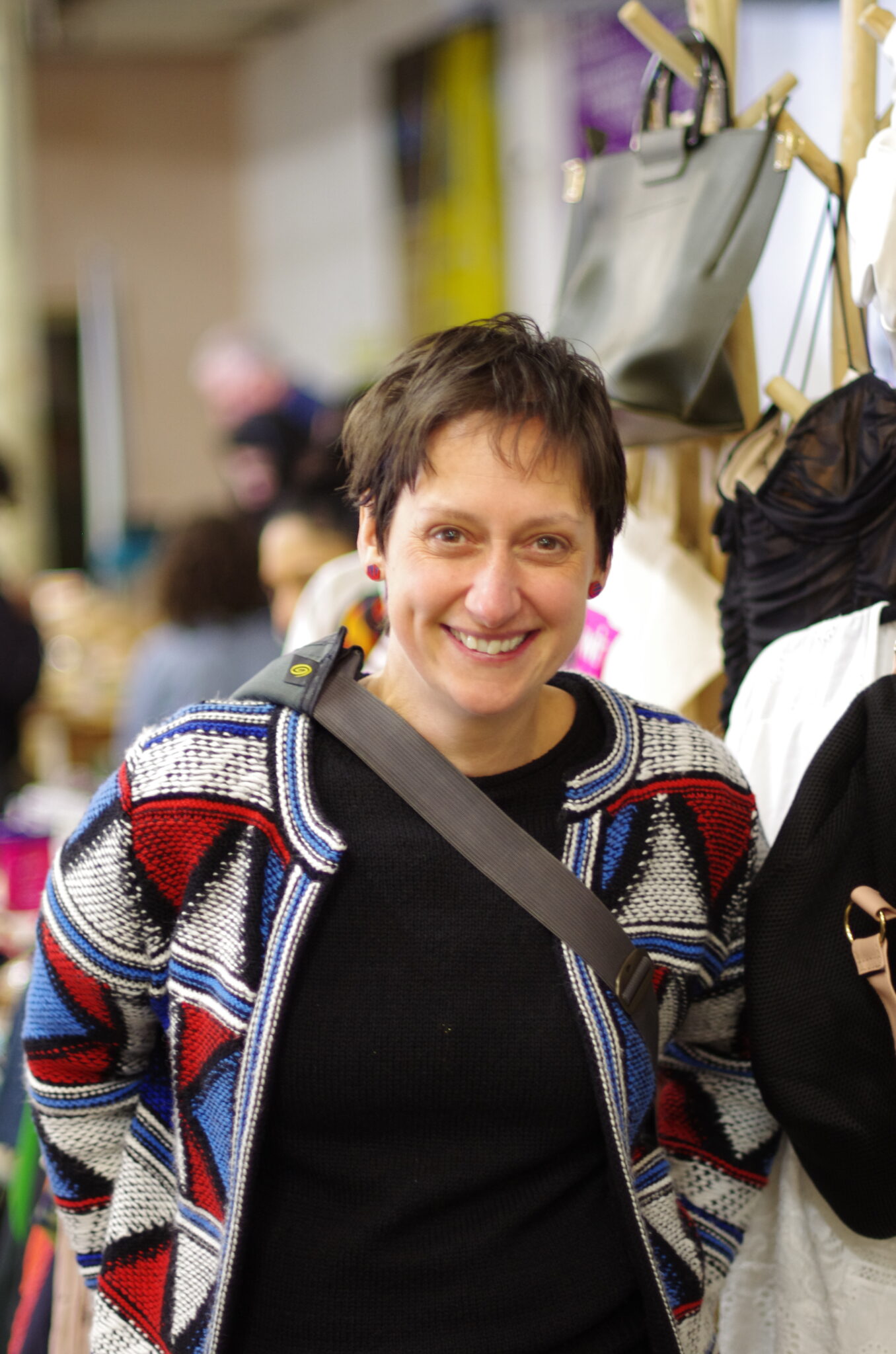
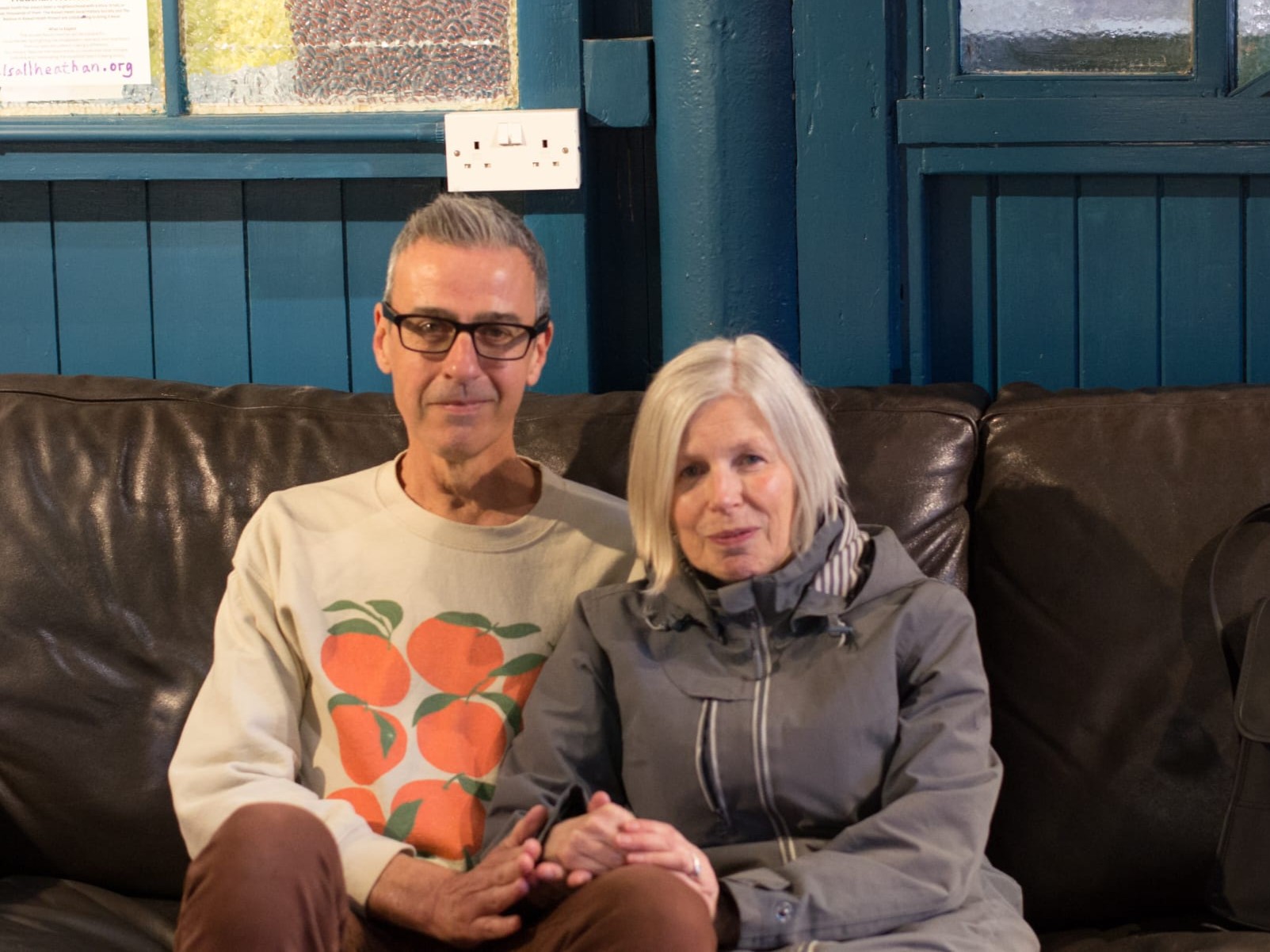
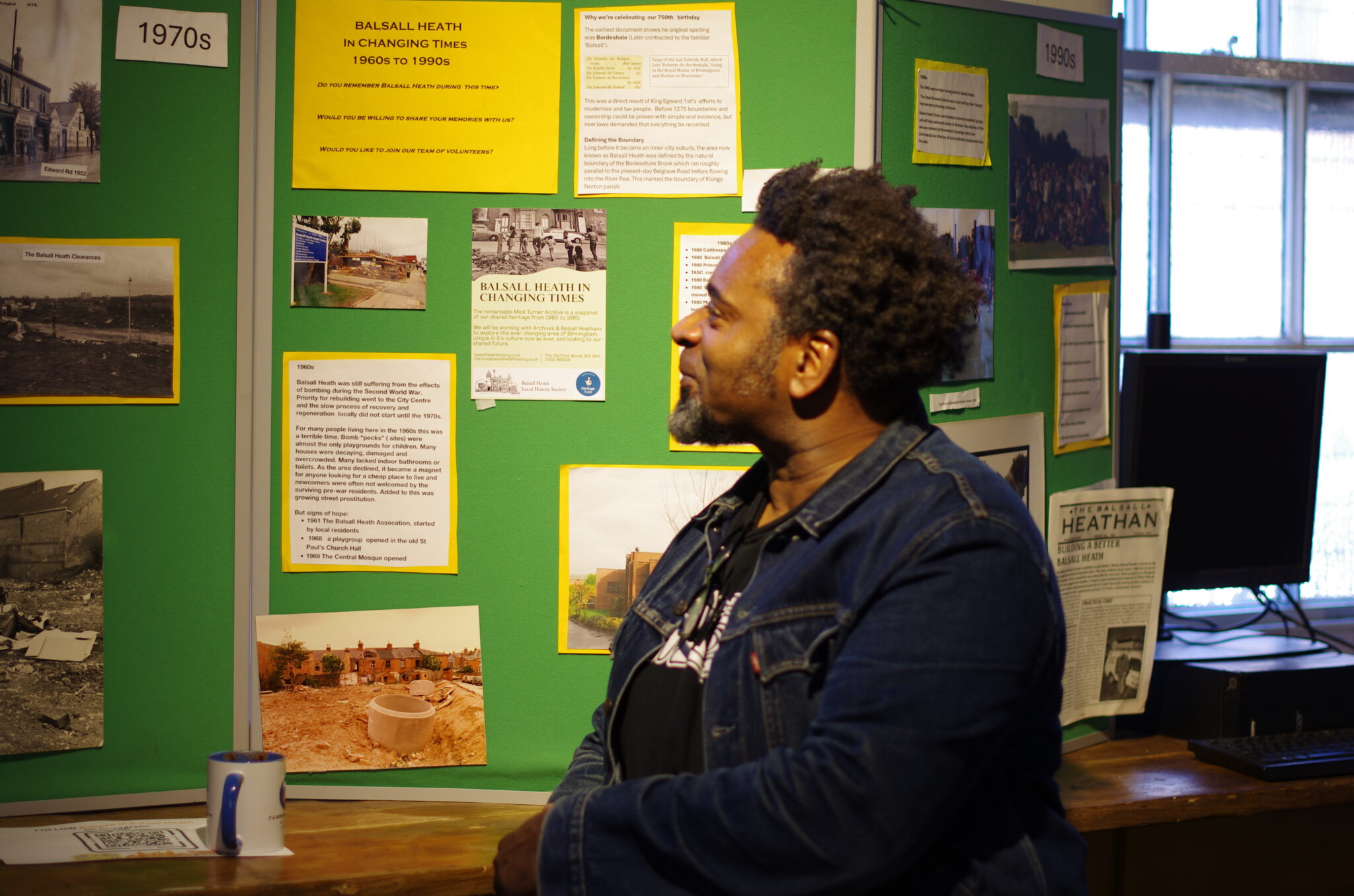
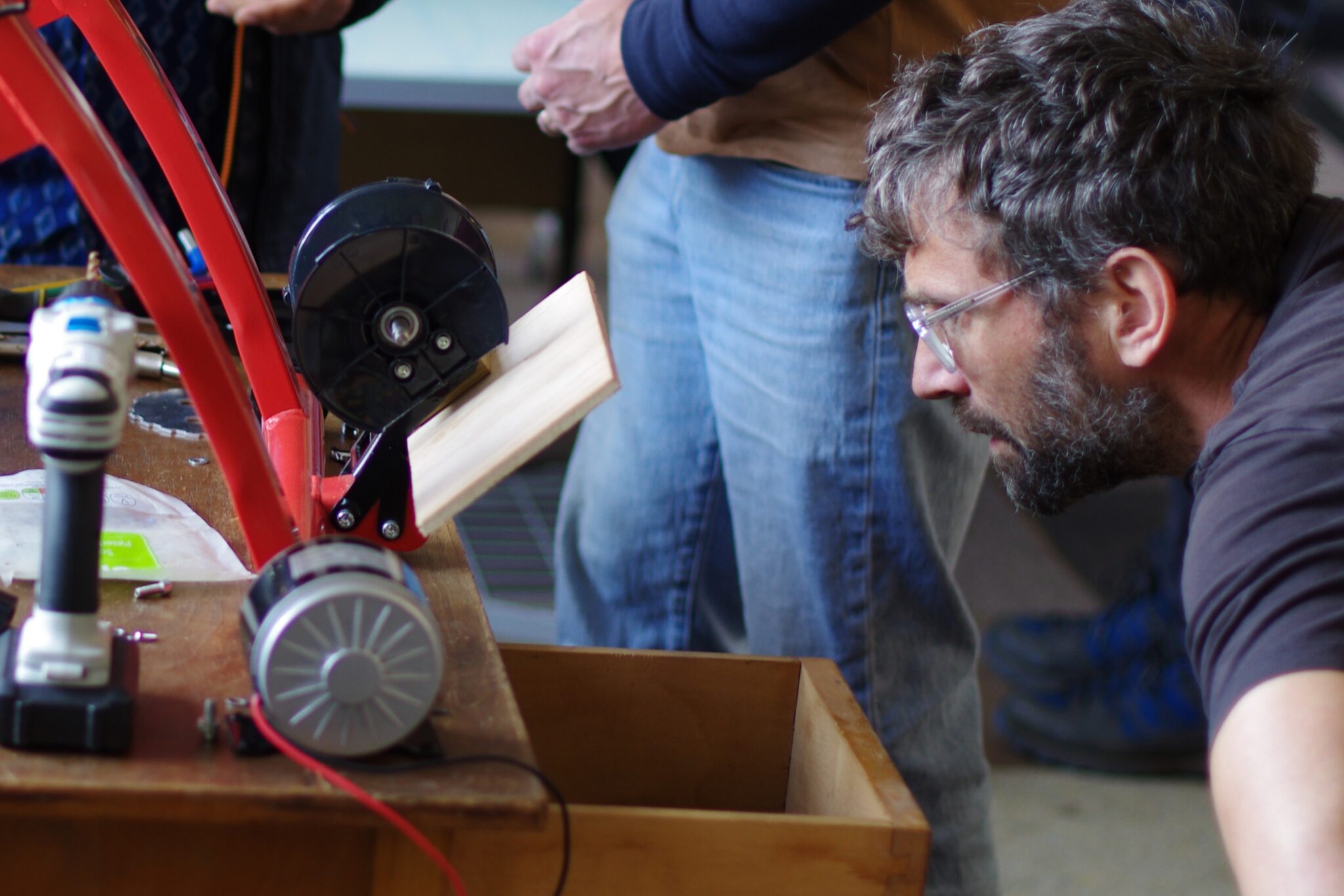
Fixing the dynamo connectorToqueer, green championFinal adjustments to the bike dynamoFlicking through past editions of the Balsall Heathan on displayDuncan Ali, looking for a fairer, greener world at Second SaturdayMarcus with Fahima, artist, sculptor, does henna sometimesRachel Gillies, editor of ‘NeighbourhoodNewsOnline.com’ on hand to see the Heathan relaunchFrancesco, co-founder of PRISM, exhibiting at Second SaturdayIan & Susie on the Mix Room Cafe CouchStep back in time, remembering days playing in the concrete drainage pipesA family of cyclists at Second SaturdayDan checks the wheel pulley thing to convert bike power to electricity
What’s next?
Whether you want to share a story, promote a local project, or just stay updated on what’s happening, we want to hear from you. If you’re interested in journalism, editing or helping in any way please get in contact with us.
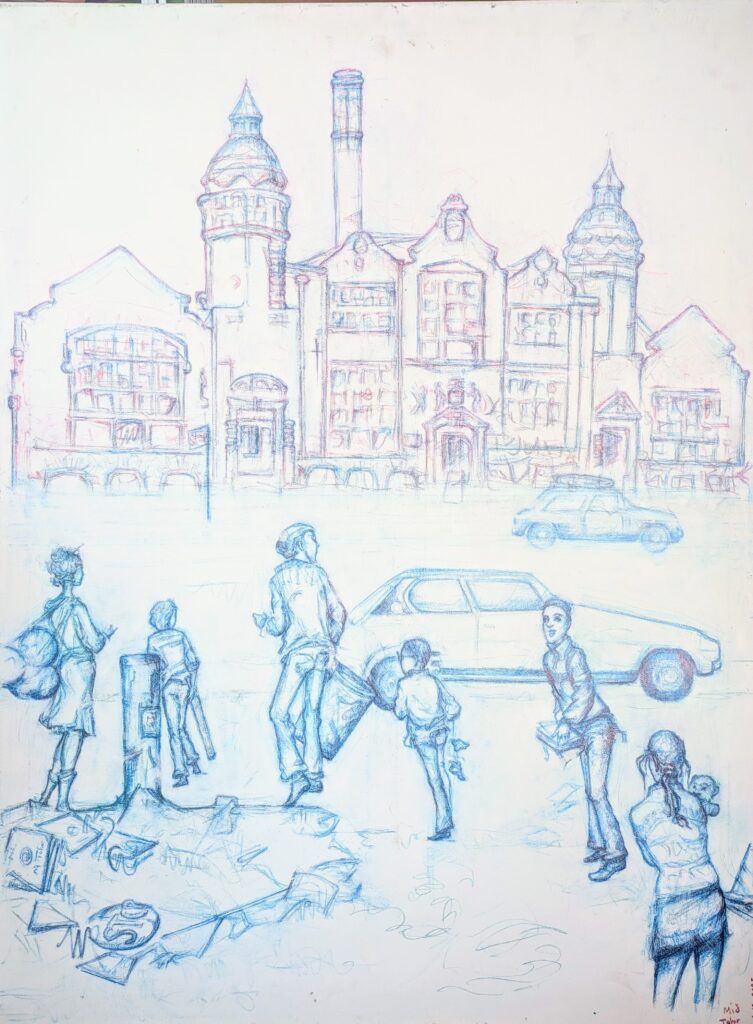
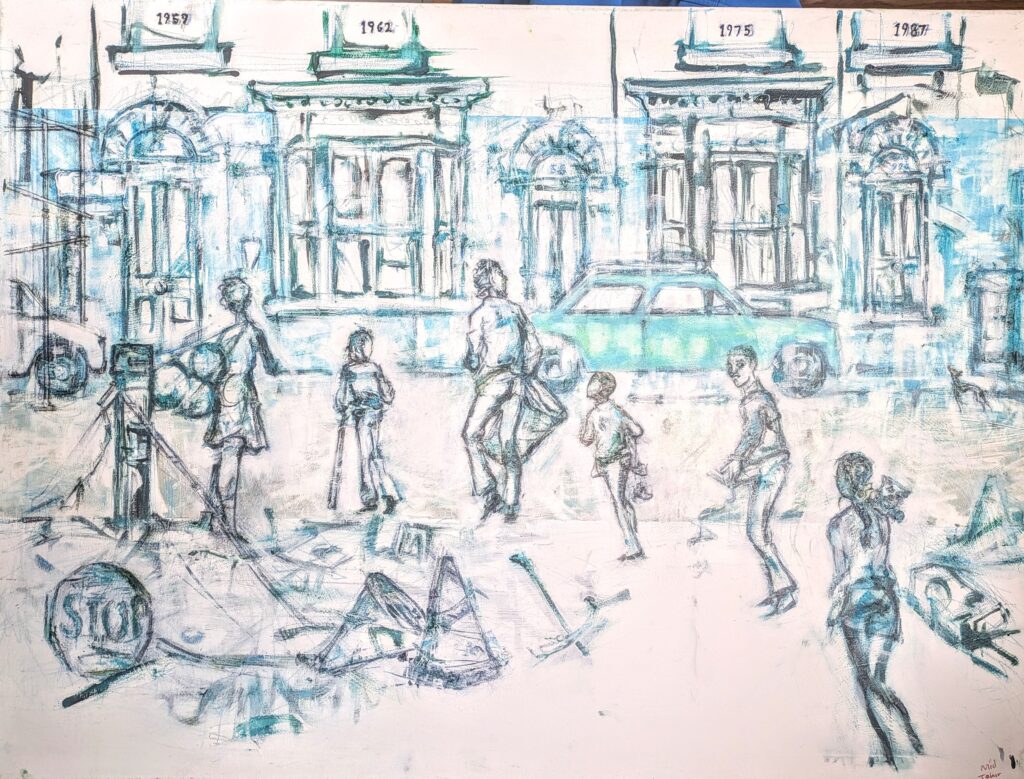
Painted by local artist Muhmood Tahir, gifted to Balsall heath, displayed for the first time at our relaunch!
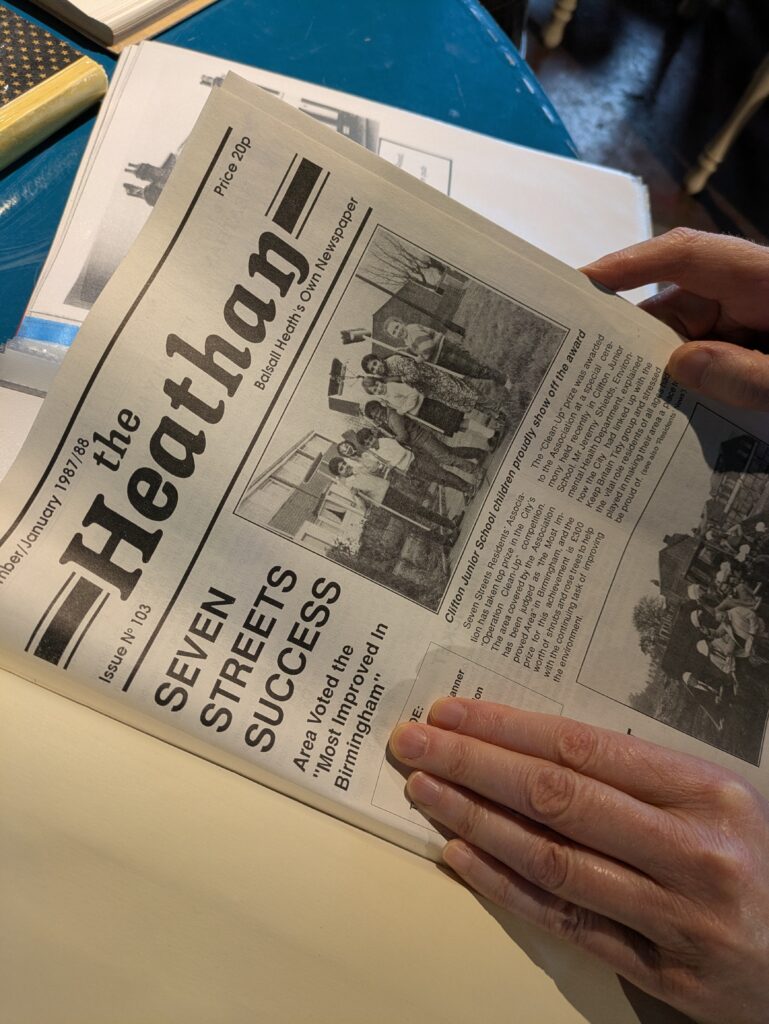
Judith explains ‘Well, I was living in Moseley, you know, rented Housing Association Flat. At the time I couldn’t consider buying a property. I couldn’t afford to anywhere in Moseley, but what was available in those days in the newsagents, was the Heathan, which for 20p I could afford, and I’ve just found the article, [Issue 103 Dec 1987]…Seven Streets Success, which…that was what made me consider Balsall Heath.’