News

Coronavirus weekly update from Birmingham City Council

The update lets you know about Birmingham City Council’s services, public health information, general advice on Covid-19, and other relevant news from the council and our partners so that we can keep you informed. If you have friends and family who are not online, please share the information in this bulletin with them.
Read More

Elmer Day with Balsall Heath Library

Staff at Balsall Heath Library have been thinking about all of the families who get involved with activities at the Library. Here are some activities that you can try at home to celebrate every young child’s favourite multicoloured elephant, Elmer!

Read More

WM Now Logo

#FeedBirmingham

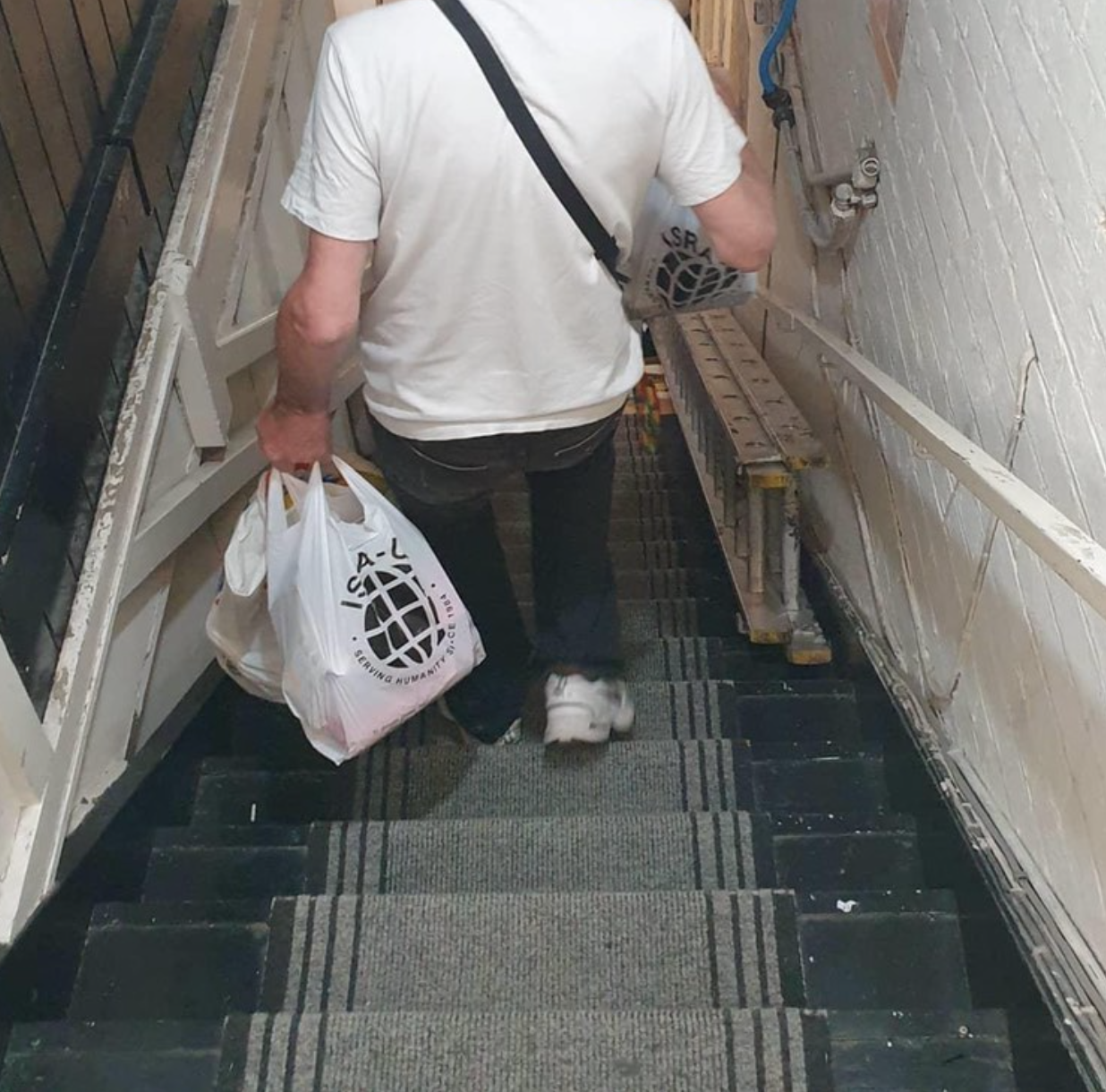
The organisations in Birmingham who help to distribute food to those in need, are running extremely short of food and we are now at the lowest levels ever seen since the Coronavirus epidemic began. We are asking our communities to come together to help.

Read More

Donate your bike to refugees and asylum seekers

At The Bike Project, we take second-hand bikes, fix them up and donate them to refugees and asylum seekers in the West Midlands. We are hosting a no contact drop-off point for bike donations in B12 8SY on Wednesday 13th May 2020! If you have an old or unloved bike, we can give it a new home. Support refugees by donating your bike.

Read More

The Potato Project

The Real Junk Food Project has teamed up with The Active Wellbeing Society to spearhead an emergency food response across Birmingham; the demand is huge and we believe the ‘Potato Project’ can play a part.

Read More

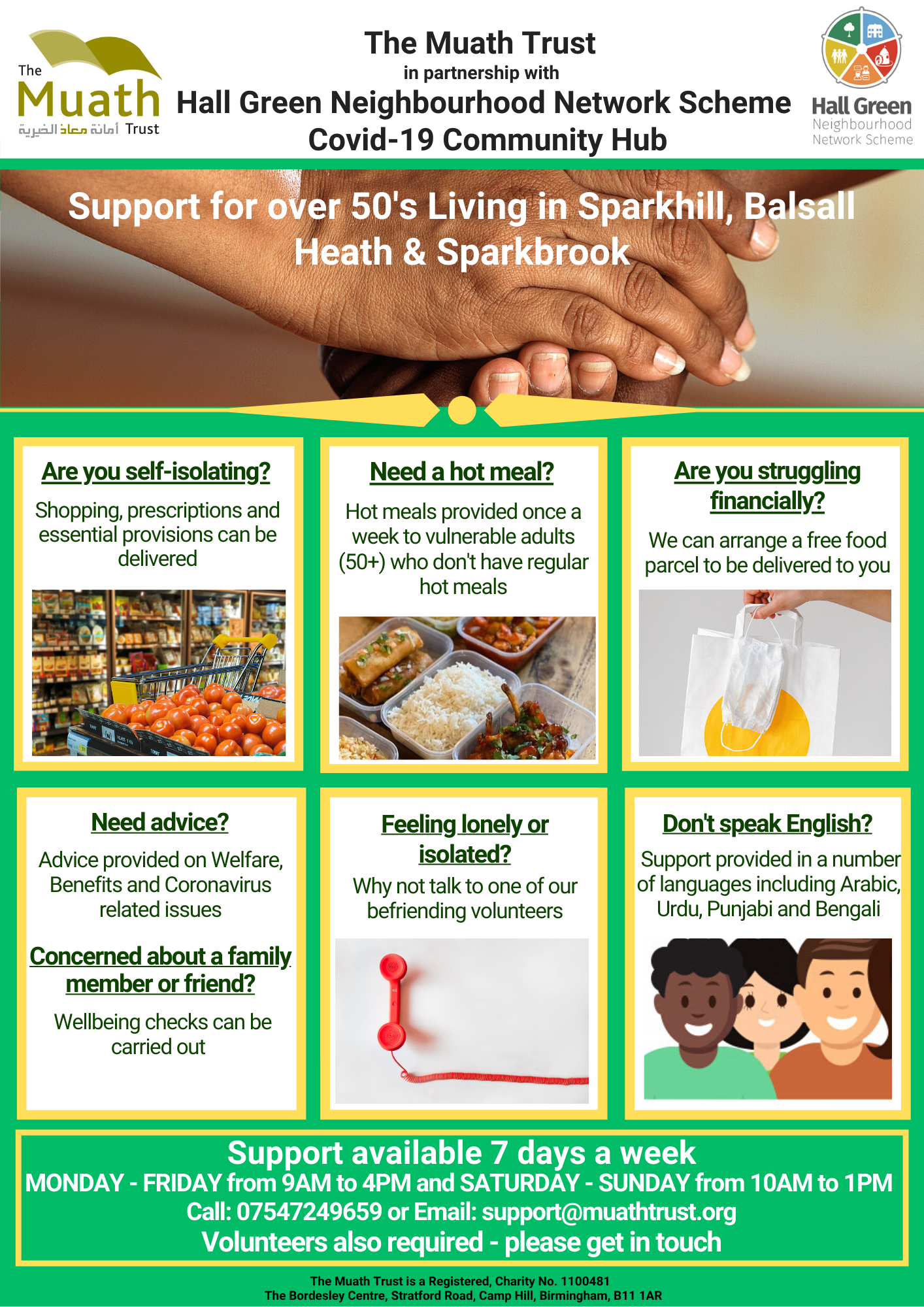
Delivery of Iftar Boxes for those in need during Ramadan

Islamic Help and the Sultan Bahu Trust are seeking to support people during the holy month of Ramadan by providing free Iftar boxes for those in need across B11 and B12 postcodes.

With the holy month of Ramadan approaching us – it is set to be a Ramadan like no other we’ve experienced. Throughout the Coronavirus crisis, it has been an honour for us to be able to serve you and the community.

For the past 30 years, The Bahu Trust Masjid has been providing a communal iftar for people to come together in the mosque and open their fast, unfortunately, this year it is not possible but we want to keep the spirit of this service and continue to being able to provide iftar to people in their homes. 

We are planning to deliver free iftar boxes for people who need them. Each box will be prepared freshly on the day, serve one person and contain; dates, fruit, one starter, rice/biryani and a fruit drink.

As you have reached out to us in the past, we wanted to ask if you would be interested in having iftar boxes delivered to you, please email us and let us know and also include how many you would need for your household, in order to allow us to plan ahead. This service is also open to non-Muslims, please also feel free to recommend others who you may feel could benefit from this service  

Finally, from the team at Islamic Help and the Bahu Trust, we wish that you and your loved ones are staying safe and wish you Ramadan Mubarak.

Kind Regards,

Islamic Help & Bahu Trust

Stay at home for Ramadan

Public Health England have prepared this guidance for those who are observing Ramadan.

The full post can be viewed here: https://publichealthmatters.blog.gov.uk/2020/04/22/stay-at-home-for-ramadan/

Places of worship will remain closed for the current time

Staying at home during Ramadan will play an important part in the nation’s effort to slow the spread of coronavirus (COVID-19). That’s the message from health experts and Muslim leaders as communities across England prepare to celebrate the holy month.

The government’s current stay at home and social distancing rules apply to all UK citizens and are supported by a wide variety of Muslim community organisations including the British Board of Scholars and Imams. The government recognises that this is an unprecedented request but following these rules will help control the spread of coronavirus and protect family, friends, the wider community, and the most vulnerable.

Keeping yourself and loved ones well during Ramadan this year will mean adapting usual religious and cultural practices. This is particularly important for protecting vulnerable people who are shielding because of underlying health conditions as well as family, friends and carers of those who are most vulnerable.

During Ramadan you should only leave your home for one of four reasons:

  • shopping for basic necessities, for example food and medicine, which must be as infrequent as possible.
  • one form of exercise a day, for example a run, walk, or cycle – alone or with members of your household.
  • any medical need, including to donate blood, avoid or escape risk of injury or harm, or to provide care or to help a vulnerable person.
  • travelling for work purposes, but only where you cannot work from home.

Traditionally Ramadan is a time for communal prayer, spiritual reflection, meals with extended family and friends to break daily fasts, and concludes with the community celebration of Eid-Al Fitr. Whilst staying at home throughout the holy month will be challenging, it is necessary to protect the NHS and save lives.

Consider how you could use technology to stay connected with your family, friends and wider religious community at this time. Video and social media could connect you to worship services and ceremonies. Individual pastoral and care visits could be received by phone. Despite being physically apart, religious practices could be observed at the same time of day as the rest of your faith community. Your faith leaders will be able to advise you on the many ways for you to stay connected.

Fasting for healthy people can continue as usual this Ramadan. If you have very mild symptoms of coronavirus or a flu-like illness and don’t require medication or treatment, as advised by a physician, you can also fast but should do so while self-isolating. Other coronavirus patients with more severe symptoms should consider not fasting, as is usual for patients with any serious illness. Always consult your physician for advice on the particular circumstances of your condition and whether or not fasting is advisable. People preparing food for others for iftar or suhoor, shouldn’t do so if they have any symptoms of coronavirus or any other flu-like illness, even if the symptoms are mild.

In addition to performing wudu before prayers, healthy hygiene should also be maintained through handwashing for 20 seconds, using soap and water or a hand sanitiser, when you enter your home, blow your nose, sneeze or cough and eat or handle food, to help protect yourself and others.

Osman Dar, Consultant in Global Health at Public Health England said: Ramadan is a time for prayer, contemplation, self-sacrifice and charity – all of these qualities are key to supporting our collective effort in tackling this pandemic. This Ramadan, let’s think about how we can best protect the most vulnerable in our families, amongst our neighbours and in all our diverse communities. By working together we can minimise the transmission of coronavirus and reduce the chances of overwhelming our health and care services. Let us not forget the deeply spiritual reminders this pandemic brings; unite, pull together and leave nobody behind insha’Allah.

Stay at home for Ramadan

  • Only go outside for food, health reasons or work (but only if you cannot work from home)
  • If you go out, stay 2 metres (6ft) away from other people at all times.
  • Wash your hands as soon as you get home
  • Do not meet others, even friends or family. You can spread the virus even if you don’t have symptoms.

If you’re clinically extremely vulnerable you’re strongly advised to stay at home at all times and avoid any face-to-face contact, to protect yourself. Read more about shielding.

If you have symptoms that may be caused by coronavirus, and do not require hospital treatment, or if you live in a household with someone who shows symptoms that may be caused by coronavirus you must remain at home until you are well. Read more about self-isolation and household isolation.

The UK Government is following a scientific-led action plan to reduce the impact of coronavirus, to protect the NHS and to save lives. The success of this plan depends on the nation’s support to follow the guidance. Please follow this guidance and stay safe this Ramadan.