A Tale of Two Heaths, Saheli transforming lives of Women
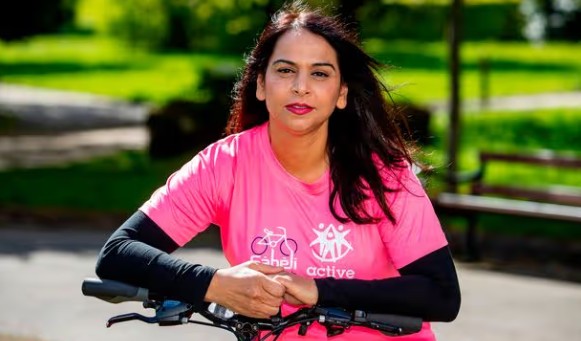
Naseem Akhtar BEM looks back on the challenges growing up and growing strong in Balsall Heath. She has spent over 20 years inspiring and encouraging thousands of women in Birmingham and, with the Saheli Hub team, transformed lives through activity.
Naseem has lived in Balsall Heath nearly all her life. Growing up in Balsall Heath in the 70s and 80s, Naseem recalls hiding where she came from when at school in nearby Selly Park:
I genuinely used to hide that I was from Balsall Heath…I used to say, ‘just by Cannon Hill Park’, or ‘by the Edgbaston Cricket Ground’.
For a young girl in a traditional Muslim household with five brothers, the streets were off-limits. ‘I thought I wasn’t allowed out because I was an Asian girl. Looking back, I wouldn’t let my sons out now, knowing what was happening on those corners.’ Balsall Heath was then known for street prostitution and drug dealling.
‘It’s only when I became a teenager it kind of almost started to become like that 24-hour service. So, you’d see women on the streets in the morning, noon and night and growing up in a kind of traditional Muslim household, no one ever discussed what these women were doing or what it was about…I think that the day that I was really kind of horrified was when I stopped at my doctor surgery, who’s still my doctor, amazing doctor on Cheddar Road, and I remember one day walking past and a woman was sitting in a bikini. I thought what’s that about? But nobody talked about it.’
The Thread of Activism
Naseem’s journey into advocacy started in a local sewing factory at 19 when she realized she was being paid a third of what she thought she should. She went to the ‘low pay unit’ with her brother and photocopied leaflets, distributing them to every woman in the building.
‘…it was on piece work. And some people got the best pieces and some people didn’t, and I didn’t like it. But what I loved in the factory was that it was a lot of Asian girls. As an adult having left school with no real qualifications – I wasn’t allowed to go to College or Uni because Margaret Thatcher had come along and she’d shut all the colleges, unless you went to mix college. And in my generation, many girls weren’t allowed…because of the fact that they’re mixed.’
It was a hard lesson in leadership. “I was ostracized by half the factory,” she admits:
‘I learnt you can’t be an unelected leader by yourself. You have to bring people with you. I stayed for six months to prove a point, then got a job that paid the full £150. I went back to the old factory and showed them my wage slip. I wanted them to know you can get paid properly if you find the right employer.’
Saheli – a Vision Born of Rejection
By the early 2000s, Balsall Heath was changing. The community – churches, mosques, and residents – had reclaimed the streets from the sex trade. But for Asian women, “social exclusion” remained. Naseem joined the Balsall Heath Forum:
‘They could see I was really committed and so they offered me the job. Initially I was too scared to take it – my brother had completed the application for me and I got the interview…I got the job and started from there. So the Forum then employed me to see what women wanted and we secured funding for a feasability study.’
What they wanted was a health and fitness facility run by women, for women:
‘They wanted to do a swimming exercise, Fitness and Sport, and when we asked them why aren’t you using the biggest Sports Centre on the edge of your neighbourhood, they said because they felt nobody understood their culture. The women-only times were very limited by the time you got in and changed you needed to change back…it wasn’t suitable, so they just didn’t go.’
Responses to the feasibility study were dismissive – NHS services said ‘We don’t do leisure, we do health’, and City Council Leisure staff said, ‘That’s never going to happen’.
Naseem partnered with South and City College, starting in ‘The Learning Library’ one day a week. Soon, women were flooding in. Women who came for the gym ended up staying for ESOL classes and vocational training offered by the college too:
‘We changed in one of the side offices. And the numbers just started to go through the roof. So we started in April, I always remember that, and by September we had a meeting they said just have that bit of the site, just have it. And so we ended up using the site Monday to Friday.’
A big break came from a moment of raw honesty at a high-level regeneration conference. Naseem was given seven minutes to speak. She told a room full of suits that despite £6 million being spent on “regeneration” in her area, nothing had changed for women and girls. That honesty caught the ear of a funder from Sport England. He asked for a one-page vision. Naseem sent him a photo of local girls in hijabs and helmets, splashed with mud, beaming after a day of mountain biking in a ravine.

The Saheli Hub and beyond
Today, the Saheli Hub stands as a testament to what happens when you stop telling a community what they need and start listening to what they want.
Naseem’s ‘radical’ ideas – that women from all backgrounds deserve to take up space, ride bikes, and prioritize their health – have helped build a bridge to a healthier future for women and men.
From a girl who was once ‘walked to her friend’s house by her brothers for safety,’ Naseem has been walking, running and biking with an entire community in Balsall Heath and across Birmingham.
Naseem Akhtar BEM Running, Cycling & Fitness: Saheli Hub, Balsall Heath
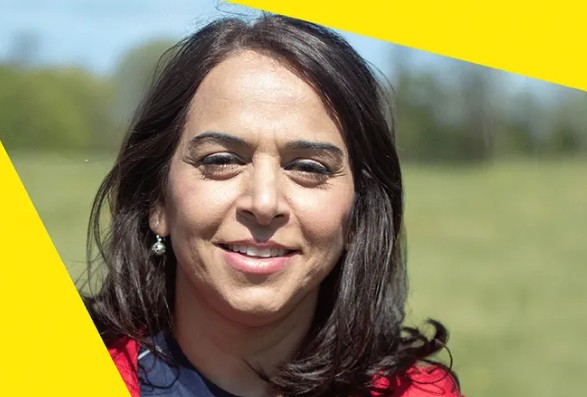
Naseem is the project manager at Saheli Hub, a charity in Balsall Heath run by women for women, which aims to improve health and wellbeing and encourage participation in exercise and sport. The hub is based in Calthorpe Park and operates out of three wellbeing centres and two GP practices.
Since starting the charity in 1998, Naseem set up The Young Sahelis, a youth club for girls aged 14-25; The Saheli Running Club, which has seen over 75 women run half marathons and seven women complete full marathons; and The Saheli Cycling Club which has taught over 2,000 women to ride a bike.
Naseem has always been passionate about breaking down barriers to exercise for women in her community. She’s channelled this passion into creating opportunities for local women of all abilities to gain confidence to take part.
Saheli Hub welcomes around 1,600 women a year, 80% of which are from diverse ethnic backgrounds, who have now started their physical activity journey with Naseem and the Saheli Hub, regularly taking part in walking, jogging, cycling, chair-based exercises, yoga, pilates and body conditioning.
In 2019, Naseem was awarded a British Empire Medal for her work in encouraging thousands of women to lead healthier lifestyles.
Health Club Management 2024 issue 8
- Saheli Hub wins prestigious ‘Building Inclusive Communities’ award at national award ceremony
- Saheli Hub Men only Activities
- Wassail! at Saheli Hub – Saturday 7th January
- Saheli Activity Schedule
Find out more at Saheli Hub